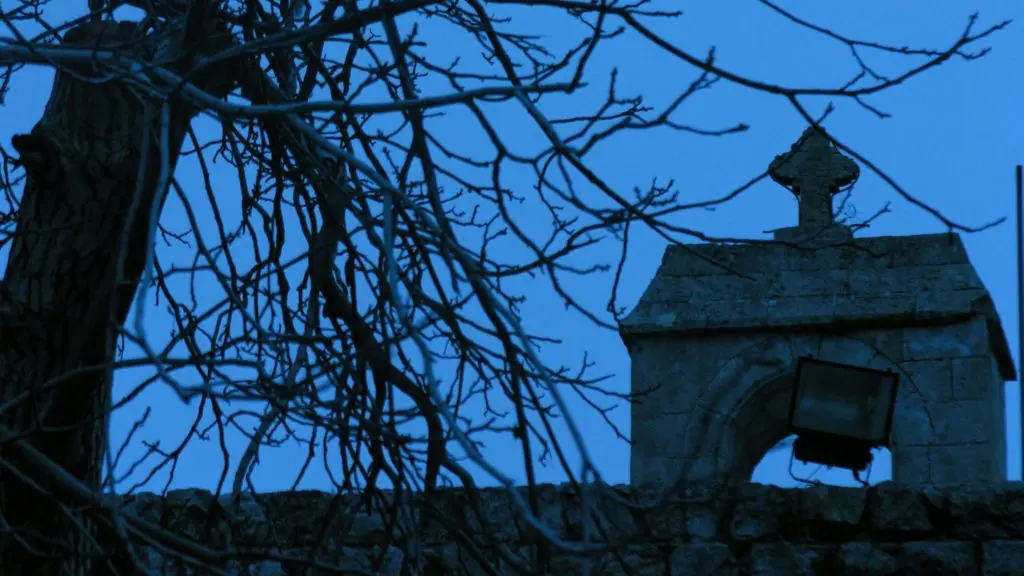
The tomb of King Athelstan in Malmesbury Abbey, Malmesbury, England. There is nothing in the tomb beneath the statue, the relics of the king having been lost in the Dissolution of the Monasteries in 1539.
Arpingstone, Public domain, via Wikimedia Commons
He brought under his rule all the kings who were in this island: first Hywel, king of the West Welsh, and Constantine, king of the Scots, and Owain, king of the people of Gwent, and Ealdred, son of Eadwulf from Bamburgh. And they established peace with pledge and oaths in the place which is called Eamount, on 12 July, and renounced all idolatry and afterwards departed in peace.
David Woodman. The First King of England: Aethelstan and the Birth of a Kingdom. Princeton: Princeton University Press, 2025.
There is a popular meme on the internet that J.R.R. Tolkien’s Lord of the Rings tells us how we want the world to be, while George R.R. Martin’s Game of Thrones shows us the world as it really is. Indeed, the (often unwatchable crude and violent) televised adaptation of Game of Thrones, along with late Bush and Obama era series True Detective Season 1, Mad Men, and Breaking Bad helped inaugurate a new era of “bleached” and gritty twenty-first-century realism. While the more optimistic “End of History” 1990s promised a Star Trek-esque world in which humans lived collaboratively, and science and technology improved life, all of this came crashing down after 9/11. The world of the twenty-first century seems increasingly defined by violence, deception, pain, and poverty.

In the field of Medieval Studies, the same pessimism has crept in. While medievalists have always depicted the seemingly unpleasant realities of living in the premodern world, there is an increasing trend in recognizing that medieval figures were just as, if not more, Machiavellian and wise than those of us living in what has been called the “postmillennial” era. Following this general trend, in his recent The First King of England: Aethelstan and the Birth of a Kingdom, Cambridge historian David A. Woodman has crafted a new biography of the Anglo-Saxon Aethelstan, the first king of those who became known as the English. In The First King of England, Woodman plunges the reader into a fractious and violent time in which the many and diverse peoples of the North Atlantic vied for control of the British Isles. Amidst this fractious chaos, came Aethelstan.
Aethelstan, originally a West Saxon king, was the first to unite disparate Germanic kingdoms in England. As he notes, there are a number of medieval sources for Aethelstan’s life, including the Anglo-Saxon Chronicle, William of Malmesbury’s Gesta Regum Anglorum, and Gesta Pontificum Anglorum. We also have Aethelstan’s diplomas and law codes. Aethelstan was the grandson of Alfred the Great of the West Saxons, who had made his name fighting Danes. Aethelstan’s father, Edmund, had died in July of 924, and since Aethelstan was the oldest son of Edward’s first wife, he succeeded his father to the throne at the age of thirty. After the death of the Viking ruler Sihtric in 927, Aethelstan obtained the kingdom of Northumbria and the submission of various other kings, and thus, according to Woodman, 927 is the year England is first formed. This England joined together the kingdoms of Mercia, East Anglia, Northumbria, and Wessex.
Woodbridge begins his biography with a ceremony on July 12, 927, during which Aethelstan received submission of the Welsh kings Hywel Dda and Owain. Wales, at this time, included a number of kingdoms. The Welsh and the Saxons had had a contentious relationship, as evidenced by the famous dike built by the Mercian King Offa. There were also, however, points at which the Welsh and Saxon collaborated. Welsh rulers such as Brochfael, Ffernfael, and Hywel ap Rhys sought the aid of Alfred the Great. At the ceremony of submission, there was also Constantine II, who ruled over a kingdom often referred to as Alba from the 9th century forward and which approximated the contemporary country of Scotland. Constantine’s predecessors had been given the title “King of the Picts,” and his successors would rule over a people increasingly called, from 920 forward, “Scots.” At the meeting was also the Northumbrian ruler Ealdred. Woodman notes the importance of this site of the meeting for the English: it was the location where the River Eagmont joins the Lowther. Kings had met at this site before, but they usually met as equals to negotiate. This time, the kings were meeting to submit to one king who ruled over all.
One of the greatest threats to Aethelstan and the Saxons were the Vikings, who had camps in Ireland and had settled on the Shetland Islands and the Isle of Man. The Irish expelled the Vikings from Dublin in 902, and this expulsion may have inspired the Vikings to seek out new land in England and Wales. The Vikings had also made their way to Constantinople—Woodman notes that there is Viking graffiti in Hagia Sophia. Woodman further points out that the detailed descriptions of Aethelstan’s battles against Vikings suggest the author of the chronicles may have been “close to the action.” The Vikings would join forces with Constantine II and fight Aethelstan at the Battle of Brunanburh in 937. Aethelstan would win this often forgotten battle and solidify Saxon rule.
Aethelstan set about uniting Britain and increasing its importance on the world stage. The British Isles were also linguistically divided, with the presence of disparate languages such as Old English, Latin, Old Norse, and Pictish. England was united by the Roman roads that crisscross the newly formed country. As Woodman notes, Europe at this time was ripe for those warlords to seize power. Aelthelstan was just such a man; he was both brutal and crafty but also appeared pious and genuinely concerned for the welfare of his kingdom. The Carolingian Empire, forged by Charlemagne, had splintered into several chunks, including West and East Francia, which would become France and Germany, respectively. Aethelstan strengthened the bounds with wider Europe during this time—Woodman records that English men and women appear in recorded books known as Libri vitae throughout the European continent.
Woodman further depicts Aethelstan as having something like an early British Empire. In his diplomas as well as his coinage, Aethelstan presented himself as both “king of the English” and “king of all Britain.” Aethelstan died on October 27, 939, and was buried under the altar at the church of St. Mary in Malmesbury. Woodman speculates the burial of Aethelstan at Malmesbury, which is located between Mercia and Wessex, was a symbol that Aethelstan was the king of all of England. Since Aethelstan was unmarried and had no children, his half-brother Edmund succeeded Aethelstan to the throne. The Saxon people would continue to rule England until that infamous year of 1066.
Once the ruler of an empire over which the sun never sets, England is now derided in some quarters as a “third world country.” It is, from the view of the political right, a crime-ridden, fiscally unstable country that cannot control its borders. In contrast, the new twenty-first-century millennial left appears to have abandoned much of its working-class base and is increasingly focused on issues of race and gender as well as dismantling much of British history and identity. The underlying question for the peoples of Britain is what sort of man or woman can unite and fix this ailing country. Our time, like that of Aethelstan, is providing opportunities for men and women of cunning as well as generosity to restore Britannia.