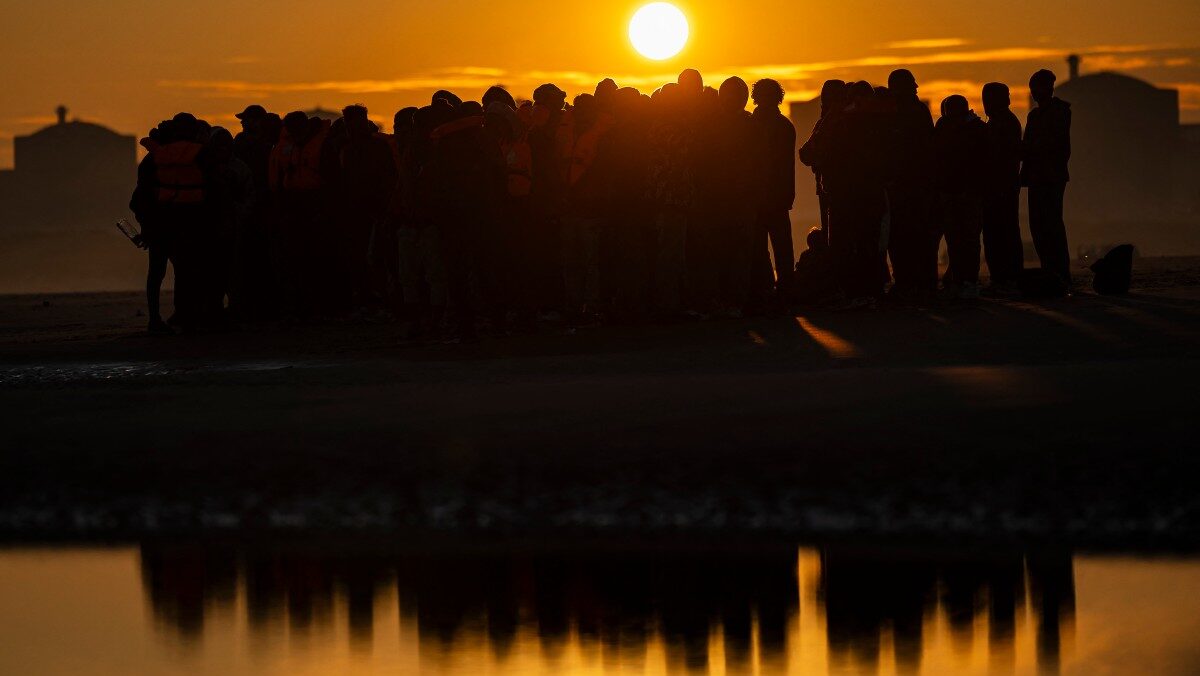
Migrants wait to board smugglers’ boats in an attempt to cross the English Channel off the beach of Gravelines, northern France on September 27, 2025.
SAMEER AL-DOUMY / AFP
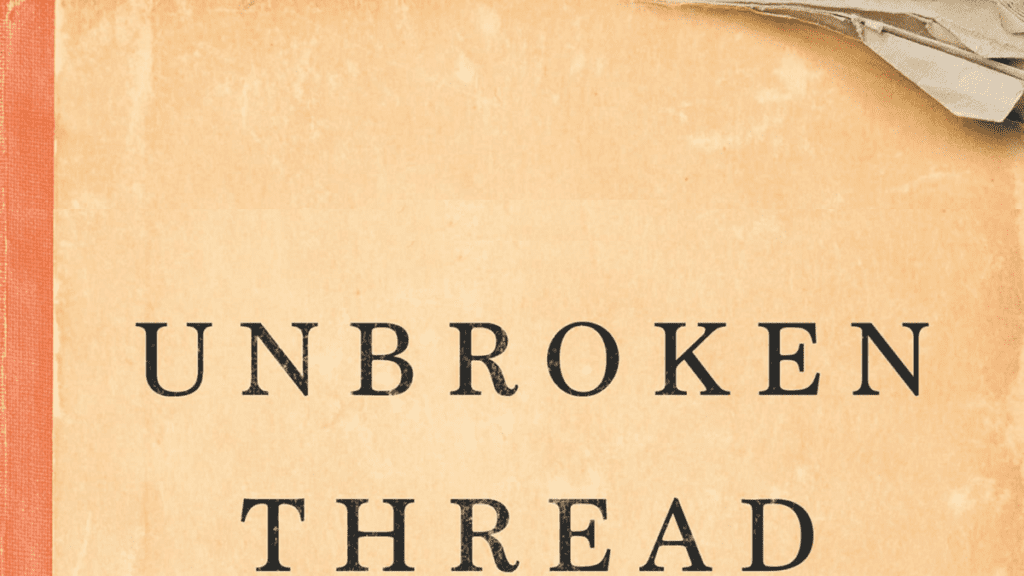
Reading The Betrayal of Britain, a collection of essays just published by the New Culture Forum (NCF), a line from Machiavelli kept coming to mind: “Men sooner forget the death of their father than the loss of their patrimony.” The twelve essays by different authors crackle with anger and frustration at what a once-great Britain has become. This book has the power to red pill readers—if it doesn’t black pill them first.
The introduction, written by the late Peter Whittle (whom Harrison Pitt recently eulogized here), sets the tone:
From the banks of the Thames whatever direction you take, the evidence of unchecked immigration stares back at us: makeshift camps in parks, strained public services buckling under impossible loads, a cultural fabric fraying almost beyond repair. It is a scene that would have baffled our forebears, those islanders who forged an empire from the wild seas and defended it against invaders from Napoleon to the Luftwaffe. Yet here we are, in the twenty-first century, watching as the greatest challenge to our national soul unfolds not through cannon fire, but through policy papers and porous borders.
The NCF has been sounding the alarm for years, including in predecessor volumes such as State of Emergency, The Long March, and Fighting Back. Since then, the UK has been convulsed by riots, speech crackdowns, and perpetual protests leavened with Jew-hatred. Perhaps the alarm can still be heard over the noise of the mob; the solutions proposed throughout The Betrayal of Britain are dramatic, but not compared to possible alternatives: social collapse, ethnic strife, or, if Professor David Betz’s warnings prove true, civil war.
The grim truth, reprised by nearly every essayist, is that the indigenous peoples of Great Britain have voted against mass immigration, election after election, but have gotten only millions more migrants for their efforts. Those who protested have been stigmatized and, not infrequently, silenced. Whittle emphasizes that “immigration is not, in itself, the villain of this tale,” citing the Huguenots and Jews escaping persecution as examples of “waves of arrival” that shaped the nation:
However, these were movements measured in thousands not millions; integrated not by fiat, but by a shared embrace of British values: the rule of law, free speech and a quiet stoicism that turns strangers into neighbors. What we confront today is something altogether different—nothing less than a deluge, engineered by decades of ideological folly and political cowardice, which threatens to submerge the very essence of what it means to be British.
Foreign migration under the Blair-Brown Labour years totaled 3.6 million. According to 2025 research conducted by Matt Goodwin and Eric Kaufmann, “White Brits could fall below 50% by 2063,” with net migration potentially hastening the process. In one essay, Olly Huitson debunks the myth that immigration is “good for the economy”; to cite one case study, of the 170,000 Somalis in Britain, recent data shows that only 19% were employed, 80% were in social housing, and 39% were claiming income support (in contrast to just 4% of British-born).
Housing, predictably, has become a crisis, with over 1.33 million households on local authority waiting lists in March 2023. In March 2025, 45,840 households were “initially assessed as homeless,” and an additional 131,140 “in temporary accommodation.” Immigration-led population growth combined with a housing shortage has had “widespread social and economic consequences,” fostering a “generation rent” of young people unable to buy homes in their home country.
The National Health Service is similarly strained. “In June 2025, there were approximately 7.37 million cases on the NHS waiting list in England, with around 6.23 million individual patients waiting for treatment,” Amy Gallagher writes. “Around 2.8 million patients had been waiting for over 18 weeks, with many waiting over a year.” In 2014, the NHS had to launch a £1.4 million program to educate healthcare workers on female genital mutilation; at least 137,000 women in the UK have suffered from this “foreign barbarism.”
The crime stats are worse. “Between 2021 and 2023, there were 369,000 foreign national arrests recorded by police forces across England and Wales,” writes Rob Bates. “This rate exploded in the first ten months of 2024, when 131,518 foreign national arrests took place”—or roughly 24 arrests per every 1,000 foreign nationals in Britain. The arrest rate for the entire country, in contrast, was 12 per 1,000 people. About a third of those were for rape, meaning that despite “being little more than a tenth of the resident population, foreign nationals accounted for roughly a quarter of sexual offence arrests last year.”
The case study of London is particularly eye-popping. According to Freedom of Information requests submitted to the Metropolitan Police, writes Bates, “up to 47% of sexual offence cases proceeded against in 2024 involved an accused foreign national.” Several essays also recount the grim, gut-wrenching details of the Muslim grooming gangs, in which the mass trafficking and rape of British girls was perpetrated with the assistance of officials who would rather allow sexual savagery against children than be seen as racist.
Then, of course, there is terrorism. Connor Tomlinson’s essay “There Can Be No Peace with Islam” lives up to the title. He gives a rundown of the Islamic holy books’ greatest hits on the treatment of women, Jews, and violence. Islam is the fastest-growing religion in Britain and Europe, he observes, and the Muslim population of Britain grew by 43% between 2011 and 2021. This has been consequential.
“Despite making up just 7% of the UK population, Muslims are responsible for 94% of all deaths and 88% of injuries caused by terrorism since 1999, comprise 80% of Counter-Terror Police and 75% of MI5’s open case-load, and 63% of terrorists in custody,” Tomlinson writes. “Only 10% of Counter-Terror Police and 25% of MI5’s open case-load are ‘Far Right’ extremists, a term which Prevent, the government’s ostensible anti-extremism watchdog, has redefined to include ‘Cultural Nationalism’ and readers of Douglas Murray and George Orwell in recent years.”
I suspect that Harrison Pitt, author of the essay that makes up Chapter 9, will soon be included on a future Prevent list. Pitt gives a concise and compelling defense of British history as it was, and his essay is written with that magnificent English contempt that few writers today can pull off. The remaking and erasure of history, Pitt writes, must be combatted as a sinister, propagandistic attempt to assert that the shallow historic roots of “replacement migration” do, in fact, penetrate the English frost:
Talk of ‘woke nonsense’ or ‘virtue-signalling numpties’ is not adequate to our civilisational emergency. A nation is its people. Consequently, if that people is programmed into having amnesia about their own past, they will be defenceless against further attempts to demolish their country through replacement migration. Whatever the BBC might say, the ‘shifting demographics’ of Britain are not part and parcel of a long-running historical trend, but the result of an unprecedented experiment undertaken not only without but in clear defiance of popular consent.
I wondered, as I read, if The Betrayal of Britain would address a key factor in Great Britain’s collapse: the ongoing death of Christianity. I am currently reading God is an Englishman: Christianity and the creation of England by Bijan Omrani, which eloquently makes the case that Christianity is the soul of Great Britain. In the final essay, Charlie Downe reprises many of these themes. Great Britain is not only being transformed by those coming in; the betrayal of her heritage also comes from within. Progressives have attacked Christianity; the masses have abandoned it. In the West, Downe observes, our “moral centre of gravity” is now “the self”:
The worship of the self, encouraged and enabled by every mouthpiece of authority in our society, has supplanted the Church as the central moral principle of our civilization. In the modern moral paradigm, all limits are regarded as oppressive, and all boundaries must be destroyed. Is it any wonder that the nation—a structure defined by borders—is just as much in the cross-hairs as anything else? … The British have forgotten who they are. We have forgotten what this kingdom was built on. We blame our leaders for the issues we face, but the ultimate problem is us. We have embraced this paradigm. We—all of us—have enjoyed its poisonous fruits. And we are getting what we deserve.
Downe writes like an English Puritan, and he is correct. What can be said about a country in which nearly 40% of babies are brutally killed in the womb, and the response of Westminster is to take a break from debating the legalization of euthanasia to decriminalize abortion until birth? Downe quotes Enoch Powell: “Like the Roman, I seem to see the River Tiber foaming with much blood.” I doubt even the staunchly pro-life Powell, who voted against abortion every chance he got, could have imagined the scale of the bloodshed.
The Betrayal of Britain contains many proposals: remigration, public condemnation of Islam by political leaders, mass deportation, the removal of migrants from private accommodations, the cancellation of visas, the extension of eligibility for citizenship, the restriction of state benefits. Again, these proposals only seem shocking if one does not consider the alternatives. Most of the writers observe, darkly, that it may be too late to turn the tide, despite Whittle’s plea that the reader receive the essays “not as elegies, but exhortations.”
But Downe’s final essay, despite its closing lines warning of decline, unrest, and potential civil war, also contains words of reckless hope. Great Britain may, because of her sins, deserve what is now happening—but those sins can be rejected, and a “comprehensive vision must replace it,” he writes. “And we find that vision at the very root of our civilization.” That vision, as Omrani so beautifully describes, is the faith that sent the English cathedrals soaring skywards, inspired her political system, and made Britain great for a thousand years.