A row of houses in the Eastwood area of Rotherham, northern England on August 13, 2024.
JUSTIN TALLIS / AFP
Bothelford’s Gone, Edward McLaren, The Maldon Press, 2026
One of the most damning aspects of the UK grooming-gang scandal is the fact it was known so long ago, yet the road to justice remains arduous. For this reviewer, an American with no insider knowledge, one who studies other European countries more closely than the UK, the name ‘Rotherham’ has been synonymous with subcontinental Muslim grooming gangs for well over a decade. Therefore, when Elon Musk and others renewed public debate on this topic last year, it felt bittersweet. This urgency was needed a quarter-century ago.
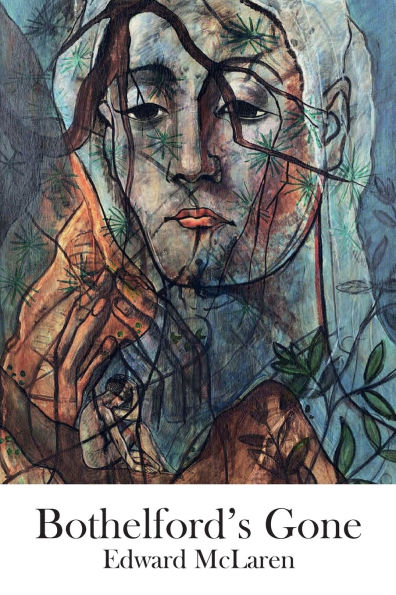
Bothelford’s Gone, Edward McLaren’s recently published novel, proves the struggle is ongoing. While not outright banned, this novel examining Britain’s twenty-first-century national shame has thus far been suppressed in all the standard ways. Though Amazon is known for endeavoring to sell everything, the book is unavailable from Amazon UK (though the American parent company sells it in the U.S.). As of this writing, Oldspeak Bookshop in Suffolk is the novel’s only confirmed UK retailer. Thus, an American writer is reviewing a British book, on a British topic, published by a small American publisher.
This is not a fictional account of the Rotherham crimes. The plot extends to the present day. It names the 2014 Jay Report and Rotherham itself. The fictional Bothelford, then, portrays the ongoing failures of late-stage liberal Britain, the malignant society that endures after its authorities did precious little to address Rotherham.
McLaren illustrates numerous defects of this society, perhaps to his detriment. We encounter attitudes to Tucker Carlson and Brexit, COVID lockdowns, and creeping technology. The narrator alludes to President Trump without naming him. A transgender-identifying character plays an unexpected role. McLaren accurately captures UK polite society, if this reviewer’s interactions with the British professional-managerial class are any indication. However, any readers from the ‘respectability’ camp—if they are willing to approach the grooming-gang subject in good faith—likely won’t read until the end.
Bothelford probably would have benefited from a first-person narrator. Too often, especially in the first half, the narrator tells rather than shows. We might give McLaren the benefit of the doubt. Do Western readers have a reference point for grooming-gang Britain without being told? Official narratives have insisted it is conspiratorial or extremist to talk about the subject. (“Tell me why The Financial Times isn’t talking about it, if it’s such an issue?”)
Can an author like Michel Houellebecq more easily employ a first-person narrator because readers can better comprehend his atomized, sexually depraved subjects? After all, McLaren argues pornography desensitizes young British minds to the crimes occurring in their midst. “He had been subjected to the mulching of manhood such that the English women, the little girls, would have no defence from the likes of him. It was deliberate. It must have been deliberate, all along.”
The novel gathers momentum in the second half. Bothelford’s corrupted criminal-justice, education, and local-government ecosystems are especially resonant, even if accounts of the crimes and resultant suffering are less so. The protagonists are born into Houellebecquian emptiness, not complicit in it.
Some will wonder, “Should I display this on my bookshelf? Is it beyond the pale?” Rest assured, the only extremist content is the criminal behavior that has incontrovertibly happened—and largely gone unpunished—in modern Britain. As is often the case in this genre, the Muslim characters are mostly incidental to the plot; the most glaring villain is the British state. “He remembered his own age and cursed whoever had planned, enabled, or culturally organised the ‘phenomenon’ he was experiencing. That would be a lot of people.”
It is fitting that former Chancellor of the Exchequer Sajid Javid’s memoir, The Colour of Home, was published, to great fanfare, at approximately the same time as Bothelford’s Gone. The former’s first chapter is titled “Run, Paki, run,” and it is set in Rochdale, of all places. Like McLaren’s antagonists, Javid’s publishing team seems to dare an emasculated population to notice.
Thus far, Bothelford’s Gone has gone unnoticed, and that is unfortunate. “What are you doing to help me?” demands the novel’s female protagonist. The plight of this simple novel suggests: very little.
This reviewer sincerely hopes Bothelford will garner discussion in British society, an outcome that would be wholly to the nation’s benefit.