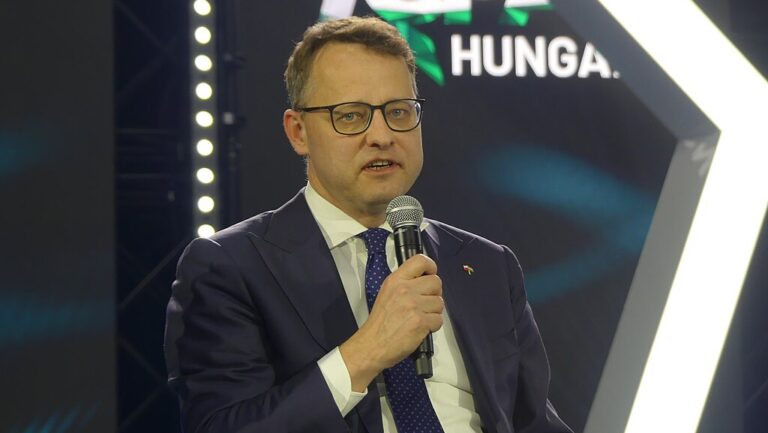
CPAC Hungary has firmly established itself as the central gathering point for the new patriotic international forces. This year’s edition, held on May 29–30, took place at a particularly sensitive time for Europe—caught between an increasingly inward-looking European Union and just days ahead of Poland’s Law and Justice (PiS) party’s historic conservative victory, which marks the return of sovereignist right-wing leadership in one of the region’s key countries.
Against the official narrative of a progressive, multicultural, and increasingly homogenized Europe, another current is gaining ground—one that calls for national sovereignty, secure borders, the family as the civilizational core, and the revival of Christian cultural pride.
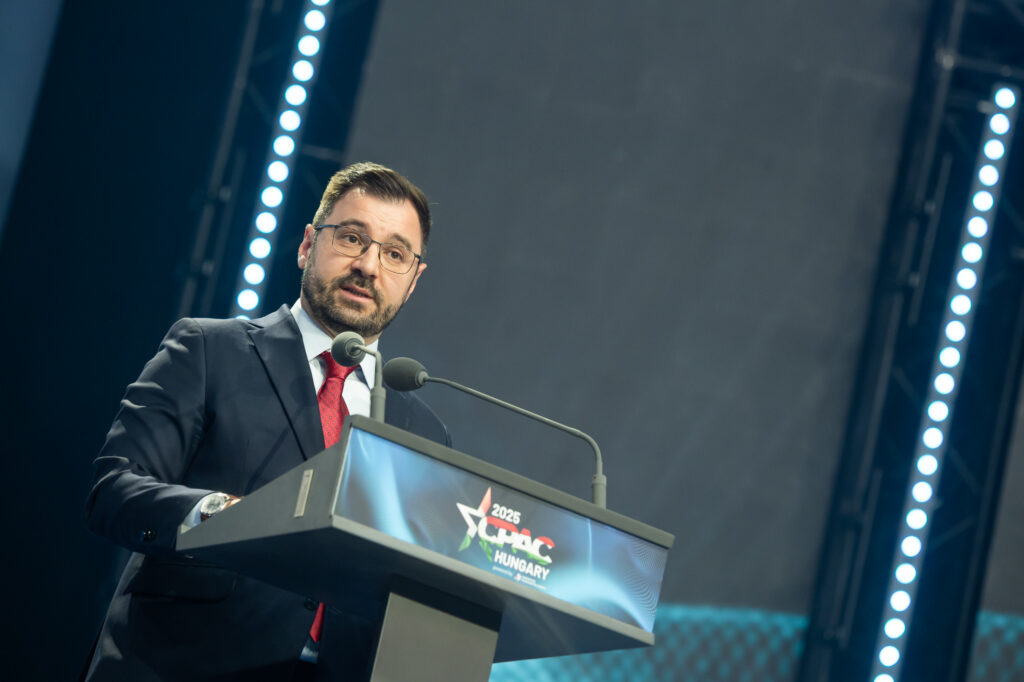
Miklós Szánthó, Director General of the Center for Fundamental Rights and event host, set the tone: “God, homeland, and family are the fundamental values. We do not need imported wars or dissolving ideologies.” He underlined the need to recover sovereignty and genuine democracy in the face of a “deep state” that imposes rules without popular legitimacy. CPAC presented that vision: a union of free and strong nations, not a bureaucratic superstructure governed by elites detached from the ordinary citizen.
Donald J. Trump’s return to the U.S. presidency further amplified the event’s symbolism. The “conservative revolution” that triumphed in North America now finds an emerging counterpart in Europe. It is an informal but ideologically consistent alliance: a defense of sovereignty, deep skepticism of financial and cultural globalism, and reaffirming traditional values as a source of long-term stability.
CPAC Hungary served as a meeting point for leaders and movements who share this diagnosis despite coming from different national realities—from German MEPs to American congressmen, from Israeli lawmakers to Latin American senators. All agreed on a fundamental point: the world is undergoing a tectonic shift, and the structures born of the post–Cold War era no longer meet the demands of the present.
Underlying all the speeches was a shared adversary: the European Commission. The concern is no longer limited to economic or regulatory issues. It is the perception that Brussels has embraced an ideology of social engineering—mandatory progressivism, mass immigration, gender indoctrination—aimed at shaping a new Europe without nations, traditions, and God.
In this context, Hungary has emerged as a form of institutional resistance. Unlike other countries that have yielded to external pressure, Budapest has legislated to protect its culture, secure its borders, and restrict the influence of foreign interests in national politics. What the Commission sees as an anomaly, CPAC attendees see as a model to emulate.
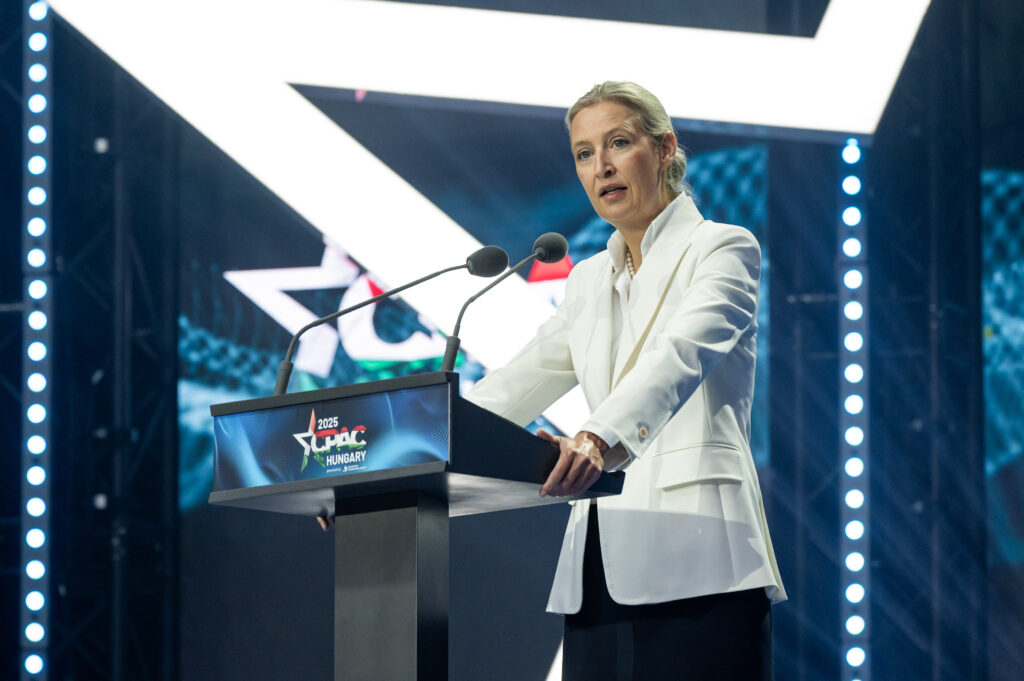
Hungarian Prime Minister Viktor Orbán, flanked by patriotic leaders like Robert Fico (Slovakia), Geert Wilders (Netherlands), Alice Weidel (Germany), and Georgia’s young Prime Minister Irakli Kobakhidze, outlined a pan-European alliance that transcends ideological labels. Fico summarized it bluntly: “This isn’t about left or right. It’s about defending our nations from an authoritarian Brussels.”
Beyond the speeches, what happened in Budapest was a collective affirmation—a community of leaders who, despite their differences, share a common conviction: the future of Europe depends on restoring power to the people, not handing it over to impersonal structures hostile to the roots of Western civilization.
This year’s CPAC celebrated a moment of political expansion for the patriotic movement and laid out a roadmap for dismantling the globalist power networks, and recovering political, economic, and cultural control over the nation-states.
CPAC Hungary was more than just a conference. It validated a rising trend and demonstrated that this is not about nostalgia—it is about the future. It showed that Europe can be rebuilt from the ground up with order, faith, and common sense.