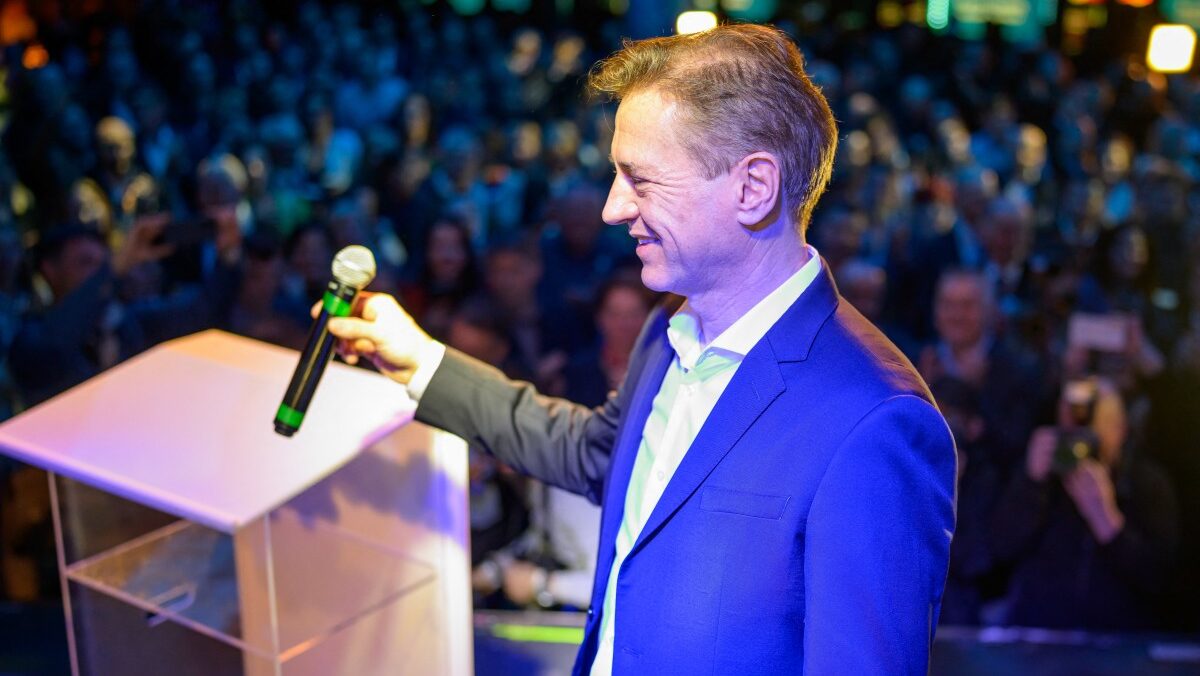
Slovenian PM Robert Golob addresses Freedom Movement supporters after election results in Ljubljana on March 22, 2026.
Jure Makovec / AFP
Slovenia’s newly elected parliament will convene in less than two weeks, but the result remains under a cloud as allegations of irregularities continue to be disputed.
Officially, the Freedom Movement of outgoing prime minister Robert Golob won the most votes, taking 29 seats in the 90-seat parliament. But conservative former prime minister Janez Janša, whose Slovenian Democratic Party finished just one seat behind, insists the result is tainted by signs of foul play.
Election Fraud in Slovenia Is the First Step Toward Establishing a Dictatorship ━ The European Conservative https://t.co/Z0r8pTcruA
— Janez Janša (@JJansaSDS) March 29, 2026
Critics have pointed to a number of alleged irregularities, including statistically impossible data fluctuations, voting invitations issued to thousands of deceased individuals, and physical removal of ballot boxes during voting hours.
Janša has therefore called for coalition talks to be put on hold until the allegations are resolved.
But President Nataša Pirc Musar, elected in 2022 with backing from the left, has dismissed “any doubts whatsoever” about the legitimacy of the vote, and urged instead “honest discussions” and alignment on the country’s key priorities.
Hvala predsednicama in predsednikom novoizvoljenih parlamentarnih strank za udeležbo na današnjih neformalnih pogovorih.
— Nataša Pirc Musar (@nmusar) March 30, 2026
Konsitutivna seja @Drzavnizbor bo v petek, 10. aprila 2026. Političnim strankam pri pogajanjih o oblikovanju koalicije želim dober, poglobljen razmislek ter… pic.twitter.com/e5ZUavb0mo
Reports say Musar is also keen for the formation of the next government to take place swiftly due to current global uncertainties.
Golob launched coalition talks last week, saying: “Through collaboration on concrete measures that will benefit people and economy we can build trust between those that have been on opposite banks in the past.”
Once parliament has opened, the president must propose a prime minister-designate within 30 days.