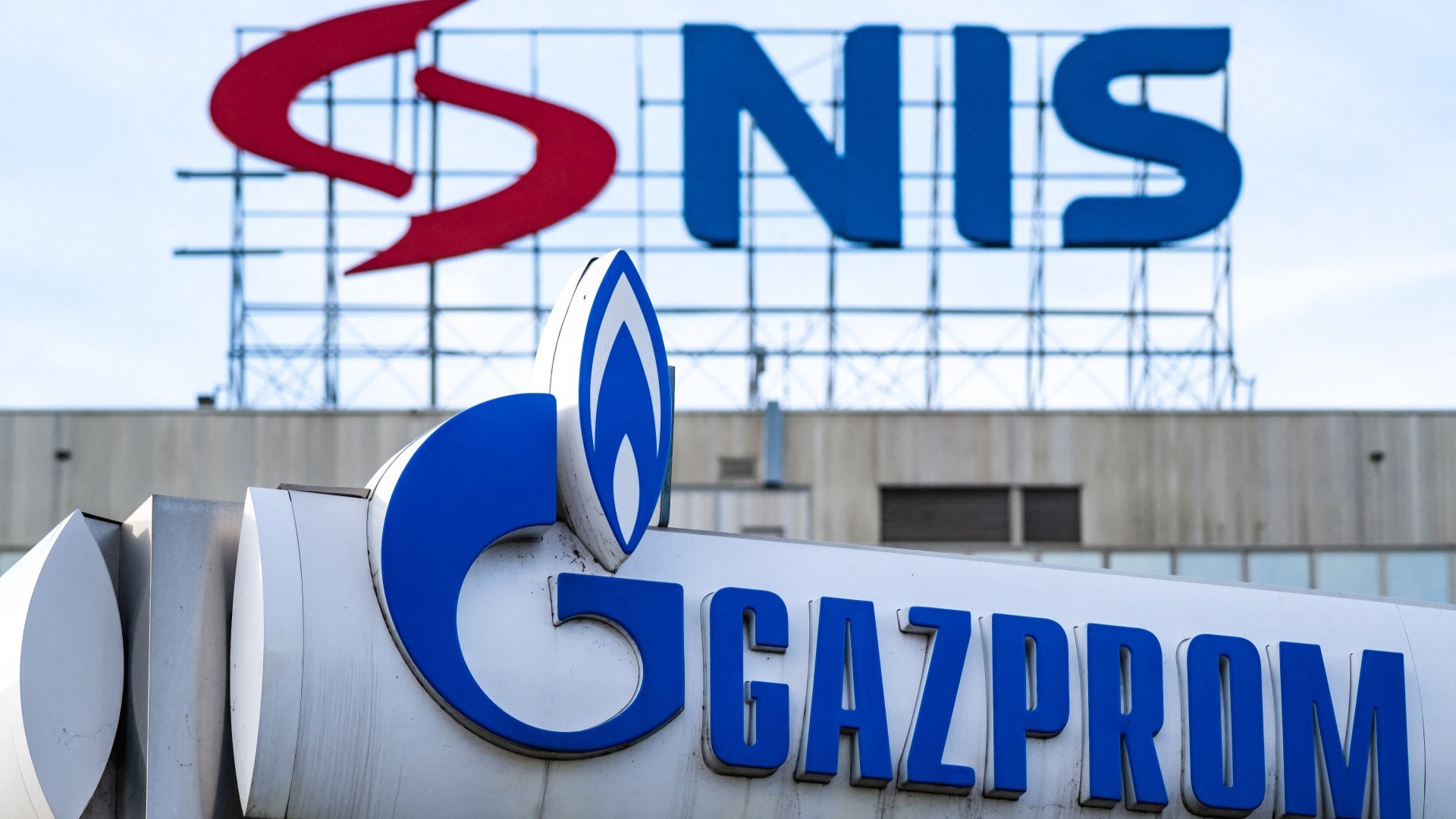
The logo of Serbian oil refinery company Naftna Industrija Srbije (NIS) displayed on the facade of the company’s headquarters above the logo of a Gazprom gas station in Belgrade on November 25, 2025
ANDREJ ISAKOVIC / AFP
The European Union has spent years presenting its energy sanctions against Russia as proof of political resolve. But the figures for March 2026 once again dismantle that narrative: the EU remained the largest buyer of Russian gas, both LNG and pipeline gas, paying Moscow €1.45 billion in a single month.
This is not an isolated anomaly. Nor is it an exception caused solely by the crisis in the Middle East. It is an ongoing reality. Europe says it wants to detach itself from the Kremlin, yet it continues to finance it through one essential channel: energy.
Spain was the largest European importer of Russian liquefied natural gas in March, purchasing €355 million worth, a 124% increase compared with the previous month. All of its regasification terminals increased imports of Russian LNG, and Sagunto even received its first cargo from Russia since August 2024. France imported another €287 million and Belgium €219 million. At the same time, Hungary and Bulgaria continued to receive Russian gas through pipelines.
The explanation is less moral than material. Russian oil transported by sea was sanctioned, and coal as well, but gas has never been subject to a real EU-wide ban. Too many governments know that suddenly giving it up would carry an industrial, fiscal, and social cost that would be difficult to bear. In other words, under current circumstances, it would amount to economic suicide.
What changed after 2022 was not the substance, but the form. Part of the Russian gas stopped arriving through pipelines and began arriving by ship. The fuel is the same; only the route and the political packaging have changed. Spain, France, and Belgium are central to that system because of their ports and regasification capacity. Part of that gas is consumed domestically; another part is redistributed across the continent.
March’s figures also show that the dependence is not decreasing. 65% of all Russian LNG cargoes that reached their destination that month were unloaded in EU ports. At the same time, European imports of Russian LNG increased by 10% compared with February.
And imports are not limited to gas. Indirect routes also remain open for refined products made from Russian crude to enter Europe. In March, fourteen shipments of fuels from refineries in Turkey, India, and Georgia that process Russian oil were unloaded in EU ports. France was the main recipient. Belgium, Italy, the Netherlands, and Bulgaria also received deliveries.
In other words, Russia sells energy, third countries reprocess or relabel it, and Europe buys it back. On paper, the commercial origin changes. In practice, the dependence remains. But in the process, the price increases. Logic? None. Pure ideology imposed by Brussels.
That is the great flaw in the European sanctions policy. The Commission wants to maintain pressure on Moscow without assuming the real cost of a complete energy break. The result is a partial sanctions system, full of exceptions and politically convenient for everyone—until the data appears.
Four years after the start of the war, the EU is still buying Russian gas, and Russia is still getting paid. Everything else is rhetoric that fewer and fewer ordinary citizens pay attention to.