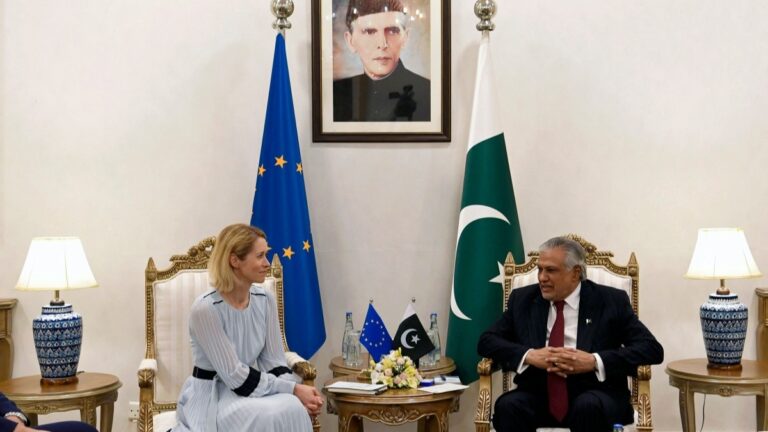
The European Commission has confirmed for the first time that it is working together with the Swedish government on the organisation of technical meetings in Brussels with representatives of Afghanistan’s Taliban authorities to discuss possible returns and deportations of Afghan citizens from European territory.
The confirmation ends weeks of institutional silence surrounding contacts that Brussels had earlier only acknowledged as “technical.”
The language used to describe the talks remains identical. According to a Commission spokesperson, the Directorate-General for Migration and Home Affairs (DG HOME) is coordinating a “potential technical follow-up meeting” with Afghan authorities in the European capital.
Formally, the Commission insists there is no diplomatic recognition of the Taliban regime, so the meetings would be held without political representation and outside institutional buildings to avoid uncomfortable optics.
Even so, the European Union once again finds itself negotiating with actors it had spent years presenting as incompatible with European values. And it is doing so after having contributed for years to a foreign and migration policy marked by strategic improvisation.
EU sources acknowledge that Brussels is studying economic and cooperation mechanisms to facilitate the Taliban government’s acceptance of the returns. In practice, the logic is simple: financial incentives in exchange for migration cooperation. The arrangement is reminiscent of previous agreements with Turkey, Tunisia, or Egypt, where the EU progressively outsourced border control to third countries.
Alongside the migration objective, growing concern over expanding Chinese influence in Afghanistan and Central Asia cannot be ignored. Beijing has strengthened political contacts and projects linked to strategic minerals, infrastructure, and regional corridors since the Western withdrawal in 2021. Brussels does not want to disappear completely from the Afghan chessboard while China consolidates its economic presence in the region.
The move inevitably echoes what happened with Syria. For years, numerous European governments denounced the current Syrian leadership as illegitimate and linked to Islamist terrorism. However, after the regional balance shifted and the Western strategy in the Middle East collapsed, several European capitals began normalising political and economic contacts with Damascus. Brussels ultimately adapted to the reality it once claimed to oppose. Once again.
The contradiction is now reappearing in Afghanistan. The same European Union that maintains sanctions, human rights rhetoric, and diplomatic restrictions versus the Taliban regime is now considering opening direct channels with the same regime. All while trying to manage a migration problem stemming, in part, from the West’s own failure in Afghanistan after two decades of military intervention.
The Commission is now attempting to build a politically hybrid formula: cooperate without recognising, negotiate without formalising, and finance without assuming the full symbolic cost. The result is a diplomatic architecture becoming increasingly difficult to sustain publicly.