JOE RAEDLE / GETTY IMAGES NORTH AMERICA / Getty Images via AFP
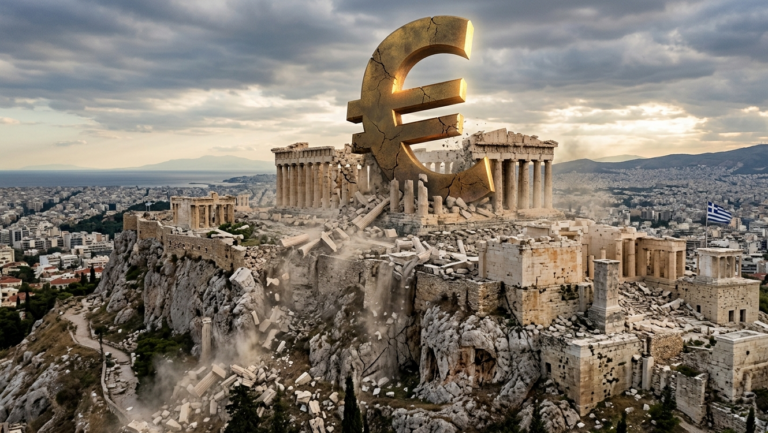
Europe has turned climate policy into its new political religion. In the name of carbon neutrality, the European Union has built a web of rules, penalties, and carbon-credit markets that supposedly promote green innovation but are, in reality, strangling its industry while empowering its strategic competitors.
The EU’s CO2 quota system in the automotive sector is the clearest example of this self-inflicted harm—a policy sold as environmentally virtuous that has instead become a mechanism for transferring wealth, technology, and jobs to the United States and China.
Since 2020, EU regulations have required that the average emissions of new cars cannot exceed 95 grams of CO2 per kilometer, with reductions of 15% by 2025 and 55% by 2030 compared to 2021 levels. Every gram that exceeds the limit costs manufacturers €95 per vehicle, a potentially devastating penalty for traditional automakers. To avoid these fines, Brussels allows a carbon credit trading system: those who emit less can sell their “surplus” to those who emit more. On paper, it is a version of “cap and trade”; in practice, it has become a speculative market detached from any real environmental innovation.
The original intent was to reward carmakers investing in clean technologies and penalize those resisting the shift. Yet major companies that still rely on combustion engines have preferred to buy time rather than transform. Instead of encouraging progress, the fines have created a new form of financial dependence.
The most striking case is Tesla, whose fully electric production allows it to accumulate vast surpluses of carbon credits. Between 2019 and 2021, Fiat Chrysler—now Stellantis—paid Tesla hundreds of millions of euros to avoid penalties. Volkswagen did the same. In 2021, nearly 20% of Tesla’s total revenue came from selling CO2 credits, much of it to European manufacturers. The result is unsustainable: a policy designed to strengthen Europe’s green competitiveness has ended up financing the expansion of an American rival. Europe pays the fines; Tesla builds new factories.
As the 2025 deadline approaches, pressure on the industry is mounting. Reuters has reported that Stellantis, Toyota, Ford, Mazda, and Subaru plan to form new “pools” with Tesla to escape penalties. Pooling allows carmakers to combine their emissions averages so that cleaner brands offset dirtier ones. The European Automobile Manufacturers’ Association (ACEA) estimates that without such pooling deals, fines could reach €15 billion in just two years. Manufacturers no longer innovate—they calculate, buy, and survive—while foreign rivals, especially in Asia and North America, reap the benefits of Europe’s self-imposed financial transfers.
Brussels congratulates itself on the results. According to the European Environment Agency (EEA), the average emissions of new cars fell 28% between 2019 and 2023. But these figures conceal the truth: actual road transport emissions remain around 760 million tonnes of CO2 per year, about 21% of the EU total. The system only measures new vehicles and relies on laboratory tests that do not reflect real driving conditions. The statistical decline is a mirage. Europe is reducing numbers, not pollution.
The quota system now looks more like a financial market than an environmental policy. Companies that meet their targets do not necessarily innovate; they simply profit from a legal setup that turns compliance into a tradable commodity. Those that fail to comply do not change either—they just buy credits and keep emitting. The scheme shifts emissions on paper, not in reality.
At a deeper level, Brussels’ policies are not only distorting competition but also weakening Europe’s industrial base to the benefit of its global rivals. Even the European Automobile Manufacturers’ Association (ACEA) admits that the 2025 target is a “make-or-break” moment for the sector. The dream of “clean mobility” risks becoming a graveyard of factories.
The geopolitical context only makes matters worse. Electric vehicles—the very technology the EU is promoting through regulation—rely on critical raw materials such as lithium, cobalt, nickel, and graphite. Almost all are imported, refined, or controlled by China. According to the Mercator Institute for China Studies (MERICS), 98% of the permanent magnets used in European electric cars, wind turbines, and defense systems come directly or indirectly from China. The same minerals driving Europe’s green transition also power Beijing’s military machine. In other words, the EU’s clean-energy ambitions deepen its dependence on its main strategic rival. Europe not only depends on China to move its electric cars; it depends on it to build its missiles.
The Hague Centre for Strategic Studies (HCSS) highlights the same vulnerability from another perspective: Europe’s industrial strategy is advancing “too slowly and without coordination.” The Critical Raw Materials Act (CRMA), approved in 2024, offers rules but little money to back them up. Projects for mining, processing, and recycling remain “modest compared to the scale of the challenge.” France and Germany are the only countries providing direct funding for lithium and rare-earth initiatives; the rest depend on loans, promises, and bureaucracy.
According to the HCSS, high energy costs, fragmented rules, and a lack of financial incentives are “depressing demand for critical raw materials” and eroding Europe’s competitiveness. In other words, Brussels preaches strategic autonomy while making itself weaker. The European Commission, now alarmed by the consequences, proposes yet another centralised purchasing agency—another layer of bureaucracy at a moment of crisis. It is a technocratic reflex to a problem of its own making. It creates scarcity to justify more control.
The contrast with other powers is striking. The United States has paired climate goals with a strong industrial revival: the Inflation Reduction Act provides subsidies and price guarantees for companies investing in domestic mining and battery production. China, meanwhile, controls the entire supply chain—extraction, refining, and manufacturing. Europe, by contrast, focuses on regulation, sanctions, and symbolic deals. The result is a continent that measures its virtue in grams of CO2 while buying both the technology and the minerals from nations that ignore its standards.
Even Brussels’ latest strategic moves reveal this dependency. The recent decision by Ursula von der Leyen to double EU funding for Greenland is not just about education or the “green transition.” Behind the rhetoric lies a geopolitical race for Arctic rare earths, essential for batteries, semiconductors, and defense systems. The EU seeks access to these resources to compete with the U.S. and China—yet once again, it cloaks its ambitions in the language of environmentalism.
Quajanac, dear Prime Minister Nielsen.
— Ursula von der Leyen (@vonderleyen) October 2, 2025
Europe and Greenland will always be each other’s trusted and reliable partners.
We want to deepen our cooperation. That’s why we aim to double our financial support to Greenland.
So we can deliver clean energy and create the technologies… pic.twitter.com/oufGyKLHVu
All of this proves that the EU’s CO2 quota system is not an instrument of ecological change but a symptom of a policy trapped in its own idealism. Europe claims to be saving the planet with accounting tricks and punitive rules that punish production and reward dependency. Official statistics allow Brussels to proclaim itself a moral leader, but the economic reality tells another story: fewer factories, less investment, more debt, and a growing subordination to foreign powers.
Europe’s green dream has become a green mirage—a project that weakens the continent it was meant to renew. In chasing purity, it has sacrificed power. The EU is measuring purity instead of strength, counting carbon while losing industry. And a continent that no longer produces cannot lead, no matter how clean its conscience appears.