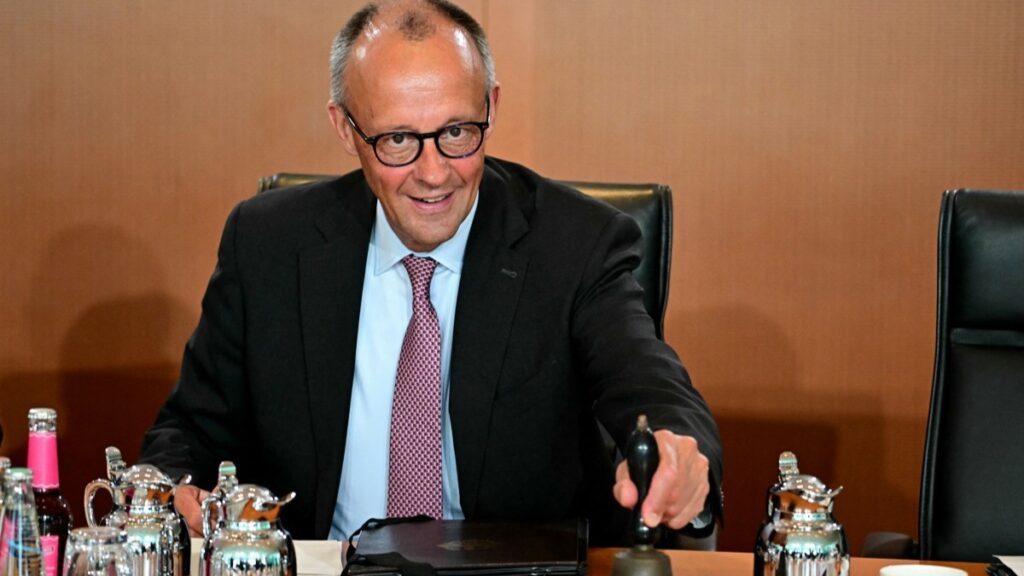
German Chancellor Friedrich Merz signals the start of the weekly meeting of the German cabinet at the Chancellery in Berlin on July 2, 2025.
Tobias Schwarz / AFP
Political failure in a welfare state translates almost immediately into rising social expenditures. Their disproportionate increase shows one thing clearly: Germany is heading for troubled times.
“Budgetary policy is the sovereign right of parliament”—so goes the well-worn phrase when lawmakers gather for their annual budget debate. If that phrase ever held truth, then today the sovereign stands exposed: the king has no clothes.
The budget for 2025, adopted by Germany’s federal cabinet on June 24th, amounts to a fiscal policy capitulation. It foresees €81.8 billion in new net borrowing for the core budget—while an additional €60 billion is parked off the books in a so-called “special fund,” also debt-financed. The total federal budget climbs to approximately €503 billion, an increase of 6.1% over the previous year. For 2026, Finance Minister Lars Klingbeil is already planning a further expansion to €519.5 billion.
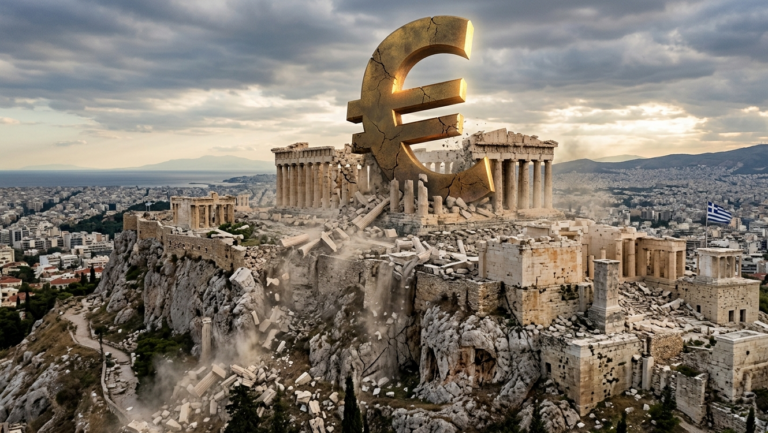
The real net borrowing, once this off-book spending is accounted for, reaches 3.2% of GDP—exceeding the long-abandoned Maastricht threshold of 3%. When even the eurozone’s former poster child no longer adheres to the rules, one thing becomes obvious: they were never worth the paper they were printed on. And the only natural brake on such excess—a free capital market—has long been neutralized by the European Central Bank’s perpetual interventions.
The path is now clear. Or rather: the floodgates are open. Debt-financed stimulus is once again the weapon of choice against recession.
As for Germany’s much-lauded “debt brake”—a constitutional clause requiring balanced budgets—it was always political poetry, never policy. A legal fiction on the verge of collapse, threatening constitutional confidence because no one in Berlin even pretends to honor it anymore.
If budget policy is about priorities, this one speaks volumes. It serves the dubious function of further expanding Germany’s welfare architecture. In 2025, social spending will rise by 6% to a staggering €210 billion. That growth does not merely signal the coalition’s political preferences—it exposes the structural failure of German governance.
Especially noteworthy is the increase in Bürgergeld (citizens’ benefit), which rises by €900 million to a total of €16.2 billion this year. Meanwhile, providing for migrants living in Germany without legal status costs states and municipalities over €10 billion annually. The welfare state has become an unrestrained transfer machine. It no longer acts as a safety net, but rather as an immigration magnet—exerting mounting pressure on German society from within.
Alongside the welfare sector and the ever-growing bureaucracy, Germany’s arms industry can also expect substantial fiscal generosity. The defense budget will rise by 3.5% next year—a first step toward NATO’s new 5%-of-GDP spending goal for defense and security. By 2029, Germany plans to allocate €152.8 billion to defense. Of that, 3.5% will go to traditional armaments, with the rest earmarked for cybersecurity, logistics, and military infrastructure. Naturally, these extra billions will be tucked away in the “special fund”—because Germany now keeps its books like the disreputable cousin of an honorable merchant. The truth is hidden; creditworthiness is merely simulated.
With the establishment of these special funds, Berlin has opened Pandora’s box. Over the next twelve years, it plans to bury €500 billion in spending for infrastructure, digitalization, and the failed green transition within them. This systematic obfuscation of costs—and their inflationary consequences—will increase public debt by at least 12%. It’s as if a child had been handed the key to the candy cabinet. The result is the end of any pretense of fiscal discipline.
German budget policy has become a farce. What we’re witnessing are expertly staged accounting tricks, media distractions, and the desperate attempt to defer structural reform of the welfare state—whatever the cost.
The worn-out German economy will not breathe new life into an equally exhausted state through some unexpected economic miracle. If current trends continue—and all signs suggest they will—German public debt will surpass the 100%-of-GDP mark within the next decade.
At that point, there will be no way back from the fiscal trap. It’s only a matter of time before the portion of the bond market not artificially suppressed by the European Central Bank begins to price in Berlin’s fiscal camouflage. The unholy alliance of expansionary fiscal policy and monetary manipulation will keep interest rates under control through bond purchases, but redirect the monetary damage elsewhere.
In the end, this unsound budget policy translates into one thing: inflation. The erosion of purchasing power is knowingly accepted by the political class. It is, in fact, a feature—not a bug—of the redistribution mechanism.