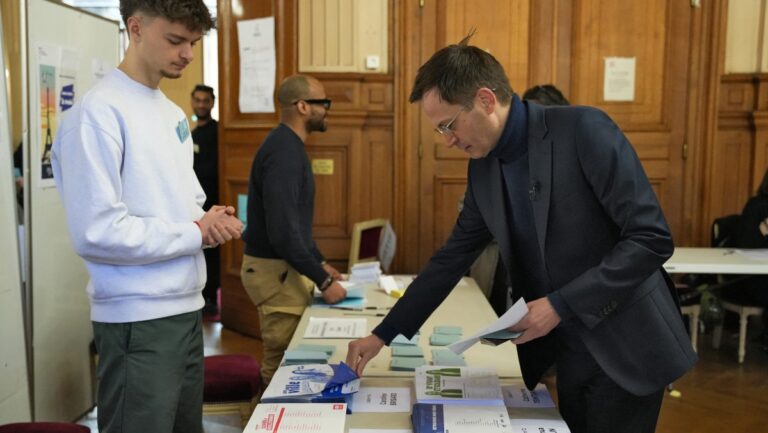
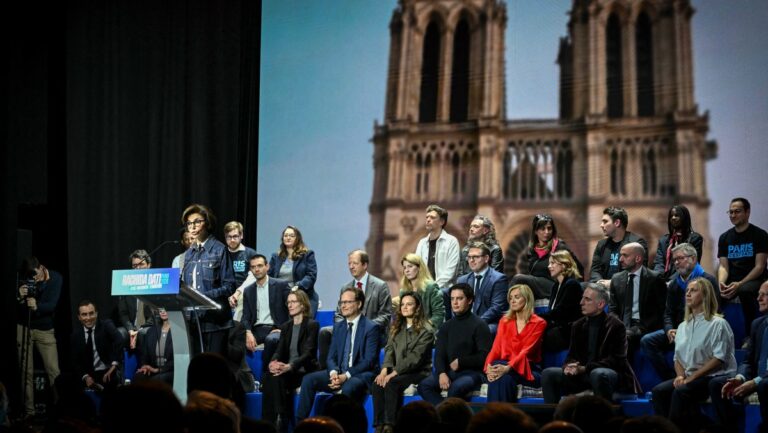
Poland’s Prime Minister Donald Tusk attending Rafał Trzaskowski’s election night event at the National Museum of Ethnography in Warsaw, Poland, during the second round of the presidential elections on June 1, 2025.
Sergei Gapon / AFP
By all appearances, the result was clear. On the morning of June 2nd, 2025, the Polish electorate was informed that Karol Nawrocki, a conservative historian endorsed by the opposition Law and Justice Party (PiS), had prevailed in the second round of the presidential election. His tally: 10,606,877 votes—approximately 370,000 more than his opponent, Rafał Trzaskowski of the ruling Civic Coalition (KO).
The announcement was made in due form by the National Electoral Commission (PKW). Every member had signed the report and the resolution validating Nawrocki’s victory. Yet within hours, the machinery of doubt began to whir into action.
It was not the official apparatus of state that cast the first stone, but a familiar consigliere. Roman Giertych—flamboyant barrister, political gadfly, and recently elected KO MP—issued a public call for citizens to report suspected irregularities in the vote. He pledged to consider legal action, specifically filing protests before the Supreme Court.
Ironically, the chamber tasked with ruling on these challenges—the Extraordinary Control and Public Affairs Chamber of the Supreme Court—is the very institution that Civic Coalition and its allies have spent years decrying as an illegitimate relic of PiS-era judicial reforms.
Giertych was not alone. Wioletta Paprocka, campaign director for Trzaskowski, launched a similar appeal, urging supporters to report any alleged irregularities via a newly created online portal. The implication: something had gone awry, and it was time to resist.
But resist what, exactly?
The theories peddled in KO-adjacent media and social platforms were numerous—and uniformly flimsy.
One precinct’s tally sheet in Kraków did, indeed, record Trzaskowski’s votes under Nawrocki’s name and vice versa. The error, flagged by the commissioners themselves, was promptly reported. The PKW acknowledged it as a clerical mistake—unfortunate but inconsequential. Not a single commission member had been appointed by Nawrocki’s camp; most were put forward by leftist or centrist candidates. The supposed scandal collapsed under the weight of its own irrelevance.
Some alleged that PKW’s digital reporting system had been manipulated or had miscalculated results en masse. No evidence was offered. No expert analysis supported the claim. It was the electoral equivalent of muttering that one’s toaster is possessed.
Giertych’s entourage suggested that the vote distribution displayed suspicious regularities—too neat, too patterned. Mathematicians swiftly dismissed these claims as classic apophenia: the human tendency to find meaningful patterns in randomness. Much like seeing faces in clouds, these visions evaporated under scrutiny.
A few claimed that abroad—in places such as Chicago or London—more ballots had been cast than there were registered voters. This was not true, and the PKW’s data confirmed as much.
Most laughable, perhaps, was the notion that the vote-counting followed a ‘mathematical grid,’ a sort of pre-programmed sequence revealed through the patterns of results. One could almost hear the tinfoil crinkling.
The tactics used to spread these falsehoods were neither novel nor subtle. The phrase “more and more doubts are emerging”—repeated ad nauseam—gave the impression of mounting concern. In truth, it was a self-referential echo chamber. The doubts were not discovered; they were manufactured. Figures such as Małgorzata Gersdorf, Andrzej Zoll, and Marek Safjan—all of them former legal heavyweights now out of step with the political centre of gravity—were summoned to lend legitimacy. Their reputations, once stellar, had been eroded by years of partisan positioning. No new legal argument was advanced; only a solemn nod from the ancien régime.
With theories failing to convince, attention turned to procedural sabotage. Over 50,000 identical or near-identical protests were submitted. The hope was that volume would substitute for merit. It did not. The Court is bound to rule by July 2nd. No credible observer expects it to invalidate the election.
Some KO figures called on Supreme Court judges to withhold the required resolution confirming the election’s validity. This would amount to judicial mutiny. No judge has signalled an intent to comply.
It was proposed that opposition MPs boycott or derail the joint session of parliament required for the presidential swearing-in. However, a quorum suffices. A symbolic gesture at best.
A call emerged to refuse recognition of the new President—to boycott ceremonies, decline invitations, and appeal to foreign governments. This tactic mirrored left-wing reactions to Andrzej Duda’s 2020 victory—and, indeed, Democratic hand-wringing after Donald Trump’s 2016 win.
Some suggested inviting the OSCE or EU institutions to “supervise” a re-run of the election. Apart from the constitutional absurdity of such a proposal, it was geopolitically naïve. Poland is not Georgia.
Throughout the affair, Donald Tusk’s conduct was notable for its ambiguity. He neither endorsed Giertych’s conspiracy theories nor condemned them. Instead, he retreated to platitudes: “Every vote must be counted fairly.” When pressed, he demurred. No congratulations to Nawrocki. No words to reassure the public. The statesman was missing in action. According to conservative media outlets—wPolityce, Do Rzeczy, and Niezależna, among them—this was no accident. Tusk had, they contend, deliberately allowed Giertych to act as his ‘dirty tricks man,’ launching rhetorical grenades while he remained above the fray. In classic Machiavellian fashion, the principal kept his hands clean while letting his subordinate play the provocateur.
Why would Tusk risk such a gambit? Several strategic motives suggest themselves. First, delegitimisation of defeat. A refusal to accept the result avoided demoralising KO’s base and kept the option of a counteroffensive alive.
Second, international messaging. Casting doubt on the election’s integrity served to remind Brussels of its supposed obligation to “protect Polish democracy”—a thinly veiled plea for leverage.
And third, internal party management. By allowing Giertych to carry the narrative, Tusk pacified the hardliners in his party without committing himself.
Yet the gamble has plainly backfired. The Supreme Court is expected to confirm the result. The Sejm and Senate will convene. President-elect Nawrocki will take the oath.
As June gave way to July, the crisis began to consume its authors. A growing number of centrist commentators—even within KO’s orbit—began to express unease.
Even the Batory Foundation—long sustained by George Soros’s largesse—has conceded the obvious: there was no election fraud. In a report commissioned from Warsaw University scholars, the verdict is unequivocal: “the deviations are not significant enough to affect the final outcome.” Alleged anomalies were methodologically flawed, and no partisan bias was found in commission composition. The myth of a stolen election collapses under scrutiny.
Instead, it corrodes public trust and fractures the coalition’s standing.
According to the most recent poll conducted on June 23–24, 2025, support for Tusk’s Civic Coalition (KO) has plummeted by 7.6 percentage points, now standing at 25.8%.
Meanwhile, Law and Justice (PiS) has reclaimed the lead with 30.5% support.