There is a great irony in the controversy that President Trump has stirred up around Greenland. Being a Danish territory, the big, frozen island has become a catalyst for a macropolitical version of the old Danish story about the naked emperor. Where in the book by H.C. Andersen, a little boy points to the emperor and spells out that he has no clothes on, President Trump has stepped onto the global political scene and called out Europe for what it is—not what it wants to portray itself as.
By spelling out his desire to put Greenland under U.S. governorship, Trump has pulled off another of his brilliant stunts in international politics. While European leaders turned out in droves to pledge defense of Greenland, sending military resources up there on the double, Trump accomplished two things that would have been much more difficult to accomplish without all this attention on Greenland.
First, he gave Europe’s listless political leadership an off-ramp from their mad dash into war with Russia. If you did a search of how often Ukraine was mentioned in the news cycle before Trump ramped up his Greenland rhetoric, and did the same search now, chances are that the war-torn country’s mentions are down by 80-90%.
Trump realized that NATO’s European members, for the most part, had invested themselves in the Ukrainian conflict to the point where they could not imagine a way out, even if they wanted one. By having them all rush to Greenland’s defense, he not only snapped them out of their anti-Russian war rhetoric, but he even got German Chancellor Merz to talk about re-establishing peaceful coexistence with Russia.
This is a paradigm shift in international politics of epic proportions, but it actually pales in comparison to Trump’s other ‘Greenland’ accomplishment. To understand this one, we need to go to Munich, Germany, where on February 14th, 2025, Vice President JD Vance gave a speech that left Europe in shock and disbelief. Here was this newly-sworn-in second-in-command American about whom nobody really knew anything, who stepped up to the podium at a conference where the usual suspects get together and exchange pleasantries.
Not Vice President Vance. He gave Europe’s political elite a lecture on free speech that they would not soon forget. Vance let the Europeans know that the new administration in Washington was very worried about how Europe’s governments were gradually encroaching on freedom of expression.
Europe responded with disbelief; up until that moment, the prevailing paradigm was that Europe looks down the nose at America—especially when there is a Republican in the White House—and America quietly ponies up the money and the resources to keep Europe looking militarily strong and industrially capable.
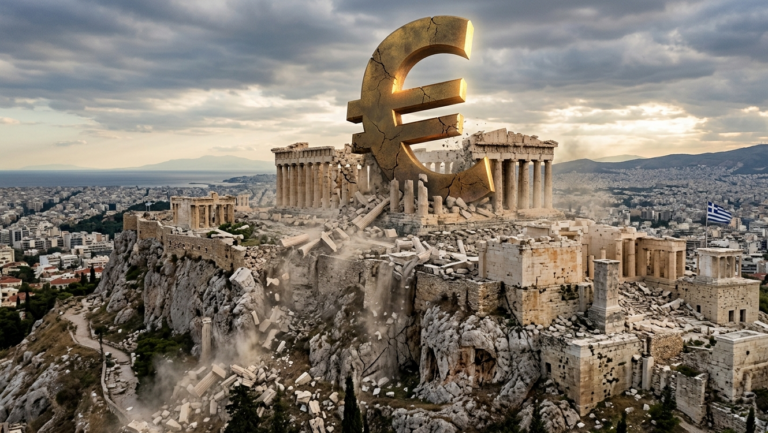
Trump broke with that paradigm. His assessment of Europe is as chilling as it is a ‘naked emperor’ experience. The U.S. government’s new National Security Strategy, NSS, published in November last year, refers openly to Europe’s long-term economic decline—a point I have also made on numerous occasions. This decline weakens the continent’s ability to maintain a military, and even threatens its status as a cohesive political entity.
However, the National Security Strategy explains (p. 25), the erosion of Europe’s economic strength
is eclipsed by the real and more stark prospect of civilizational erasure. The larger issues facing Europe include activities of the European Union and other transnational bodies that undermine political liberty and sovereignty, migration policies that are transforming the continent and creating strife, censorship of free speech and suppression of political opposition, cratering birthrates, and loss of national identities and self-confidence.
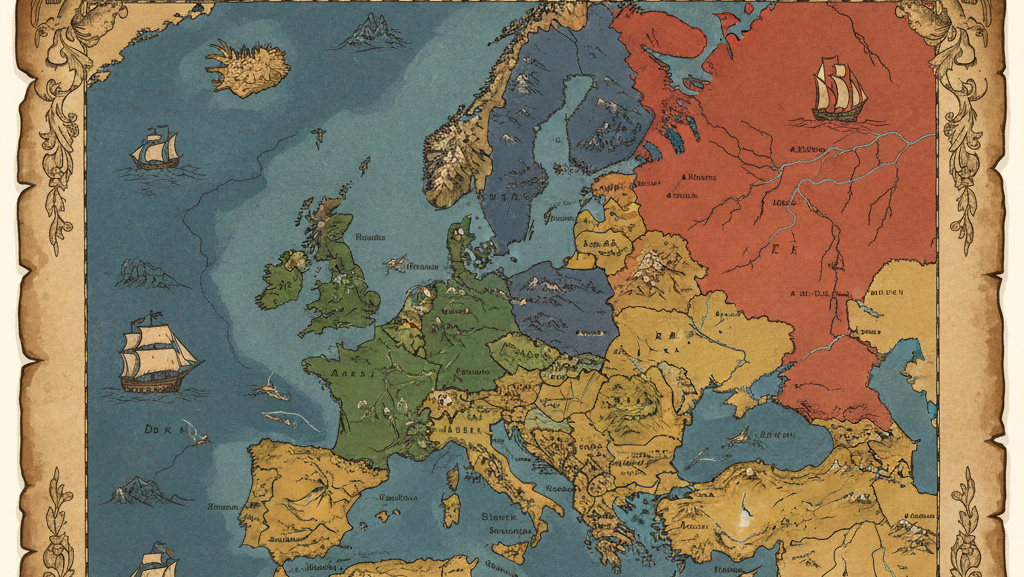
This is a heavy indictment of Europe as a civilizational project and most of all of the political class leading the way toward that “civilizational erasure.” It is important to note that this decline does not apply to all of the continent. In the east, nations from Estonia to Hungary have charted a different path into the future than Western Europe has. Lower immigration, higher birth rates, and stronger economies have put Eastern Europe ahead and given hope for the future.
Nevertheless, Trump’s NSS poignantly rewrites the script for Europe’s future. While the Eastern countries will continue to be European in the traditional sense, Western Europe, from Spain to Sweden, is plagued by demographic upheaval, economic decline, and fatal de-Christianization. Although the NSS does not take its criticism this far, it is strongly implied in its assessment (p. 25):
Should present trends continue, the continent will be unrecognizable in 20 years or less. As such, it is far from obvious whether certain European countries will have economies and militaries strong enough to remain reliable allies. Many of these nations are currently doubling down on their present path. We want Europe to remain European, to regain its civilizational self-confidence, and to abandon its failed focus on regulatory suffocation.
Looking at a Europe fragmented into two halves, the resilient east and the decaying west, Trump has decided that unless the leaders of western Europe change their ways, the greatest days of the continent are in the past. As those days become a distant echo in the history books, a new, grim reality emerges—one that Trump is not going to gamble with. Greenland may have a small population, but its geostrategic value is immense. Its military value is underscored by the presence of the United States Space Force base in the northwestern part of the island. Greenland is also well known for harboring major deposits of minerals.
In a scenario that Trump’s NSS does not spell out, but we can easily infer from it, western Europe’s demographic changes turn large swaths of the continent into a patchwork of Islamic nations. Those nations, in turn, shift European politics in a direction that is antithetical to friendly relations with the United States.
If this is Europe’s future—and we have painfully many reasons to believe it is—then its fallout in the global political arena will be immeasurable. With countries like Sweden, Germany, the Netherlands, Belgium, France, and Spain leading the Islamization, those countries will in all likelihood also adopt the anti-American views of radical Islam.
By exposing Europe’s political leadership as weak and listless, Trump has put the question of the continent’s future at the top of the news cycle. He has done formidable work to expose the need for a transformation of the U.S.-Europe relations; the question is if the political elite in Western Europe hears his message and is willing to do what is necessary to save their continent.