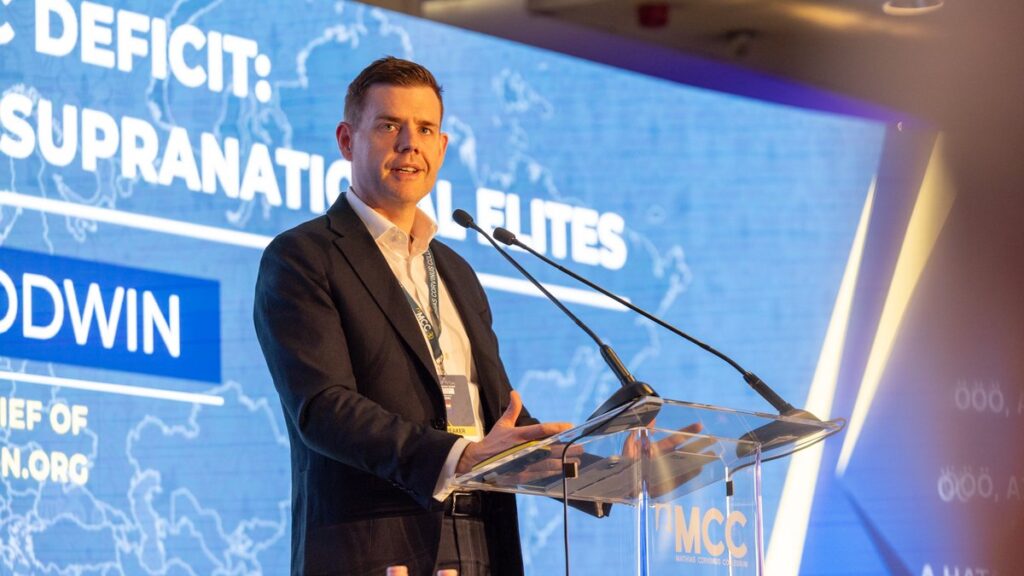
Paul Coleman
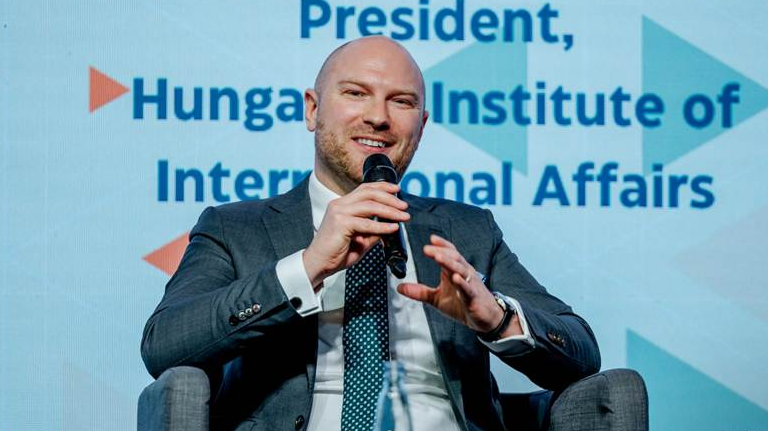
Courtesy of the Hungarian Institute of International Affairs
On the sidelines of the Budapest Global Dialogue 2026, Paule Coleman, executive director of the global advocacy group ADF International, which specializes in human rights, including freedom of thought and expression, talked to europeanconservative.com in an interview focused on the state of freedom of expression in Europe, the impact of the Digital Services Act (DSA), and the political and institutional direction of the European Union. The conversation revolved around growing concerns about European elites and whether they are responding to citizen disaffection with more control instead of greater self-criticism.
Coleman, a lawyer specializing in free speech and strategic litigation, argues that Europe is going through a decisive moment. In his view, increasing regulatory tightening in the digital sphere, combined with what he describes as a “structural democratic deficit” in the EU, is shaping a scenario in which the space for dissent is progressively shrinking.
From a legal and cultural perspective, he also warns of Europe’s disconnection from its historical and moral foundations.
The DSA, approved in 2022 and in force since February 2024, is a massive piece of legislation that went relatively unnoticed at the time. It was conceived in a very specific context: the pandemic, the Russian invasion of Ukraine, and a dominant narrative according to which social media was being ‘weaponized’ to spread disinformation.
No one denies that disinformation exists. The problem is that, in this case, the remedy may be worse than the disease. What has been built is a framework of narrative control under the umbrella of ‘content moderation.’ That means someone decides what is true and what is not, what can be seen and what cannot, what can be said and what cannot. And what is troubling is that this ‘someone’ is part of a complex network with little public oversight.
The DSA sounds technical and bureaucratic. But in reality, it is legislation whose practical effect is the control of the digital space.
If we go back ten years, the political earthquakes were Brexit and the election of Donald Trump. Neither was part of the political elites’ plans. Instead of asking why millions of citizens voted that way, the dominant explanation was that they had been misled or manipulated.
From that emerges a dangerous logic: “saving democracy” through censorship. In other words, limiting debate to avoid undesirable electoral outcomes. If this path continues—without listening and doubling down on control—history suggests it will not end well.
At the national level, citizens can still exert pressure through elections and peaceful mobilization. The problem is that even there, we see attempts to block or stigmatize certain political options.
At the EU level, the disconnect is greater. There is no clear relationship between citizens and the centers of power. The European Parliament does not initiate legislation; the European Commission proposes laws and is not directly elected by citizens. The Council operates with considerable opacity.
This so-called democratic deficit is becoming increasingly visible. People want to make their voices heard and find no effective channels.
When I speak with people who unreservedly defend the functioning of the European system, I usually ask three simple questions: Who is your Member of the European Parliament? Do you know how a law is adopted at the EU level? What can you do as a citizen if you disagree with a European policy?
I rarely receive clear answers. At the national level, at least, most people know which party they voted for and have some idea of how to express disagreement. At the European level, that connection is much weaker.
Ideas do not disappear overnight. The ideological framework that made it possible, for example, to claim that gender is entirely self-determined or that questioning certain migration policies is racist did not emerge spontaneously. It has been decades in the making.
There may be isolated setbacks or electoral reactions, but it is premature to speak of a definitive defeat of those currents. In the UK, the coming years will be decisive for civil liberties. We are at a turning point.
There is a growing sense that Europe has lost touch with the foundations that built it. For centuries, our laws, our public ethics, and our conception of human dignity were anchored in a coherent moral tradition.
When those foundations are diluted, concepts such as freedom, equality, or the rule of law risk becoming empty slogans that can be instrumentalized by those in power. Ayaan Hirsi Ali uses the image of a cut flower: it may look beautiful for a while, but once separated from its root, it inevitably withers.
Europe still appears strong in many respects, but the question is how long it can sustain itself disconnected from what shaped it.
The first is to protect the space for freedom of expression. Without that space, any other debate is impossible. In the United Kingdom, there is talk of dozens of daily arrests linked to social media posts. In Germany, we have seen home raids over online comments. The tightening is real.
The second is to honestly confront the question of our cultural and spiritual roots. If we want to preserve the fruits—freedom, equality before the law, justice—we must ask whether they can be sustained indefinitely detached from their historical foundation.
The third is to address the demographic issue. The debate about population replacement often focuses exclusively on immigration, but less is said about falling birth rates and record numbers of abortions in countries such as the United Kingdom. It is difficult to discuss demographic change without also considering those figures.