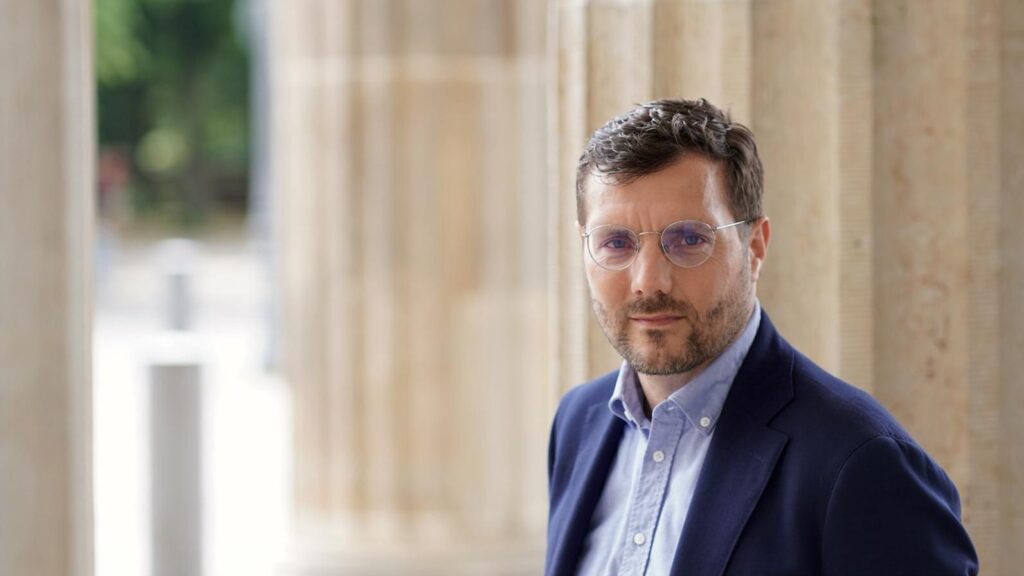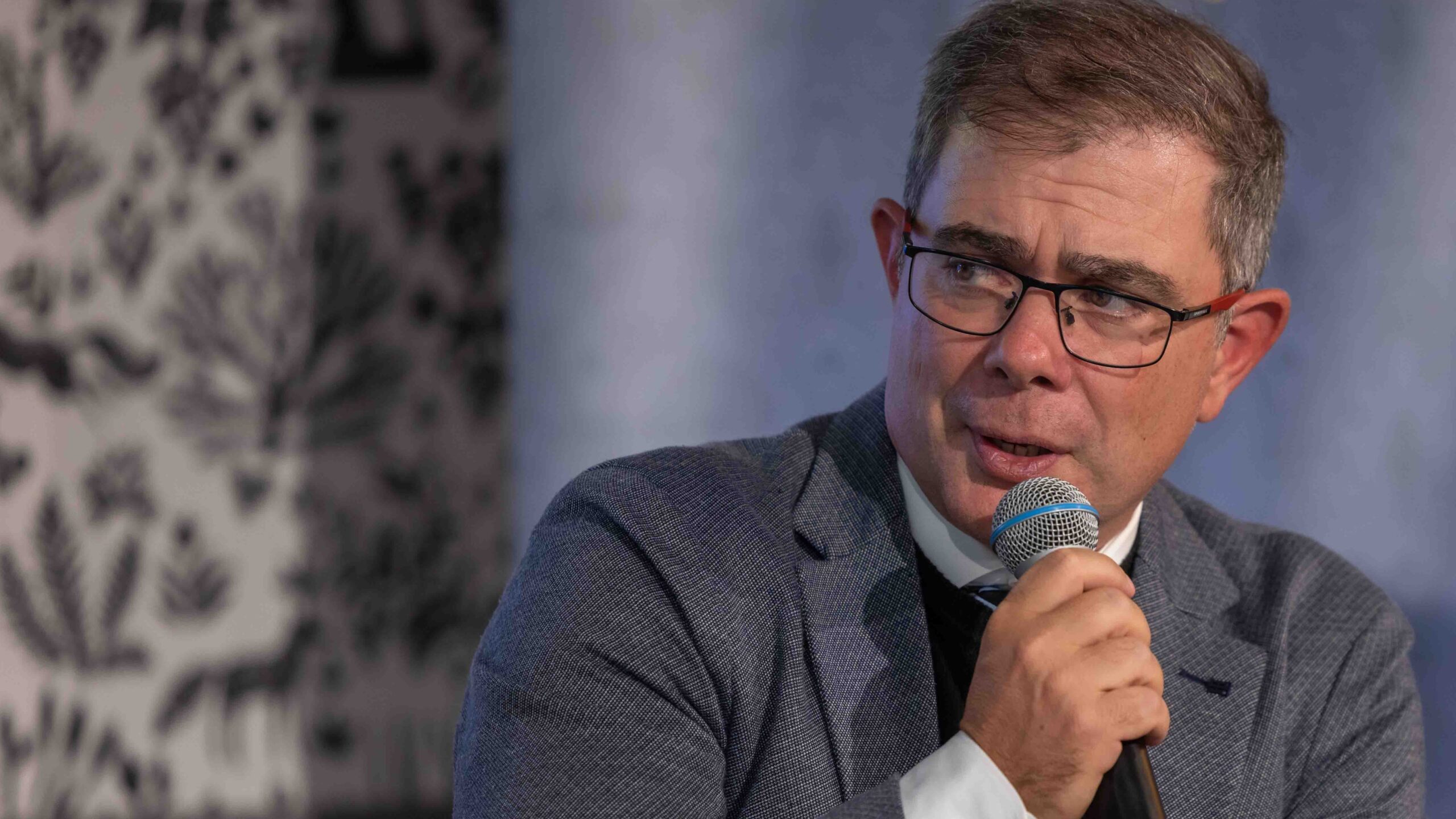
Xavier-Laurent Salvador in Budapest on September 23, 2025
MCC Budapest
Xavier-Laurent Salvador is a renowned French scholar, specializing in linguistics, digital literacies, medieval literature, and Biblical texts. He is the co-editor of the book Future of Academia: Against the Awakened Obscurantism and editor-in-chief of Observatory of Decolonialism. He was recently hosted by MCC Budapest for a presentation of the book that, as this publication also reported, was first suppressed but then, following a major backlash, released this spring. While in Hungary, he granted an interview to europeanconservative.com.
Yes, my academic field is medieval literature, and at first sight, it has nothing to do with politics. But in fact, it was precisely because of this distance that I could see clearly when ideological distortions entered the university. My research on Old French and the Bible showed me how important it is to preserve historical truth against anachronism and revisionism. When colleagues tried to cancel lectures on [the problems with] inclusive writing, and when I personally faced disciplinary procedures while simply teaching philology, I realized this was no longer scholarship, but an attempt to silence. That personal experience pushed me into the fight.
It was launched in 2021. Its purpose is to monitor, document, and analyze cases where ideology undermines academic freedom and the integrity of teaching and research. We provide evidence-based reports, we support colleagues under pressure, and we aim to show the public what is really happening inside universities—normally very closed institutions.
The two platforms are complementary. The Observatory of Decolonialism was founded earlier, in 2018, focusing on the ideological penetration of “decolonial” thinking in universities. The Observatory of University Ethics is broader: it covers not only decolonial issues, but also gender theory, cancel culture, misuse of funds, or pressures on academic staff. I serve as editor-in-chief for the Observatory of Decolonialism, and also co-founded the Observatory of University Ethics—so the two initiatives are linked, but with different scopes.
We have had a very strong impact in France. Our reports are widely covered in national newspapers such as Le Figaro, Le Point, Marianne, and sometimes even in Le Monde. We receive support from many colleagues who cannot speak openly. Of course, we also face hostility, but this is a sign that our work matters. The fact that our platforms are constantly cited in public debates shows that we have become unavoidable interlocutors on these issues.
Yes, the book was originally commissioned by Presses Universitaires de France, but after three years of work, they suddenly pulled out, under pressure following a lecture at the Collège de France where a boycott was called against us by Patrick Boucheron, the man who designed the “naked blue man Olympics show.” We took legal action, and finally PUF agreed to publish under that pressure. The irony is that the book then became a great success: more than 30,000 copies sold. This shows that while some elites tried to bury the debate, the public wanted exactly this book. The episode revealed both the strength of ideological censorship and the resilience of intellectual freedom.
I was impressed by the seriousness of the Mathias Corvinus Collegium. It is rare today to find institutions that are so openly committed to intellectual debate and academic freedom. In Hungary, I saw a strong interest in defending European civilization against ideological fashions. I do not pretend to know Hungarian academic life in depth, but I sensed a climate of curiosity and courage that is refreshing compared to the atmosphere of fear that often reigns in French universities.
I am continuing my research on medieval literature, especially the relationship between biblical texts and French culture in the Middle Ages. At the same time, with the Observatories, we are preparing new reports on how ideology infiltrates European universities, not just French ones. I am very interested in developing cooperation with colleagues in Hungary—perhaps a joint research report, or a translation project. The idea is to build a European network of resistance to ideological obscurantism.