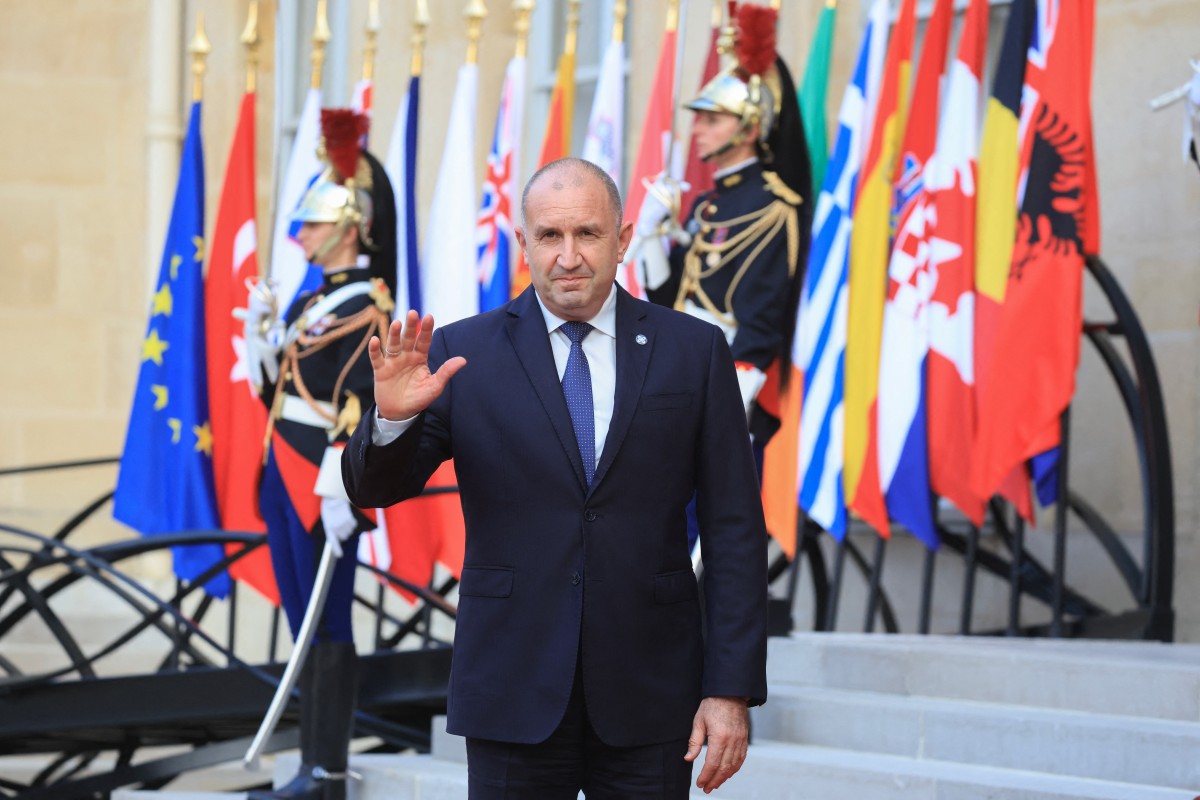
Bulgaria’s President Rumen Radev poses for a photograph as he arrives for a dinner of the Coalition of the Willing to support Ukraine at The Elysee Presidential Palace in Paris on July 13, 2026.
LUDOVIC MARIN / AFP
Bulgarian prime minister Rumen Radev announced on Monday, July 20th that the country’s parliament looks set to authorize the long-term use of the Bezmer military base by United States military aircraft for refueling purposes.
The move contrasts with Radev’s previous criticism of the presence of U.S. planes at Sofia’s main airport, after failing to secure a deal with U.S. president Donald Trump to lift visa requirements for Bulgarian citizens. The strategic airfield, located in central Bulgaria, will support ongoing U.S. military operations in the Middle East.
This legislative step is being facilitated by the parliament’s defense committee to establish a long-term hub framework under the existing 2006 Defense Cooperation Agreement. Politically, the decision illustrates Radev’s complex balancing act between Washington, Brussels, and Moscow since taking office as PM with his Progressive Bulgaria party. While his administration’s foreign policy often clashes with European Union partners—such as opposing recent EU sanctions on Russia and initially declining to attend a summit aiding Ukraine—his government has ultimately shown practical flexibility.
The domestic political context adds further weight to the development, as Radev’s government faces ongoing scrutiny from international and local critics. Beyond regional defense friction, his administration was recently condemned for moves to close the official commission responsible for identifying individuals with ties to communist-era security services. Granting the U.S. military expanded access to Bezmer serves as a pivotal counterweight to concerns that Bulgaria is drifting entirely out of alignment with its Western and NATO allies.