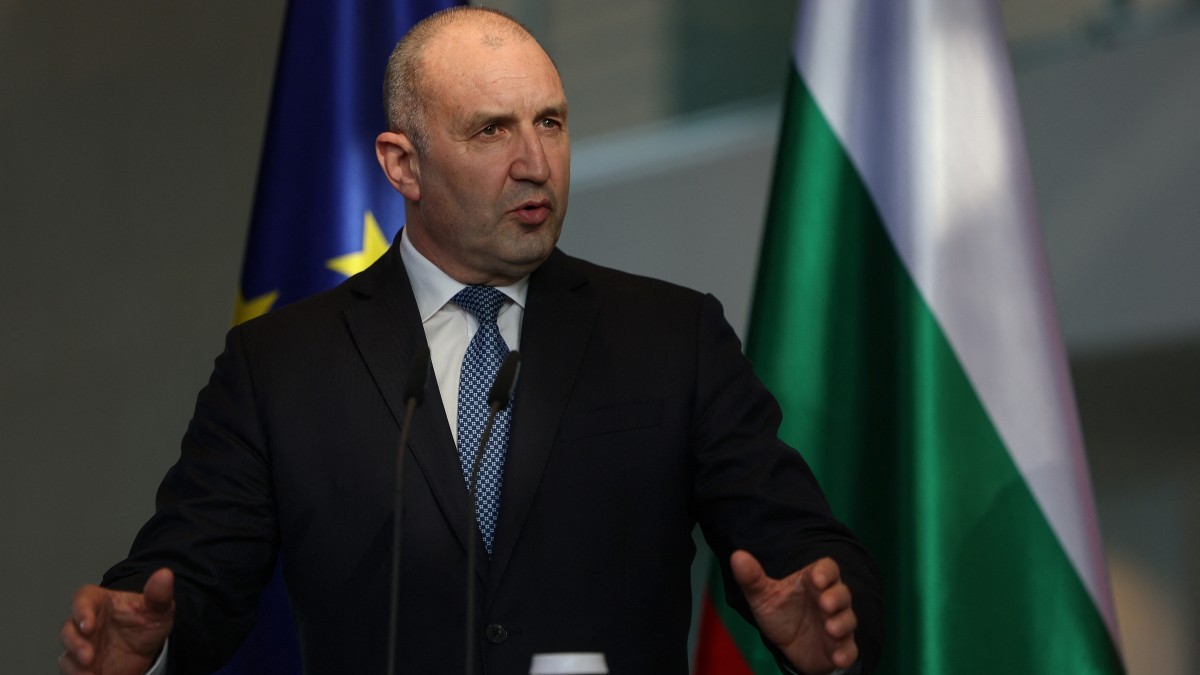
Bulgaria will no longer transfer weapons from its own military stockpiles to Ukraine, Prime Minister Rumen Radev announced on Wednesday, June 10th, marking a significant shift in the policy of the NATO and EU member state.
Speaking before a cabinet meeting in Sofia, Radev said the government was “putting an end to the provision of weapons from the Bulgarian army to Ukraine,” arguing that the conflict cannot be resolved through military means.
“We have already given enough, while our country continues to suffer socio-economic damage from this bloody war,” he said, calling instead for “the pursuit of a diplomatic solution.”
The announcement follows similar remarks by Defence Minister Dimitar Stoyanov, who stated on Tuesday that Bulgaria had no plans to supply additional arms to the Ukrainian military. Describing the conflict as “a war of attrition,” Stoyanov argued that it was time for Moscow and Kyiv to return to the negotiating table in search of “a just peace.”
The minister said
Ukraine needs more people, not more weapons. It has enough weapons, so we do not envisage providing more weapons to the Ukrainian army.
In 2024 and 2025, Bulgaria sent Ukraine anti-tank missiles, armoured vehicles, mortars, anti-aircraft guns, and howitzers, as well as infantry weapons.
Radev, a former president who became prime minister after his Progressive Bulgaria coalition secured a parliamentary majority in April’s election, has long been one of the European Union’s most prominent advocates of dialogue with Russia.
Alongside figures such as Slovak Prime Minister Robert Fico and former Hungarian leader Viktor Orbán, he has repeatedly questioned the effectiveness of continued military support for Ukraine and argued that diplomacy should play a greater role in efforts to end the war.
Despite the policy change, Bulgaria’s defence industry is expected to remain an important source of ammunition for Kyiv. Bulgarian manufacturers of Soviet-calibre munitions have expanded production since the start of Russia’s full-scale invasion in 2022, although these exports are generally sold to other EU countries before being transferred onwards to Ukraine.
The government’s decision has nevertheless sparked criticism at home. The centre-right, pro-Brussels GERB party, led by former prime minister Boyko Borissov, warned that halting direct military assistance risked undermining “trust in Bulgaria as an ally.”
However, Radev’s calls for renewed dialogue with Moscow reflect a debate that is increasingly emerging across Europe. While Brussels has largely sought to isolate Russia since the start of the invasion, several senior European leaders have recently suggested that diplomatic channels may eventually need to be reopened.