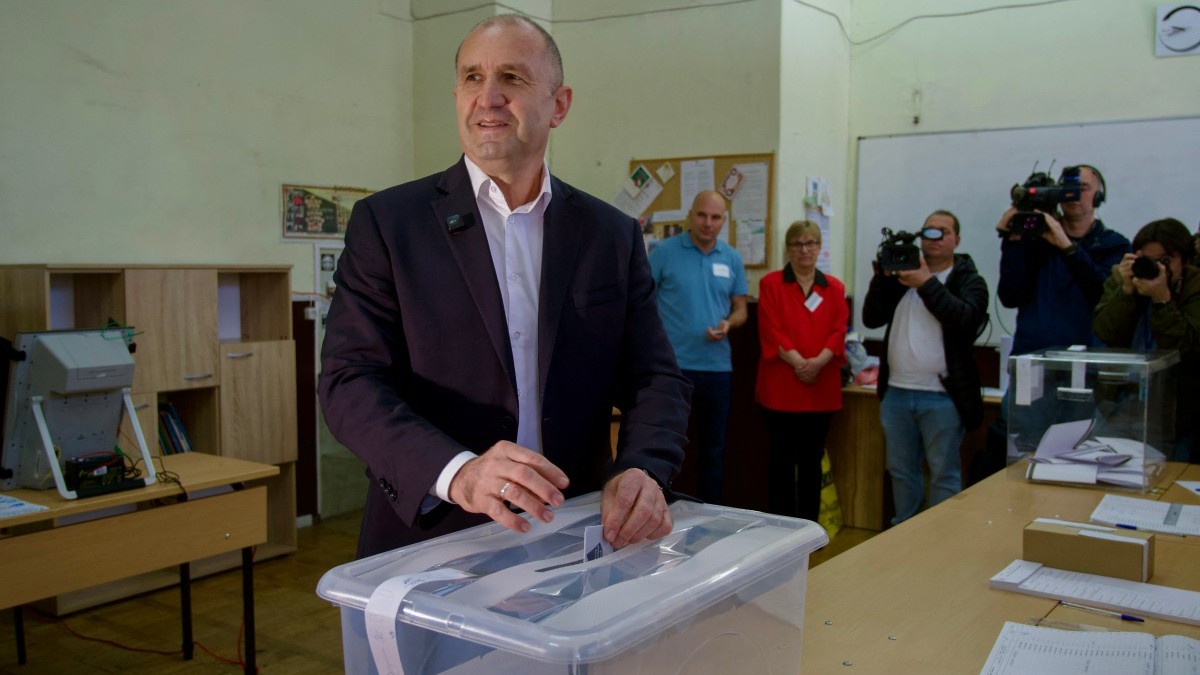
Bulgarian Progressive Bulgaria coalition leader Rumen Radev votes on April 19, 2026 in Sofia.
DIMITAR KYOSEMARLIEV / AFP
Pro-Brussels officials could not celebrate the result of last week’s Hungarian election enough, with Poland’s Donald Tusk even saying he was happier about it than the incoming prime minister, Péter Magyar, himself.
But by just looking at any of their social media accounts today, April 20th, you wouldn’t even know Bulgarians went to the polls on Sunday.
Anti-sovereigntist leaders have so far said nothing about ex-president Rumen Radev’s victory—reportedly one of the strongest results by a single party in a generation. This silence speaks volumes about the establishment’s views on this EU critic who has called for renewing ties with Russia.
In Germany, AfD politician Georg Pazderski described the result as a “new low blow” for European Commission President Ursula von der Leyen, adding: “Radev joins the growing front of European politicians who demand a clear break with the previous EU line.”
Neuer Tiefschlag für vdL❗️
— Georg Pazderski (@Georg_Pazderski) April 20, 2026
Der Sieger der Wahlen in Bulgarien, Rumen Radev, attestiert der EU eine dramatische Fehlentwicklung:
„Europa ist Opfer seiner eigenen moralischen Weltführer-Ambition.“
Statt weiterem Brüsseler Idealismus fordert der ehemalige General:
• Stopp… pic.twitter.com/O1RpAxuzIW
Political commentator Mario Nawfal also jibed: “No doubt the EU bureaucrats will be desperately trying to find a way to annul this one.”
Radev has indeed criticised Europe as having become “a victim of its ambition to act as a moral leader in a world without clear rules.” Yet he has also expressed Bulgarian willingness to “make every effort to continue on its European path, displaying a willingness to cooperate with leaders who think differently—and there are plenty of them.
One of the few pro-Brussels figures to respond to the result was Czech MEP Tomáš Zdechovský, who described it as “deeply concerning.”
This is no longer just an election result — it is a serious geopolitical shift … This is not just about Bulgaria. This concerns all of us.
Bulgaria has sent a clear — and deeply concerning — signal.
— Tomáš Zdechovský (@TomasZdechovsky) April 19, 2026
Rumen Radev, a politician openly critical of support for Ukraine and long seen as sympathetic to Russia, appears to have secured a parliamentary majority. This is no longer just an election result — it is a serious… pic.twitter.com/NBGplzHH8Y
Yet Irish journalist Brian McDonald said on Sunday that regardless of the casting of Radev as ‘pro-Russia,’ “he’s closer to a moderate nationalist” and is only “arguing for limited normalisation” with Moscow.
The politician’s alliance won around 130 seats in the country’s 240-seat parliament.