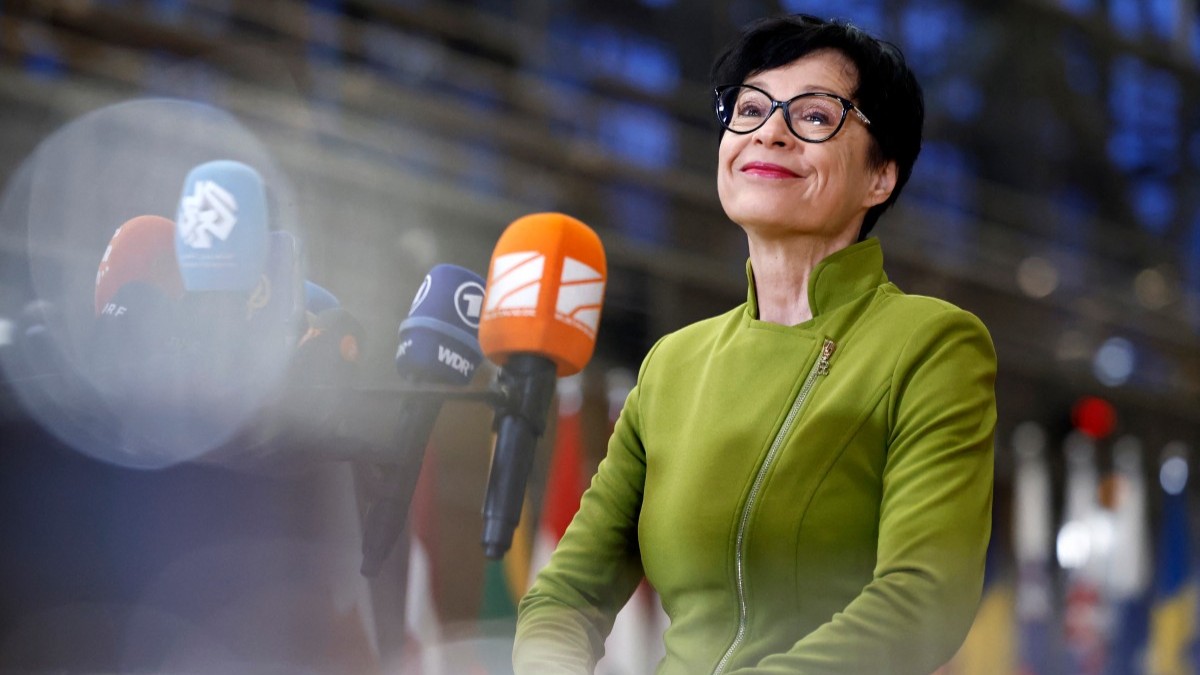
EU Commissioner for Enlargement Marta Kos talks to journalists ahead of a EU Foreign Affairs Council meeting at the EU headquarters in Brussels on January 29, 2026.
SIMON WOHLFAHRT / AFP
Controversial local elections in Serbia have prompted top EU officials to mull suspending €1.5 billion in funding for the country, which began bloc accession negotiations in 2014.
Marta Kos, the European Commissioner for Enlargement, at the end of March pointed out “widespread incidents of violence, threats and voting irregularities,” which she said had been observed by the Council of Europe, and stressed:
Free and fair elections are fundamental in democracies, especially for EU candidate countries like Serbia.
We reported at the time that the elections were marred by mutual accusations of violence, from both student activists representing the opposition, and the leading Serbian Progressive Party (SNS).
President Aleksandar Vučić has more recently “stressed that Serbia is intensively working to accelerate the implementation of reforms in order to further improve the quality of life of its citizens and achieve further progress on the European path.”
But Kos on Monday told MEPs: “We are increasingly worried about what is happening in Serbia.”
From laws that undermine the independence of the judiciary to crackdowns on protesters and recurrent meddling in independent media.
The EU funding under discussion is supposed to be used to support internal reforms required for bloc membership. Commission officials are currently waiting to receive a Council of Europe assessment on Serbia’s new judicial law, approved in January. Relations have not been aided by Serbia’s refusal to impose sanctions on Russia over its war against Ukraine.