The European Commission has declined to comment on the recently leaked Spanish police report pointing to Rabat’s involvement in the Ceuta mass incursion, declaring the investigation “a matter for the national authorities.”
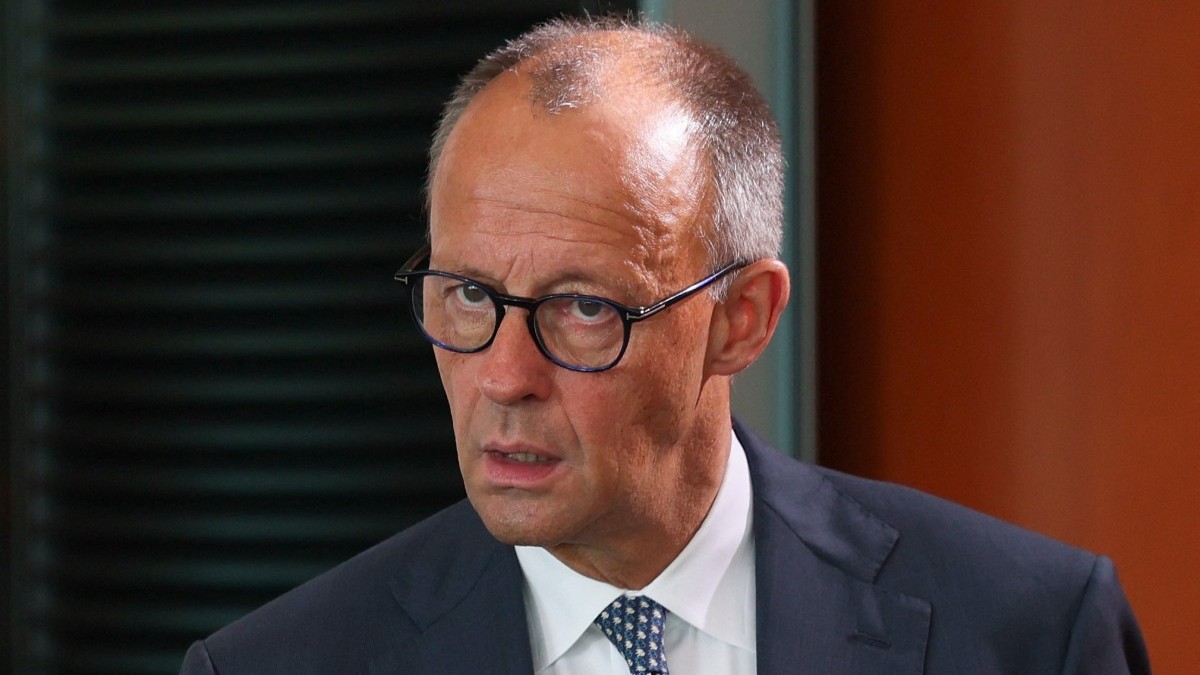
German Chancellor Friedrich Merz
ODD ANDERSEN / AFP
Support for the Alternative für Deutschland (AfD) party has reached a new high in the latest ARD-Deutschlandtrend poll, widening the party’s lead over the CDU/CSU alliance as public dissatisfaction with the federal government continues to deepen.
According to the survey conducted by Infratest dimap, the AfD remains steady at 27% of the vote, while the CDU/CSU has fallen by one percentage point to 23%. The result leaves the biggest opposition party with a four-point lead over the governing party, whose support is now at its lowest since around the 2021 federal election.
The poll also indicates growing opposition to the political ‘firewall’ against the AfD. A majority, 55% of respondents oppose the firewall. This public sentiment has not gone unnoticed by politicians of the center-right party: in March, CDU officials voted with AFD representatives in Hesse, marking a significant break with the cordon sanitaire in Germany.
The CDU’s ‘incompatibility resolution’ (the official party doctrine that prohibits cooperation with ‘extremist’ parties) regarding Die Linke (The Left party) fares even worse among the general public. 56% of respondents oppose it, while only 33% support it. Among CDU/CSU voters, however, 51% reject any form of government-like cooperation with Die Linke, compared with 37% who would be open to such arrangements.
The Greens remain the third-largest party in the poll at 14%, although their advantage over the Social Democrats has narrowed. The SPD has strengthened somewhat and now stands at 13%. Die Linke is at around 10%, while the FDP remains below the parliamentary threshold at 4%.
The survey suggests that voter frustration with established parties is becoming an increasingly important factor in electoral decisions. According to the findings, 46% of respondents now say they choose a party primarily because they are “disappointed with the other parties.” Only around half say they vote because they are “convinced by the party” they support. This marks a notable shift from March 2018, when 61% reported voting out of conviction and only 33% cited disappointment as their main motivation.
Public sentiment toward the federal government is particularly negative. Only 12% of respondents say they are satisfied or very satisfied with Friedrich Merz’s cabinet. 41% are rather dissatisfied, while 46% say they are not satisfied at all. Dissatisfaction with the government therefore reaches 87% overall.
The Chancellor’s personal ratings are also grim. According to the survey, only 16% of respondents are satisfied with his performance.