Keir Starmer’s final foreign trip as prime minister is taking him to familiar territory: somewhere people still seem pleased to see him.
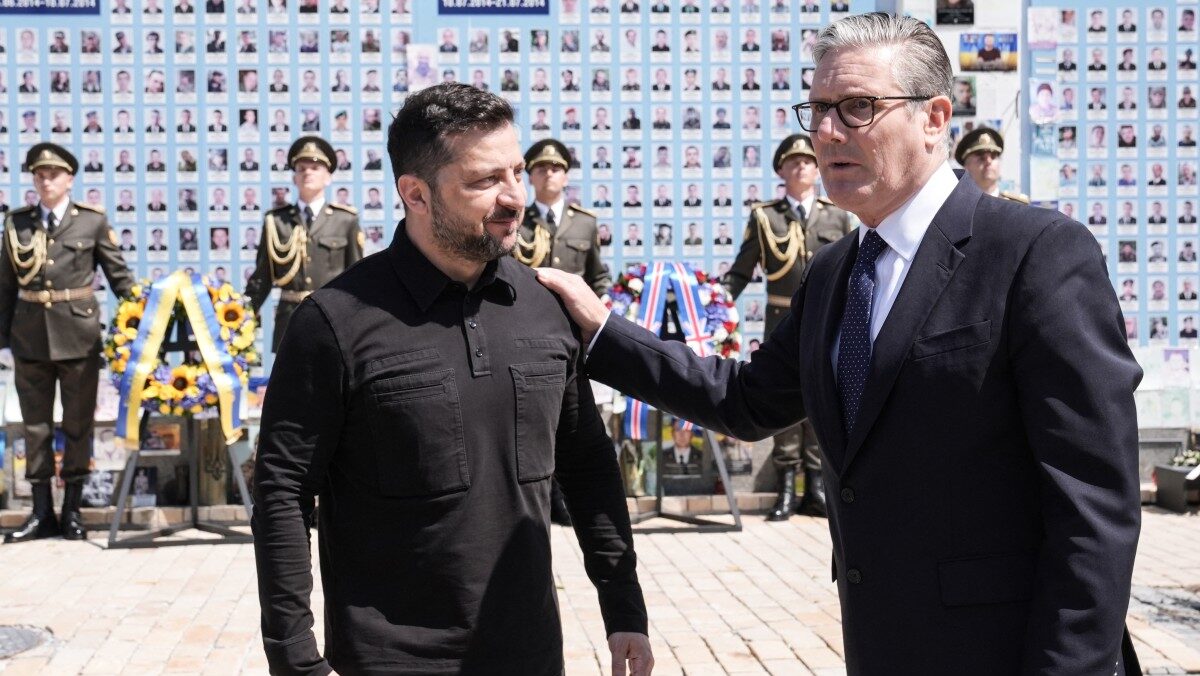
On Thursday, the outgoing British leader travelled to Kyiv to meet Ukrainian President Volodymyr Zelensky, where he was expected to promise that Britain’s support for Ukraine would continue long after he has vacated Downing Street.
The visit has all the hallmarks of the Starmer premiership. There are solemn declarations of “cast-iron support”, carefully choreographed photographs, and another appearance alongside the leaders who have welcomed him far more warmly than his own parliamentary party eventually did.
Agence France-Presse notes that Starmer is “held in high regard” by many foreign leaders, particularly for his support of Ukraine and NATO. That is difficult to dispute. The more awkward question is why the admiration shown in Brussels, Paris and Kyiv never translated into lasting political authority in Westminster.
While voters at home complained about illegal migration, sluggish economic growth and a government that seemed incapable of sticking to its own policies, Starmer invested enormous political capital in presenting Britain as a leading player in European security. Together with Emmanuel Macron, he became one of the chief advocates of the so-called Coalition of the Willing—a proposed peacekeeping force that has held summits, issued communiqués and generated plenty of photographs despite there being neither a peace agreement nor any peace to keep.
None of this is to suggest that support for Ukraine is unimportant. It is to observe that, as his government unravelled at home, Starmer rarely looked more comfortable than when boarding another plane for an international summit.
His resignation last month followed the collapse of support among Labour MPs after a succession of domestic policy reversals. Yet he leaves office with foreign leaders praising his statesmanship and Britain signing up this week to the European Union’s €90 billion loan programme for Ukraine.
For Starmer, Kyiv is therefore a fitting final destination. He came into office promising to restore Britain’s standing abroad. He leaves having done rather better with foreign presidents and prime ministers than with the people who elected him—or even the MPs who removed him.