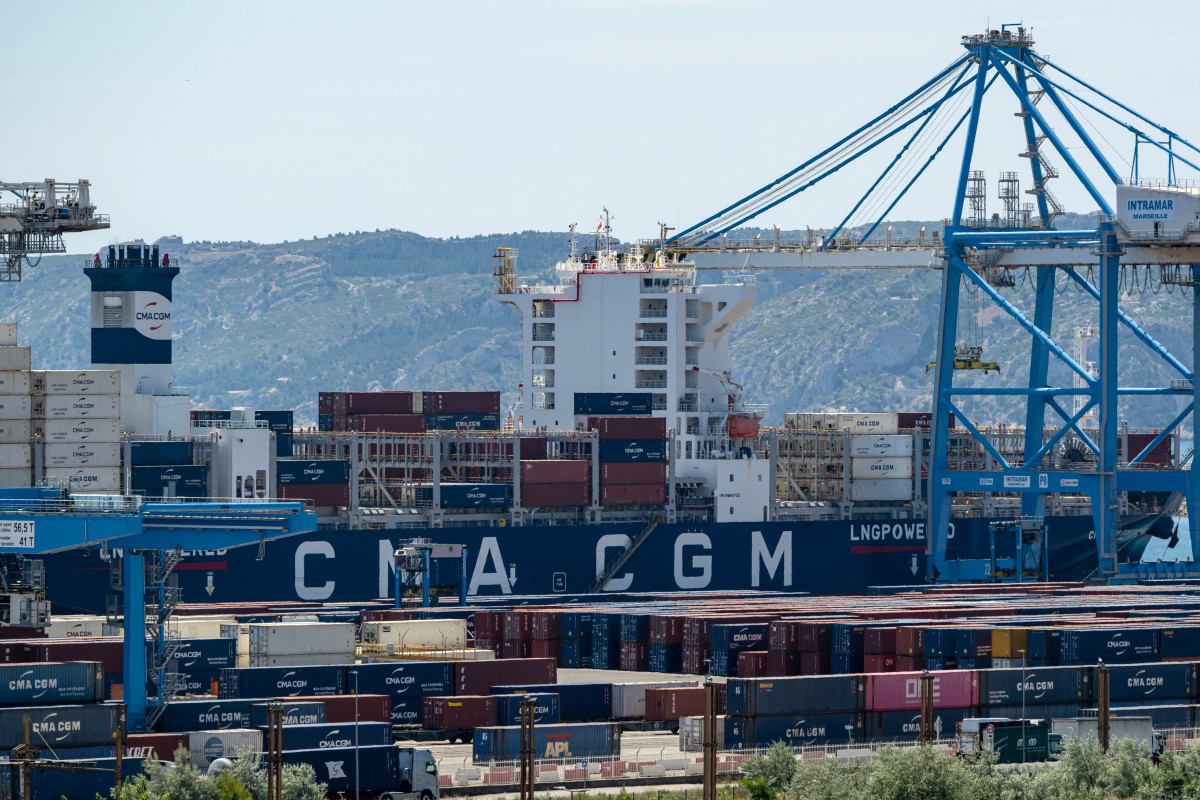
Containers of the maritime transport company CMA-CGM wait to be loaded into the CMA-CGM LNG-powered containership anchored in the commercial port of Marseille, southeastern France on June 8, 2026.
MIGUEL MEDINA / AFP
The European Union will need significantly higher imports of liquefied natural gas (LNG) this summer to replenish depleted gas reserves ahead of winter.
According to a new assessment by the Agency for the Cooperation of Energy Regulators (ACER), EU gas storage stood at just 28% capacity at the start of the summer injection season on April 1—the lowest level in four years.
EU law requires member states to fill gas storage facilities to 90% capacity by November 1, although the European Commission has indicated that countries could temporarily fall as low as 80%, or even 70% in exceptional cases.
According to ACER, reaching the 90% target will require LNG imports to increase by around 13% compared with 2025 levels (which will please major supplier the State of Qatar).
Higher global gas prices, driven partly by instability in the Middle East, have reduced incentives for traders to purchase and store additional gas.
The EU also faces growing competition from Asian buyers, particularly China and India, where LNG demand has increased in recent months.
Despite the slower refill rate, ACER said Europe’s gas system remains resilient thanks to expanded LNG import infrastructure and new regasification terminals that have improved the bloc’s ability to receive gas from global markets. However, regulators urged member states to closely monitor storage levels in the coming months to avoid supply risks during the winter heating season.