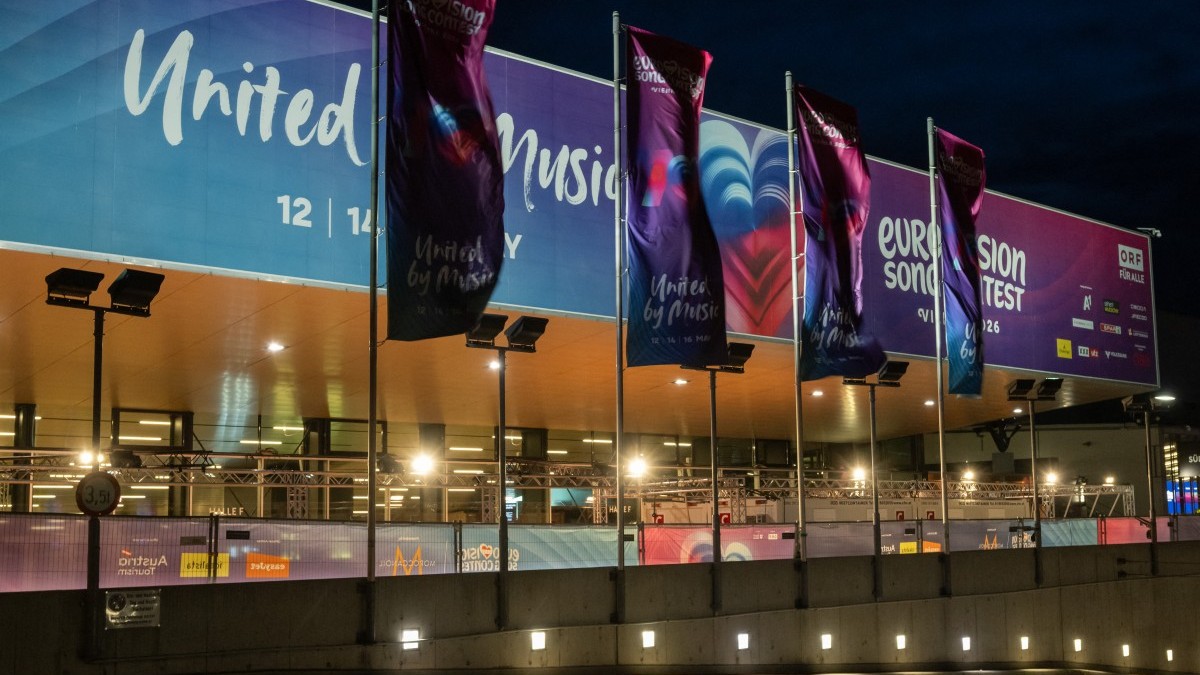
The official venue of the 2026 Eurovision Song Contest, the Wiener Stadthalle, is pictured in Vienna, Austria on May 6, 2026.
JOE KLAMAR / AFP
The Eurovision Song Contest festivities in Vienna have been overshadowed by a growing international boycott movement, as political controversy surrounding Israel’s participation continues to divide broadcasters, artists and fans across Europe.
This year’s competition, marking Eurovision’s 70th anniversary, has already seen several countries withdraw from participation, including Ireland, Spain, the Netherlands, Slovenia and Iceland. The broadcasters behind the boycott argue that Israel’s inclusion is incompatible with the values the contest claims to represent amid the ongoing war in Gaza.
The backlash has extended beyond official broadcasters. More than 1,000 European musicians and cultural figures–including Peter Gabriel and Massive Attack–signed open letters calling for a boycott, while alternative Eurovision-themed events are being organised in cities including Brussels.
Despite the controversy, the European Broadcasting Union has defended its decision to allow Israel to compete, insisting Eurovision is a contest between broadcasters rather than governments. Eurovision director Martin Green said he hoped boycotting countries would eventually return to the competition in future editions.
While organisers continue to promote this year’s slogan, ‘United By Music,’ critics argue the contest has become increasingly politicised. The divisions have fuelled concerns that Eurovision, traditionally presented as a unifying cultural event, is facing one of its deepest crises in its modern history.