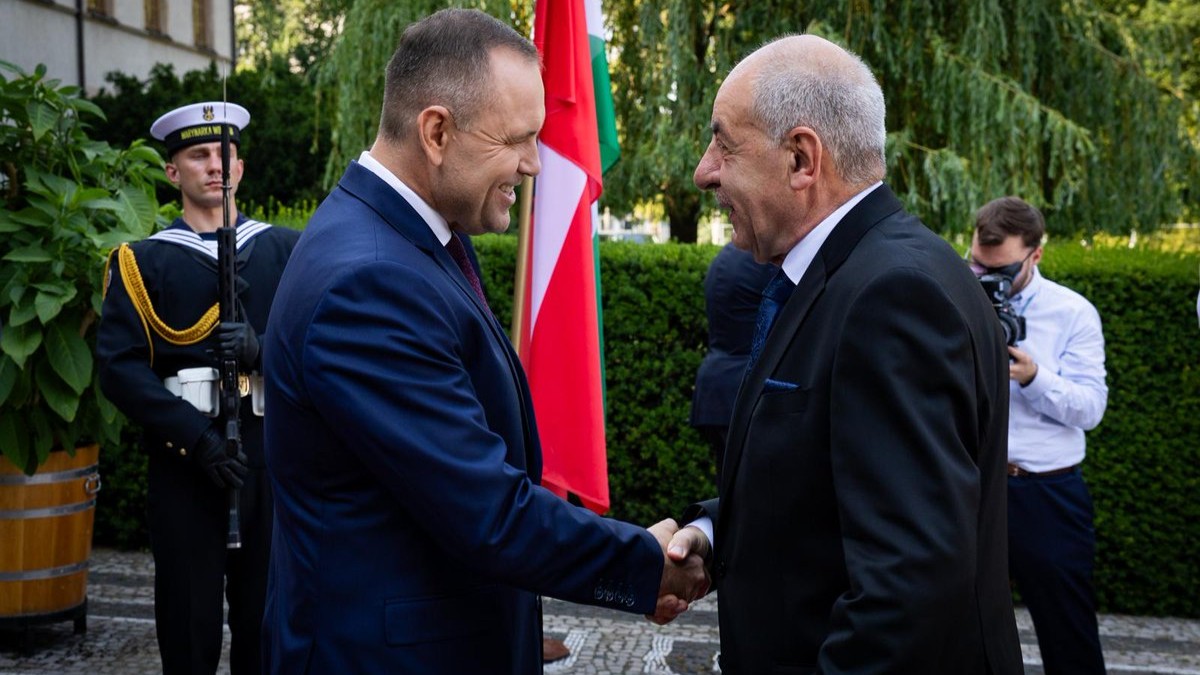
Poland’s President Karol Nawrocki (L) shakes hands with Hungary’s President Tamás Sulyok in Poznań, Poland, on June 28, 2026
@DrTamasSulyok on X, June 28, 2026
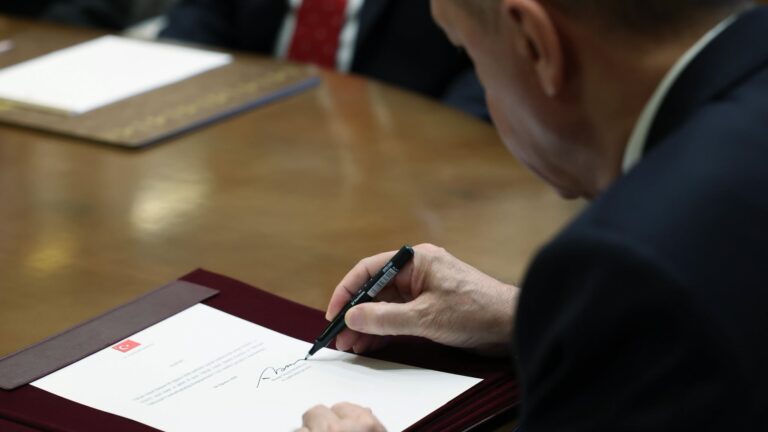
On Sunday, June 28th, Hungarian President Tamás Sulyok traveled to Poznań at the invitation of Polish President Karol Nawrocki to jointly commemorate the 70th anniversary of the 1956 Poznań workers’ uprising. The solemn event, which was also attended by Albanian President Bajram Begaj and Latvian President Edgars Rinkēvičs, concluded with the four state leaders signing a joint declaration highlighting the courage, freedom, and sovereignty of Central and Eastern European nations. In his address, President Nawrocki emphasized that the Poznań uprising served as the spark that later ignited the Hungarian revolution in Budapest in October 1956.
Reacting to the event on Monday, Hungarian MP Balázs Orbán, former political director to the Hungarian prime minister, described the meeting on X as an important victory for regional sovereignty. He welcomed Nawrocki receiving the Hungarian president, calling it a “gentle reminder” that Poland rejects attempts by Hungarian Prime Minister Péter Magyar to remove Sulyok from office. Balázs Orbán said Sulyok’s official reception in Poland demonstrates a unified, “sovereigntist pushback” by Central European leaders against liberal attacks on democratic institutions and national sovereignty.
The Poznań uprising, which took place in June 1956, saw approximately 100,000 Polish workers stand up against Communist oppression before being brutally suppressed by military forces. Sulyok noted on his Facebook page that this historic event was a direct precursor to the Hungarian revolution later that autumn. Nawrocki highlighted that this shared experience of totalitarian oppression unites the region, adding that Central and Eastern European nations have a unique responsibility to build a robust defense of European civilization to guard against modern security threats and post-Soviet imperialist ambitions.