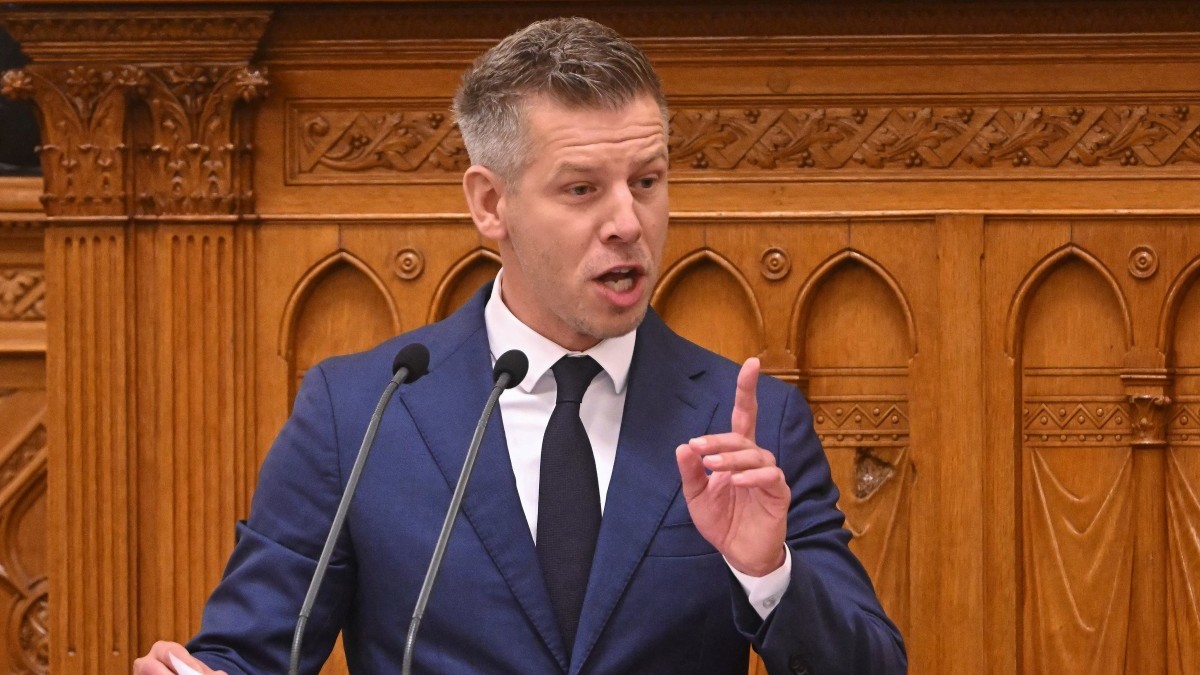
On Monday, Péter Magyar, head of Hungary’s new pro-EU Tisza government, announced “Operation Purgatory Fire,” the most obvious attack on the Hungarian rule of law the country has ever seen.
The ‘operation,’ which looks more like a constitutional putsch, consists of a slew of proposed constitutional amendments that would make it possible to remove heads of institutions appointed by the previous parliament and the Orbán cabinet, introduce a term limit for members of parliament to get rid of half of the opposition MPs, and establish the National Asset Recovery Office to confiscate the wealth of Fidesz-linked businessmen under the guise of “recovering” the nation’s “stolen” wealth.
While the government claims these steps are needed to “restore the rule of law,” the planned constitutional changes have sparked widespread criticism, with opponents accusing Magyar of abusing his power and blatantly violating democratic and constitutional norms.
The most controversial aspect is the forced removal of heads of democratic institutions, including Tamás Sulyok, the president of the Republic, and Péter Polt, the president of the Constitutional Court.
The president—a largely symbolic but important office, representing national unity—is appointed for five years. His term is longer than the government’s four years precisely to force new governments to cooperate with presidents appointed by previous ruling parties, thereby preserving the integrity of the president’s ‘checks and balances’ role as head of state.
That’s exactly what the new government wants to hollow out by replacing Sulyok with their own man before the president’s term is over, which would violate the Constitution—unless they amend it first. Something that the previous Fidesz government—constantly accused of dismantling the rule of law by Brussels and by the domestic opposition—never even thought of doing when it first came to power.
What’s more, Magyar declared that Sulyok’s mandate ends a day after the parliament adopts these changes—meaning the president cannot challenge his own removal and stall until the Constitutional Court publishes an opinion—and his office would be filled by the speaker of the parliament as interim president with the power to sign the reforms into law.
A few days prior, President Sulyok turned to the Constitutional Court for an urgent inquiry into whether such a constitutional change—one that significantly weakens the office of the president just for petty, personal revenge—was even legal. The president of the court, Péter Polt, scheduled a meeting for Monday to discuss the proposal, but it had to be canceled at the last minute after seven judges—being constantly threatened by PM Magyar—declared themselves ineligible to vote over personal connections to Sulyok, a former colleague (and boss) of theirs.
After effectively preventing the court from forming any opinion on the legality of his planned reforms, PM Magyar went as far as to call the spoiled procedure a “constitutional coup attempt” by Sulyok, proudly flaunting his success in thwarting it.
But his vengeance would come for the court and its president too: the prime minister announced another change that would introduce an age limit of 70 years for members of the Constitutional Court, which means President Polt will also be forced out of his office and replaced by someone less likely to take ‘checks and balances’ too seriously.
Still, Magyar’s personal vendetta against his own former party doesn’t stop here. Operation Purgatory also involves limiting the terms of members of Parliament to 12 years—most likely retroactively, just like in the case of an already adopted retroactive limit to the PM’s office, effectively banning Viktor Orbán from ever running again.
Similarly, this amendment aims to get rid of the national conservative opposition’s most popular veteran politicians, including former ministers Péter Szijjártó, János Lázár, and Gergely Gulyás. If the law passes, both opposition parties will lose nearly half of their MPs and be forced to replace them with less-known beginners.
For Magyar, this step is not only needed to eliminate leading opposition figures from parliament and thereby end any hope for efficient democratic debate but also to strip them of their immunity and make them eligible for persecution.
Here comes the soon-to-be-established National Asset Recovery and Protection Office, which Magyar presents as a much-needed “independent” watchdog that would oversee the use and misuse of public funds. However, Magyar’s rhetoric makes it obvious that the agency’s sole purpose will be running political witch hunts against opposition politicians and anyone associated with them, making sure the national conservative side will never have enough capital—political or financial—to come back to power.
Despite the obvious erosion of the rule of law, weakening of nearly all democratic institutions, and rewriting the constitution to centralize all power in Magyar’s hands, the EU Commission or the Court of Justice will predictably have nothing to say on the matter. After all, Brussels spent the last 16 years criticizing the previous government and working on replacing it. And since the governing Tisza party is a member of von der Leyen’s own EPP, Brussels welcomes any rule-of-law violation that would help keep its ally in power.