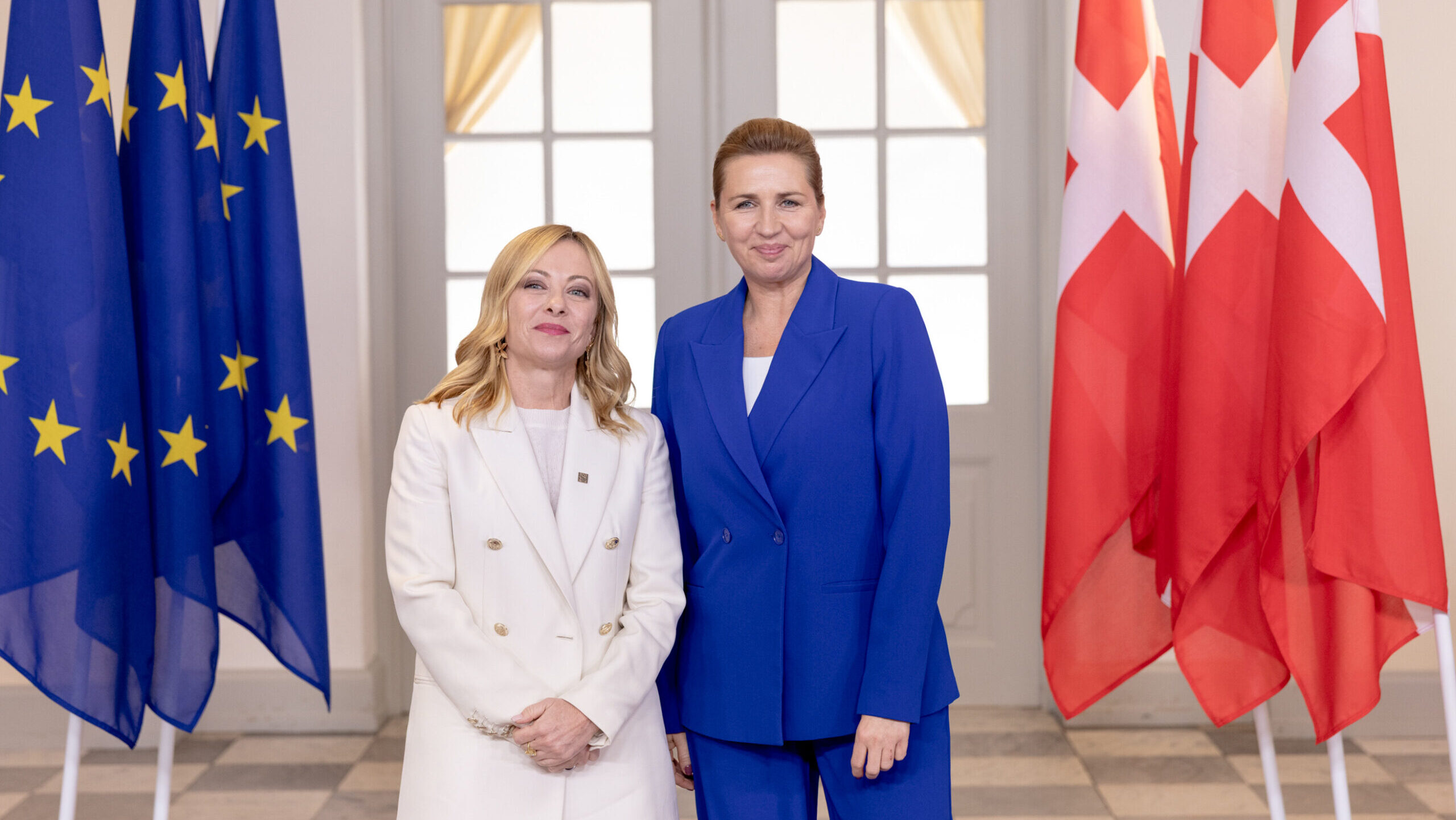
Italian PM Giorgia Meloni (left) and Danish PM Mette Frederiksen (right)
European Council, October 2025
Italian prime minister Giorgia Meloni and Danish PM Mette Frederiksen have made a joint appeal for a tougher European approach to migration, bringing together two leaders from opposite sides of the political divide.
In “A joint message for Europe”, published on August 10, the conservative Italian premier and centre-left Danish leader said Europe must both curb uncontrolled immigration and defend its Christian cultural heritage. “We do not accept uncontrolled immigration to Europe,” they wrote.
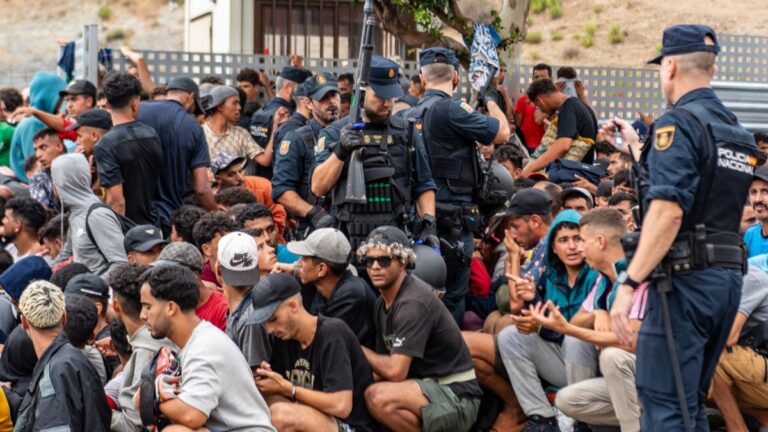
The intervention follows a Denmark- and Italy-led letter signed by 22 EU member states after some 60,000 migrants entered Ceuta. That letter criticised Spanish immigration policies and warned that the dispute could threaten the Schengen area.
Meloni and Frederiksen argued that mass migration has increased pressure on public services and contributed to crime, including violent crime, drug dealing and sexual violence, while eroding citizens’ trust in governments and public institutions.
They pointed to efforts to clarify how international human-rights obligations apply to deportations, alongside the recently adopted EU Return Regulation and its provision for return hubs in third countries. They promised to continue pursuing further “innovative solutions”.
But they said tougher returns policy alone was “not enough”. “Respect for our laws must go hand in hand with respect for European values,” they wrote, applying that principle to both legal and illegal migration.
The leaders linked migration policy to cultural integration, arguing that people who settle in Europe should respect the values of their host countries. They did not set out a broader test of assimilation.
“We are both proud of the Christian cultural heritage of Europe and we want to protect it,” they wrote. They added that those who make Europe their home should respect European values and not seek to impose ways of life the leaders said they did not share.
By presenting tougher border and return policies as inseparable from a defence of Europe’s cultural identity, Meloni and Frederiksen sought to broaden their case beyond immigration control—and to show that the argument now reaches across Europe’s traditional left-right divide.