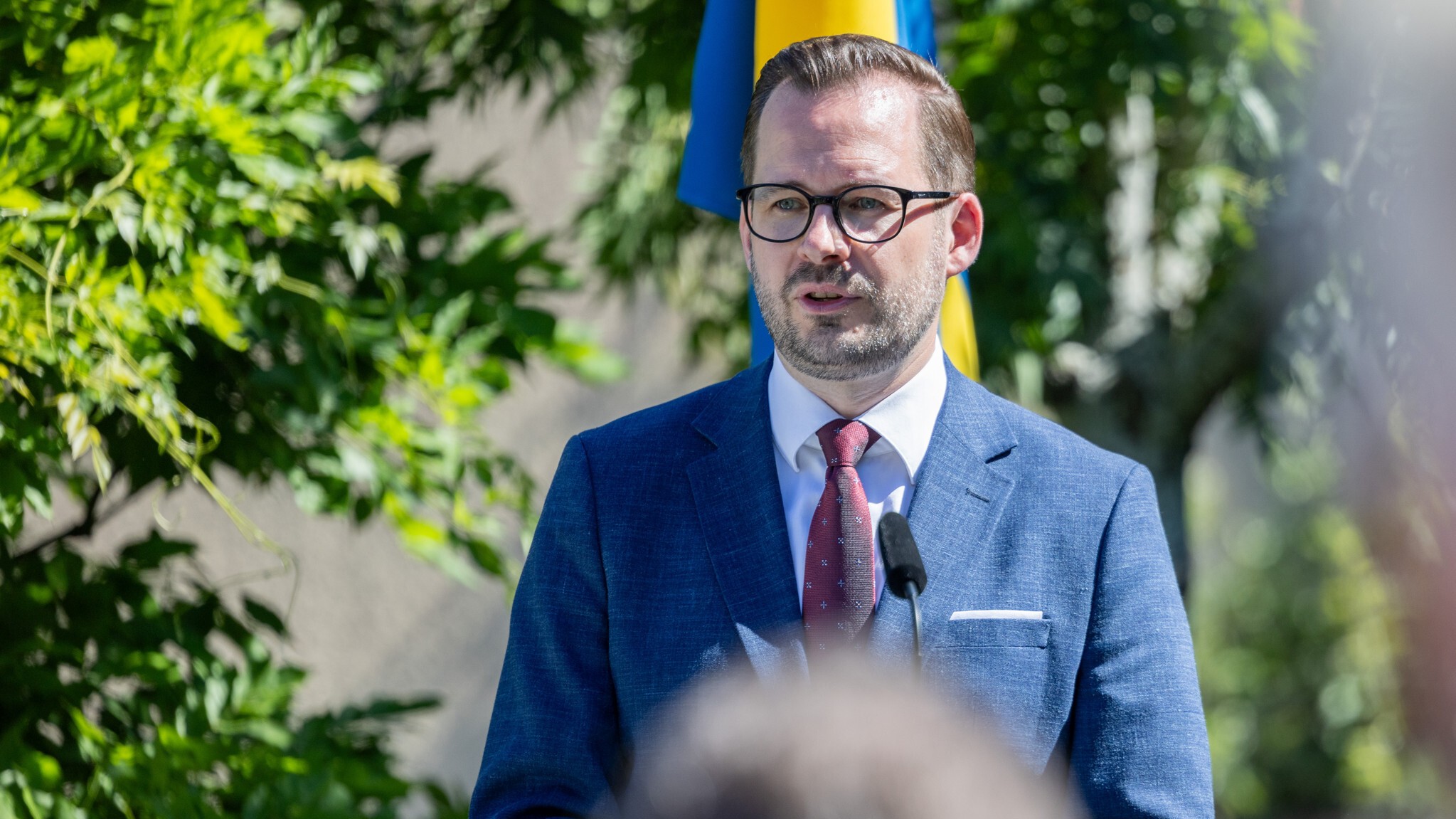
Mattias Bäckström Johansson
Ninni Andersson / Regeringskansliet
The Sweden Democrats (SD) are calling for a much tougher national response to Islamism, saying that the ideology poses one of the greatest threats to Swedish democracy in modern times.
In a recent debate article, party secretary Mattias Bäckström Johansson and MP Johnny Svedin said that decades of large-scale immigration from predominantly Muslim countries have reshaped parts of Sweden, creating neighborhoods where cultures and values are increasingly at odds with Swedish society.
The party, which supports the current government, recently backed the launch of an official inquiry into the scope of political Islam and Islamism in Sweden. The investigation will examine the extent of religious radicalization and how Islamist influence and infiltration are affecting society.
The authors stress that Islamism should not be confused with Islam as a religion, describing it instead as a political ideology that seeks to reorganize society according to religious principles.
Bäckström Johansson and Svedin said Sweden’s constitutional protection of religious freedom must remain intact but stated that it cannot be used to shield anti-democratic movements or activities that undermine the country’s laws and democratic institutions.
“Our firm opinion is that Islamism constitutes one of the greatest threats that Sweden faces in modern times,” they wrote.
SD points to several measures introduced during the present parliamentary term, including tougher counter-terrorism laws, broader powers to deport individuals considered security threats, and expanded authority for police and other agencies to intervene in extremist environments. While describing those reforms as important, the two politicians say they are only the beginning.
The lawmakers are calling for Sweden to stop using taxpayer funds to support organizations or activities that promote “Islamization, medieval values, or terrorism.” They also call for mosques where Islamist ideology, antisemitism, or support for terrorism is preached to be closed, with those responsible prosecuted and, where legally possible, deported. The lawmakers maintain that while private religious belief is not the state’s concern, advocacy of violence, hatred, or oppression should have no place in Sweden.
The article also argues against what it describes as parallel societal structures that weaken integration and challenge the rule of law. It calls for a stronger defense of democratic values and a zero-tolerance approach to Islamism.
Bäckström Johansson also linked Sweden’s current challenges to what he described as years of political naivety, particularly among parties on the Left, which he said assumed all migrants arrived with honest intentions and a willingness to integrate. While acknowledging that many immigrants have made positive contributions to Swedish society, he argued that uncontrolled migration has also created serious security risks. As an example, he cited the 2017 Stockholm vehicle attack, in which five people were killed by an illegal immigrant who had pledged allegiance to the Islamic State.
The Sweden Democrats say additional measures are on the way and that Sweden must ensure those who undermine its democratic system and open society are not allowed to remain in the country. In the party’s view, the new government inquiry and continued legislative efforts are necessary steps toward addressing a problem previous governments failed to confront.
With Sweden gearing up for a September 13 general election, immigration-related issues, including integration problems, gang crime, and increased pressure on the welfare system are expected to take center stage.