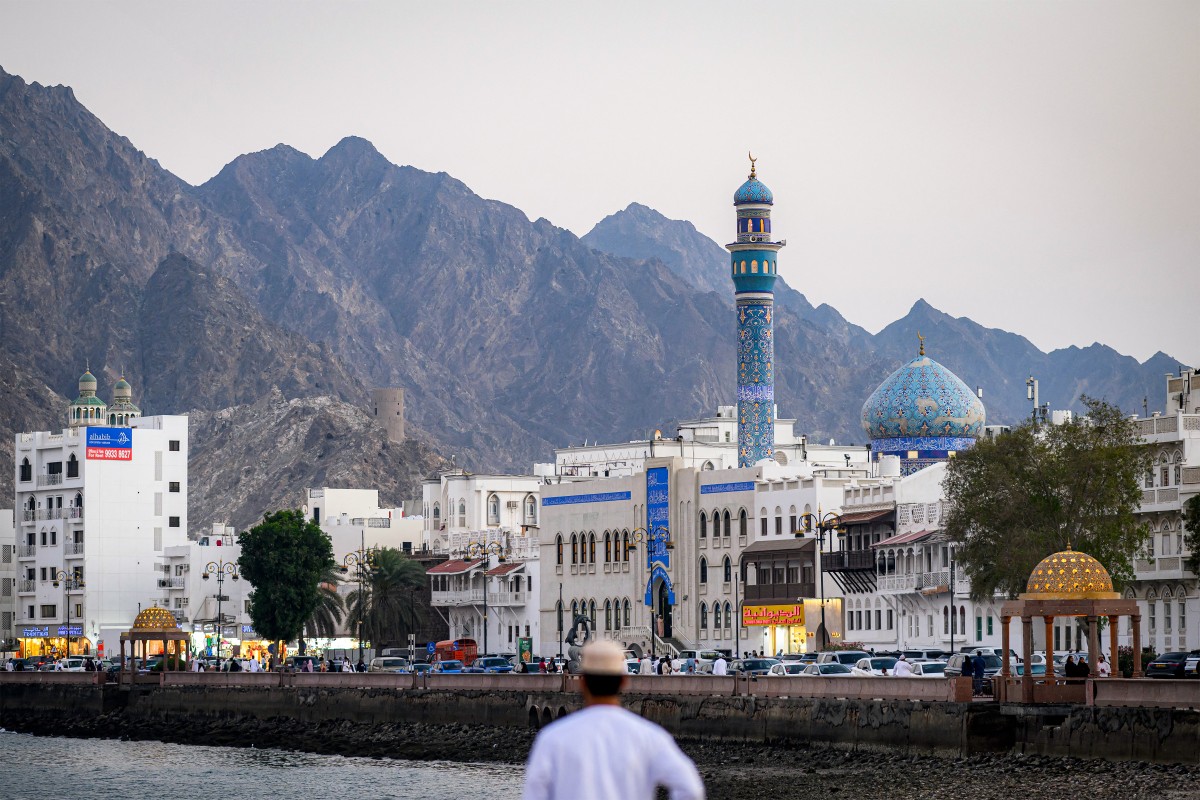
A man views the Rasool al-Adham mosque from the corniche at Sultan Qaboos port in Oman’s capital Muscat on February 5, 2026.
Loic VENANCE / AFP.
Iran and the United States were preparing for talks on Friday, February 6 in Oman, as Washington seeks to assess whether there is any realistic prospect of diplomatic progress on Iran’s nuclear programme—while continuing to refuse to rule out military action.
The negotiations, confirmed late Wednesday by both sides after days of uncertainty over their format and location, mark the first direct talks since June.
U.S. president Donald Trump’s Middle East envoy, Steve Witkoff, and Iranian foreign minister Abbas Araghchi are leading their delegations in the Gulf sultanate, which has long played a mediating role between the two countries.
“Iran enters diplomacy with open eyes and a steady memory of the past year,” Araghchi wrote on X ahead of the talks. He stressed that Tehran would engage in good faith while standing firm on its rights, insisting that “equal standing, mutual respect and mutual interest” are essential for any lasting agreement.
Speaking in Muscat, Araghchi also warned that Iran remains fully prepared to defend its sovereignty and national security against any “excessive demands or adventurism” by the United States.
The White House said the U.S. delegation intends to explore “zero nuclear capacity” for Iran. Press Secretary Karoline Leavitt emphasized that the president has “many options at his disposal aside from diplomacy.”
“They don’t want us to hit them, we have a big fleet going there,” he added, referring to the aircraft carrier group he has repeatedly called an “armada.”
The talks come as Washington reiterated its warning urging all U.S. citizens to leave Iran immediately, citing ongoing protests, heightened security measures and flight disruptions. The U.S. virtual embassy also warned that dual nationals face an increased risk of detention.