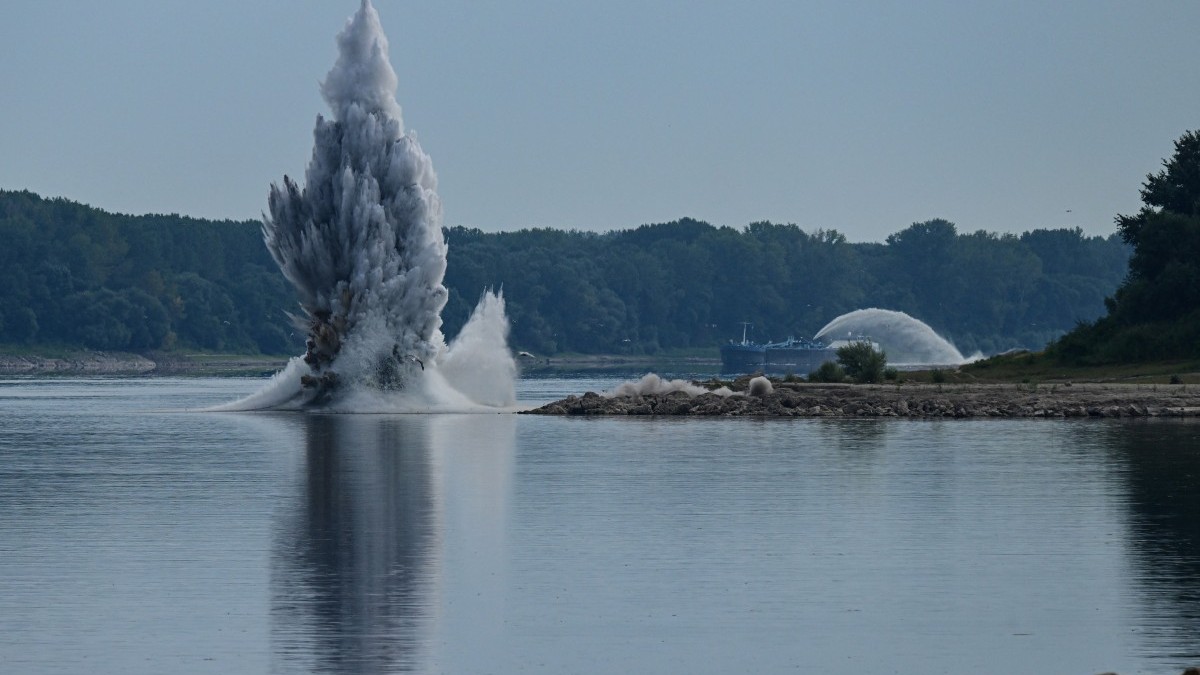
Romania’s military detonated a large rock formation in the Danube on August 3rd as part of emergency efforts to redirect more water towards the Cernavodă nuclear power plant, where falling river levels are threatening the operation of its remaining reactor. Acting Defence Minister Radu Miruță said military engineers and divers used 180 kilograms of explosives to destroy the Parjoaia rock near the riverbank.
The blast forms part of a broader water management programme aimed at reducing the flow into the Bala branch of the Danube and diverting a greater volume towards the Old Danube channel, which supplies cooling water to the nuclear facility. Miruță said it remains uncertain whether the measures will provide enough water to keep the plant’s second reactor operating, but added that extending its operation by even a single day would generate economic benefits exceeding the cost of the intervention.
Romanian authorities also plan to sink several stone-filled barges to create an underwater barrier in the Bala branch while dredging the Old Danube channel and removing rock fragments released by the explosion to improve water flow. According to the minister, if the operations fail, the plant’s second reactor may have to be shut down as early as Wednesday or, at the latest, Thursday, because of insufficient cooling water.
The Romanian government declared a state of alert on Friday, July 31, in response to drought, exceptionally low Danube water levels, and the risk of energy shortages, allocating seven million lei for emergency works. At Baziaș, where the Danube enters Romania, river discharge had fallen to 1,590 cubic metres per second on Monday—just over one-third of the July average. The two Canadian-designed CANDU reactors at the Cernavodă nuclear power plant together produce around 20% of Romania’s electricity.