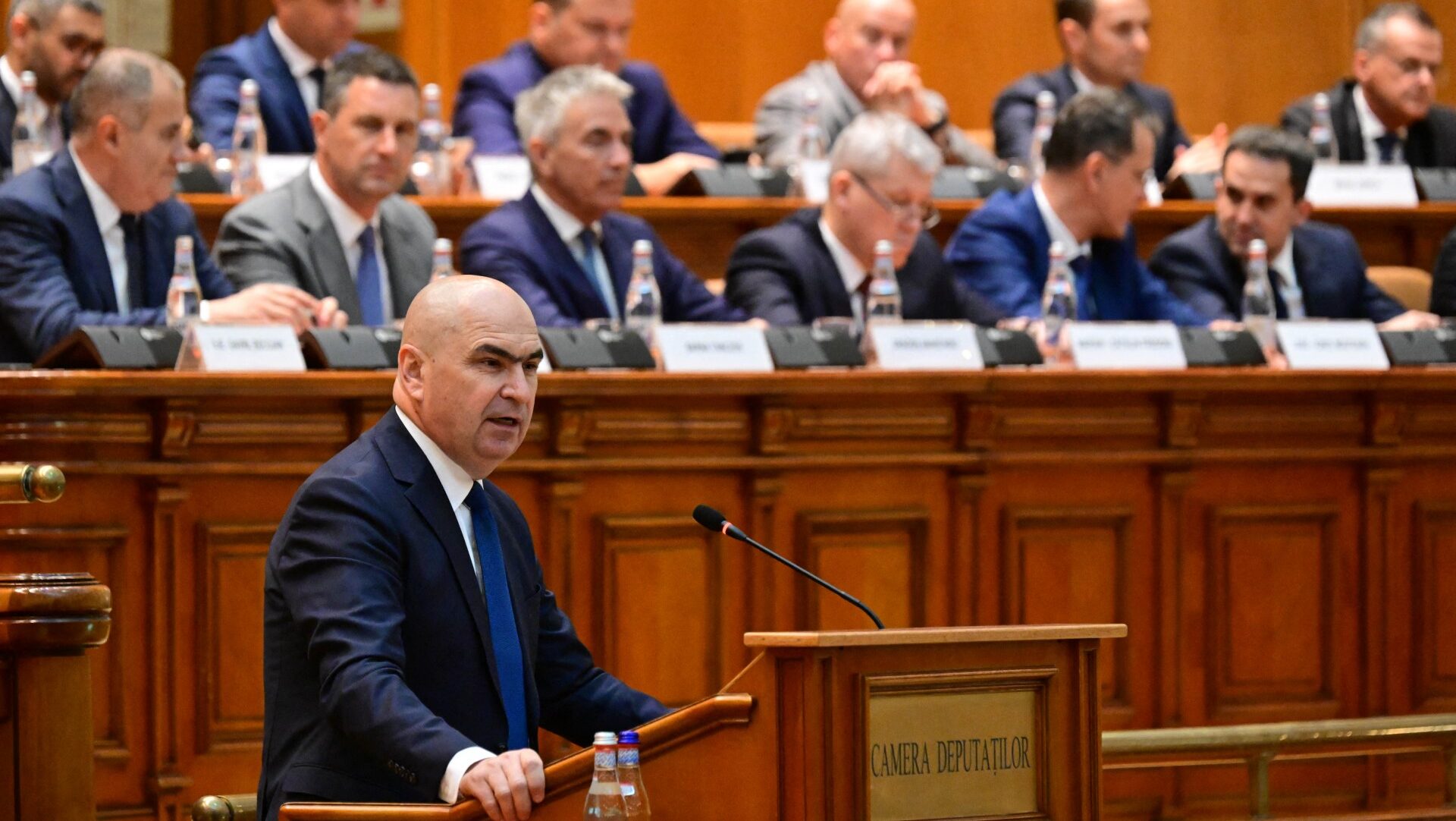
Ilie Bolojan
Daniel MIHAILESCU / AFP
Romania has been thrown into fresh political turmoil after the Social Democratic Party (PSD) withdrew support for Prime Minister Ilie Bolojan, stripping his government of its parliamentary majority and raising the prospect of collapse.
In a blunt statement on Thursday, the PSD said Bolojan “no longer has the democratic legitimacy” to remain in office, marking a decisive rupture within the pro-European coalition formed less than a year ago.
The move follows an overwhelming internal vote earlier this week, with 97.7% of party delegates backing the withdrawal. It reflects mounting tensions inside the four-party alliance, originally assembled to contain the rise of nationalist opposition forces.
Bolojan, leader of the centre-right National Liberal Party (PNL), has refused to resign and insists he will continue governing—even as his administration risks being reduced to a fragile minority.
At the heart of the dispute are a series of austerity-driven reforms. Bolojan’s government has pushed through tax increases, spending cuts, and public sector reductions in an effort to tackle the largest budget deficit in the EU. The measures have proved deeply unpopular, fuelling inflation concerns, business closures, and falling living standards.
PSD leaders say the policies have alienated their traditional voter base, while strengthening support for the nationalist opposition—particularly the AUR party, which is now polling strongly ahead of any potential snap election.
Romania’s president, Nicușor Dan, has sought to calm markets, stressing that political actors remain aligned on key priorities such as deficit reduction and securing EU funds. The stakes are high: Bucharest risks losing up to €11 billion in funding if reform targets are not met by August.
The PSD has left the door open to joining a new pro-EU government under a different prime minister, including a technocrat. But without the country’s largest party, forming a stable governing majority will be difficult.
A no-confidence vote—potentially backed by both PSD and nationalist lawmakers—could soon bring Bolojan’s government down altogether, prolonging instability in a country already strained by months of political upheaval.