Romania is facing the prospect of prolonged political instability after the Social Democratic Party (PSD) voted overwhelmingly to withdraw its support for Prime Minister Ilie Bolojan, effectively undermining the country’s Europhile coalition government.
The decision, taken on Monday, April 20th, with 97.7% of party delegates in favour, marks a decisive break within the four-party alliance that has governed for the past ten months.
The coalition had originally been formed to keep the surging nationalist opposition at bay, but persistent disagreements over economic reforms have strained relations between its members.
PSD leaders justified their move to leave the government by pointing to what they described as a worsening socio-economic situation, including rising inflation, business closures, and declining living standards.
The PSD expressed dissatisfaction with Bolojan’s reform measures, which have focused mainly on raising taxes, cutting public spending, and reducing the number of public sector employees.
Following the vote, PSD leader Sorin Grindeanu said the party would act in line with the mandate received, emphasising the need to improve citizens’ lives.
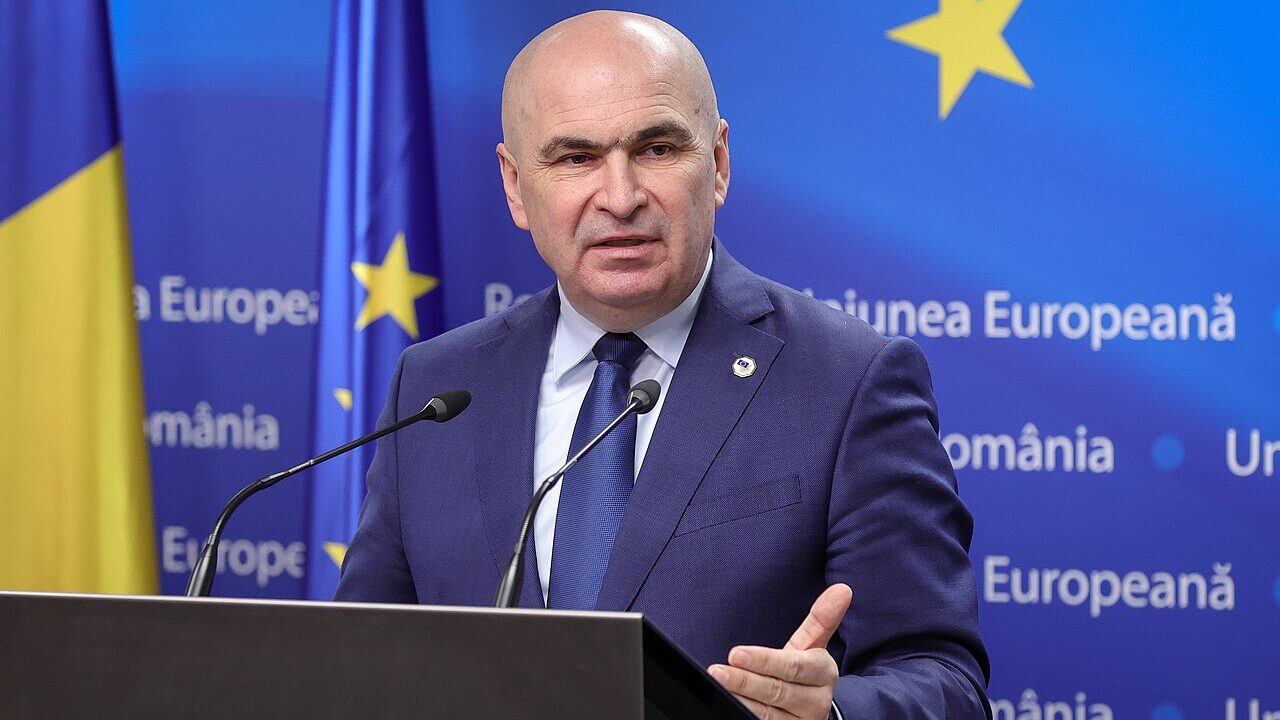
Bolojan, leader of the centre-right National Liberal Party (PNL), has refused to resign. He has indicated that he will continue governing even if PSD ministers withdraw from their posts, a move expected later this week. In such a scenario, the government would lose its parliamentary majority and operate in a weakened, minority capacity.
President Nicușor Dan sought to reassure markets, acknowledging that a political crisis was imminent but insisting that there remained consensus on key issues such as reducing the budget deficit and securing European Union funds.
Romania currently faces the risk of losing approximately €11 billion in funding if reform commitments are not met by August.
A no-confidence vote, potentially backed by both PSD and the Eurosceptic right-wing nationalist AUR party, could bring down the government altogether. However, some observers suggest AUR may prefer to delay such a move, allowing PSD’s internal divisions to deepen and further erode its credibility.
The policies of Bolojan’s government have alienated the PSD’s traditional voter base, primarily older and more conservative citizens, while simultaneously boosting support for AUR.
Recent polling underscores the shifting political landscape. AUR is projected to win 36% of the vote in the event of a snap election—double its 2024 result—while PSD, PNL, and the Save Romania Union (USR)—also a member of the coalition—trail significantly behind.
Romania, Sociopol poll:
— Europe Elects (@EuropeElects) April 11, 2026
AUR-ECR: 36% (-2)
PSD-S&D: 18% (-3)
USR-RE: 18% (+6)
PNL-EPP: 16% (+1)
UDMR-EPP: 4% (-1)
SENS→G/EFA: 2% (-1)
S.O.S.RO-NI: 1%
POT-*: 1% (-1)
REPER-RE: 1%
FD→EPP: 0% (-1)
+/- vs. 21-23 July 2025
Fieldwork: 26 March – 04 April 2026
Sample size: 1,008
➤… pic.twitter.com/eXo9GSlJCI
Despite the turmoil, forming a stable alternative pro-EU government without PSD appears unlikely, given its position as the largest party in parliament.