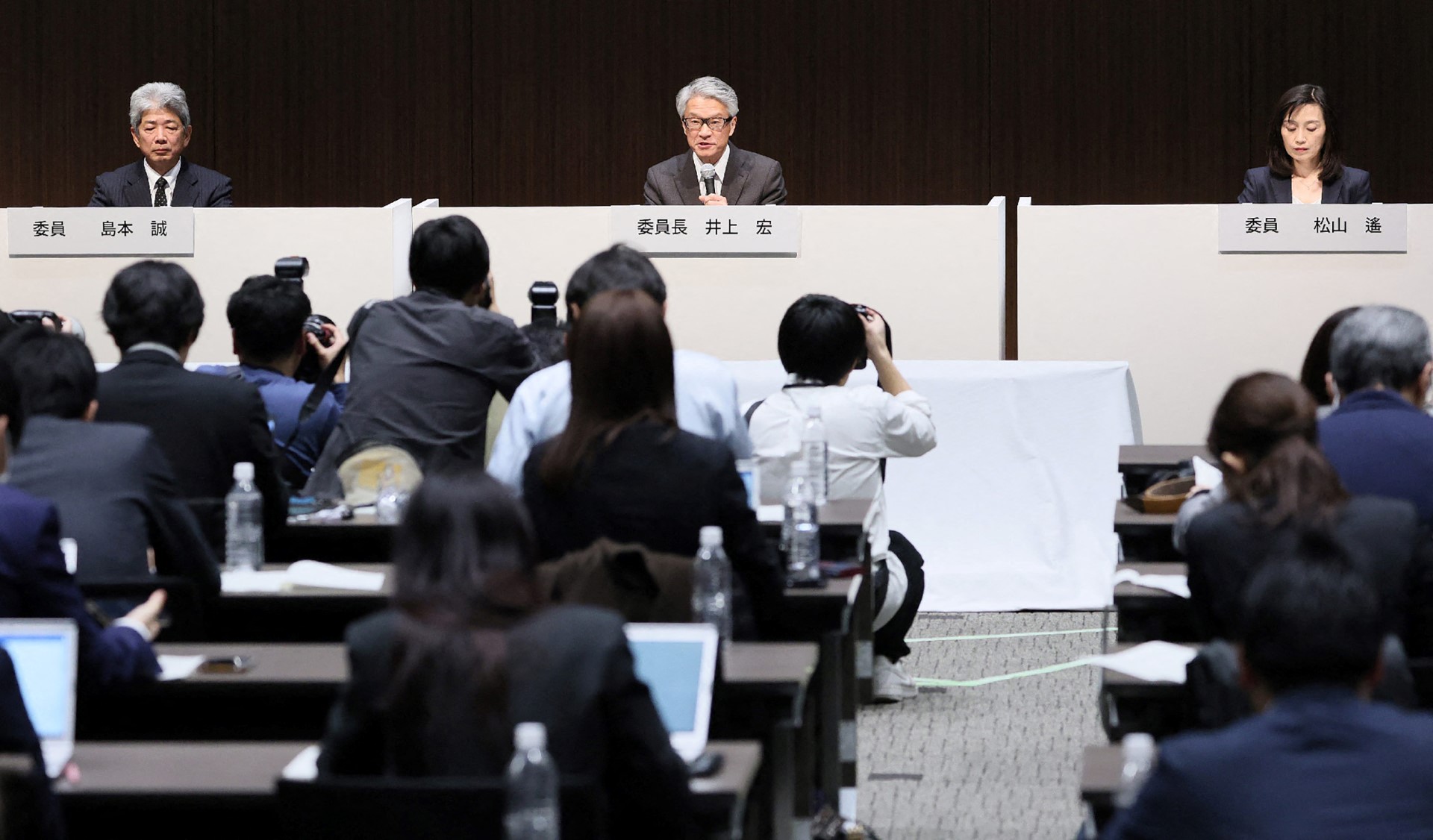
Members of the special investigation committee hold a press conference regarding Toyota Industries’ engine certification fraud in Tokyo on January 29, 2024.
JIJI PRESS / AFP
An environmentalist think tank has accused Japanese carmakers of attempting to redirect the automotive industry away from switching to electric vehicles (EVs).
The June 2026 report How the Automotive Sector is Shaping Decarbonization Policy in Emerging Markets calls out Japanese automakers for pursuing
a consistent cross-market strategy of delaying the EV transition, advocating for a “multi-pathway” approach that emphasizes hybrid vehicles and alternative fuels over battery-electric vehicles.
According to InfluenceMap, this domestic strategy can also be found in key developing markets. Toyota and the Japan Automobile Manufacturers Association are flagged up as particularly active in defending their fossil-fuel-based industry. In other words, Japanese car firms are both trying to work normally and going too slow for their eco-critics.
In contrast, Chinese EV makers are accused of deploying “these narratives far less frequently.” Horror of horrors, they “express more supportive positions on electrification when they engage.” This probably expresses China’s relative ascendancy in the global EV market. Separately, within the limits imposed by Beijing, representatives of the sector often express diverse viewpoints. For instance, this week Xpeng vice-chair Brian Gu predicted European motorists would pursue quality over savings, making price competition less important than innovation in his opinion.
InfluenceMap describes itself as an “independent think tank producing data-driven analysis on how business and finance are impacting the climate crisis” (our emphasis), unwittingly setting its green ideology on a collision course with its ‘independence.’ As it aims to bend corporations to its will, its claims to seek a sustainable, carbon-neutral future point to its lack of political neutrality.