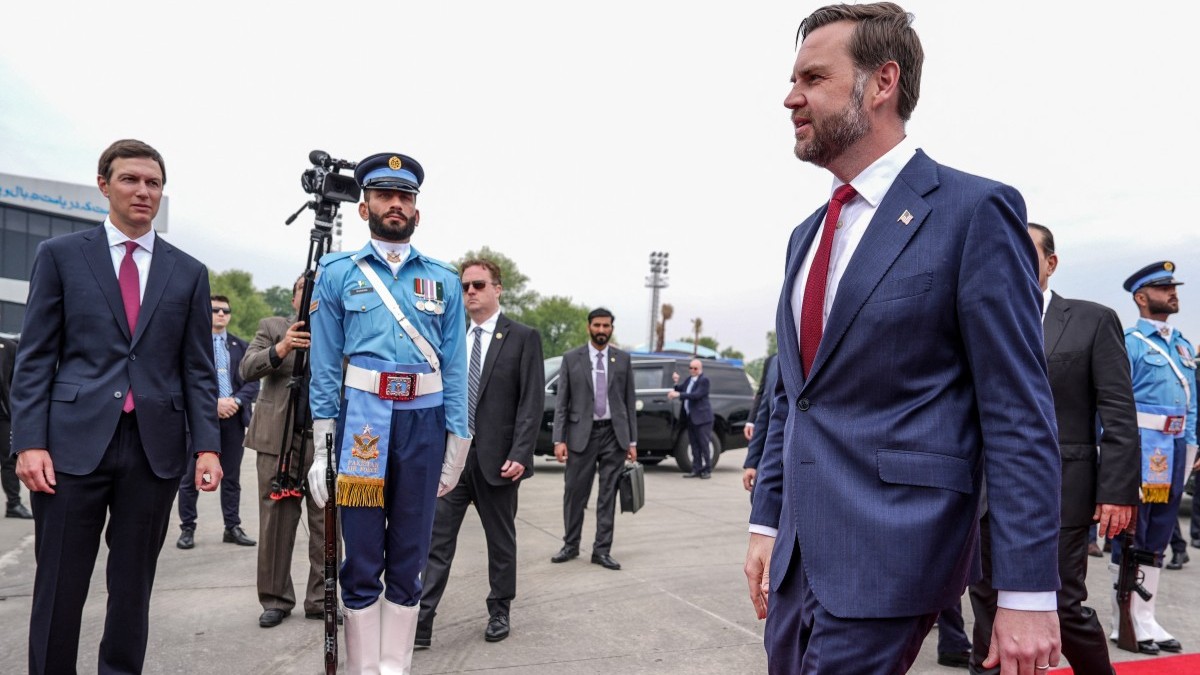
U.S. Vice President JD Vance (R) walks as U.S. President Donald Trump’s son-in-law Jared Kushner (L) watches upon their arrival for U.S.-Iran peace talks in Islamabad on April 11, 2026.
JACQUELYN MARTIN / POOL / AFP
U.S. Vice President JD Vance has arrived in Islamabad for negotiations with Iran on ending the hostilities and the uncertainty around the Strait of Hormuz.
The talks, mediated by Pakistan, mark one of the highest-level engagements between Washington and Tehran in fifty years, as both sides attempt to prevent a return to full-scale conflict. While a temporary ceasefire has been reached in recent days, officials on both sides have warned it remains highly fragile and could collapse without progress in negotiations.
However, the atmosphere surrounding the talks is tense. Iranian officials have made clear they do not trust the United States, while Washington has signalled it expects significant concessions, including limits on Iran’s nuclear programme and security guarantees in the region. At the same time, Tehran is demanding sanctions relief and the release of frozen assets.
The Vice President is leading the U.S. delegation–alongside Special Envoy Steve Witkoff and Jared Kushner –in what is seen as his most significant diplomatic mission to date. His involvement is intended to signal the seriousness of Washington’s intentions, but analysts warn that the lack of prior groundwork and the scale of disagreements make a breakthrough unlikely in the short term.
The outcome of the Islamabad talks will be critical not only for regional stability, but also for global energy markets. The Strait of Hormuz crisis has already disrupted supply chains and contributed to volatility in fuel prices.