Jean-Luc Mélenchon is gaining ground as France’s 2027 presidential race takes shape, exploiting a divided Left and sluggish centrist campaigns. Still deeply unpopular, the chameleon-like Insoumis leader may yet prove far more dangerous than his current ceiling suggests.
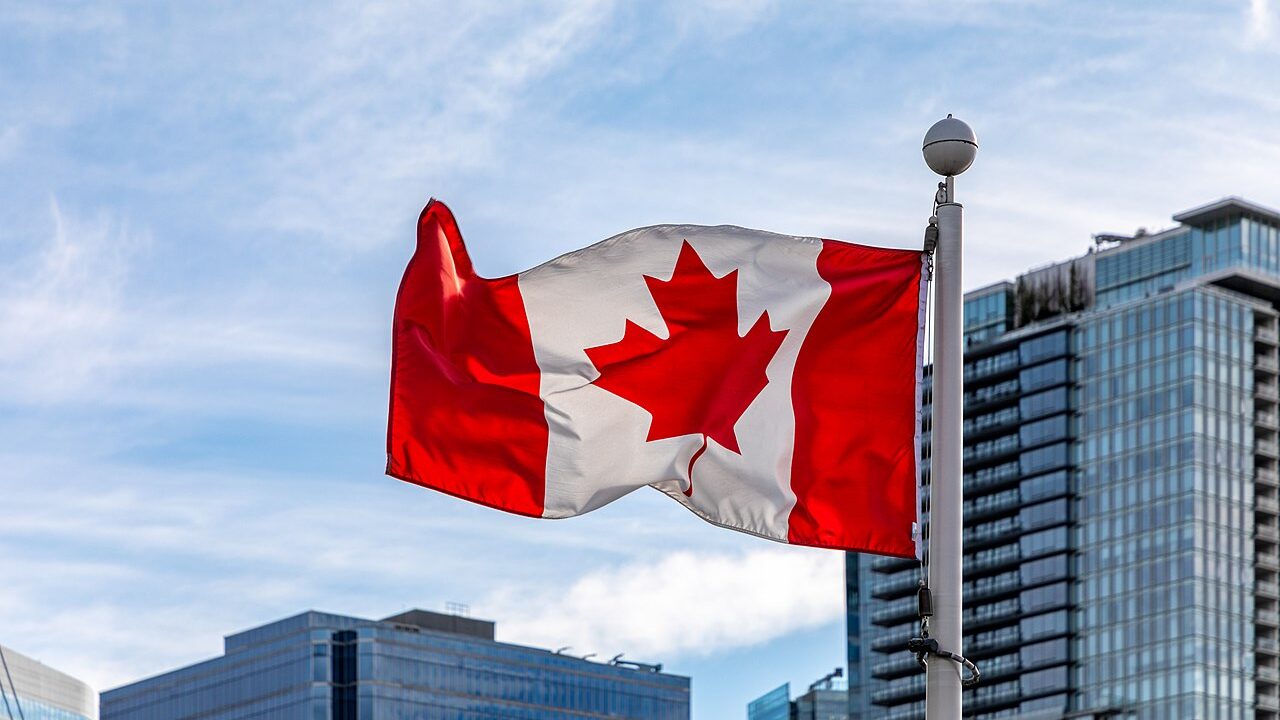
National flag of Canada on Canada Place in Vancouver, British Columbia, Canada (2022)
Dietmar Rabich, CC BY-SA 4.0, via Wikimedia Commons
While Western leaders push to bolster defense capabilities amid perceived rising threats, public willingness to enlist has lagged behind, forcing several countries to explore unconventional recruitment solutions.
Canada’s government last year changed its requirements for enlisting in the armed forces, accepting recruits with some medical conditions that would previously have been disqualifying, dropping aptitude test requirements, and implementing a program for immigrants with legal residency to join the country’s military.
A leaked internal report published by Juno News this week revealed that one French-language platoon, composed of 83% non-citizens, suffered from serious cohesion problems, including poor French fluency, a lack of respect toward female Canadian Armed Forces members, and infighting between cadets from Cameroon and Côte d’Ivoire.
Some of the platoons trained in 2025 were made up of “candidates with as little as three months residency in Canada, leading to a significant culture shock as candidates had not yet acclimatized to Canadian society, let alone Canadian military culture,” Lieutenant-Colonel Marc Kieley, commandant of the Canadian Forces Leadership and Recruit School (CFLRS) in Saint-Jean-sur-Richelieu, Quebec, wrote in the leaked report, quoted by the Globe and Mail.
“For many candidates it is the first time they have lived with members of a different sex, and for some it is also the first time they have been expected to treat women as their peers,” the internal report stated.
In addition, the new residents had not always left their native hostilities behind, resulting in accusations of racism as well as infighting between cadets from different African countries.
A significant number of the immigrant recruits also were confused about what they had signed up for and complained about not being able to return home after basic training, when they were stationed elsewhere in the country.
Several European countries already incorporate foreigners into their militaries, but a growing number are exploring expanded roles for fairly recent immigrants amid recruitment shortfalls in the native populations. France’s French Foreign Legion—which, granted, is a special case—stands out as the most open program, accepting volunteers from nearly any nationality worldwide without requiring prior citizenship or long-term residency. Spain recruits from Latin American countries with historical ties, often requiring legal residency but providing a path to citizenship for relatively recent arrivals from those nations. The UK draws from Commonwealth citizens, many of whom are recent or first-generation immigrants, though strict annual caps limit intake.
Ireland is one of the countries currently most actively considering recruiting fairly new immigrants to the country’s military. In early 2026, the Irish government, along with the defense forces, evaluated proposals to fast-track citizenship for foreign nationals who enlist and complete a set term of service. Germany has also floated the idea of opening recruitment to the Bundeswehr to EU citizens and potentially wider non-citizens, though citizenship is still generally required.
Across Europe, these moves are driven by recruitment crises, with analysts suggesting structured citizenship-for-service pathways for recent immigrants. The Canadian experience suggests the problems associated with such a recruitment policy should not be underestimated.