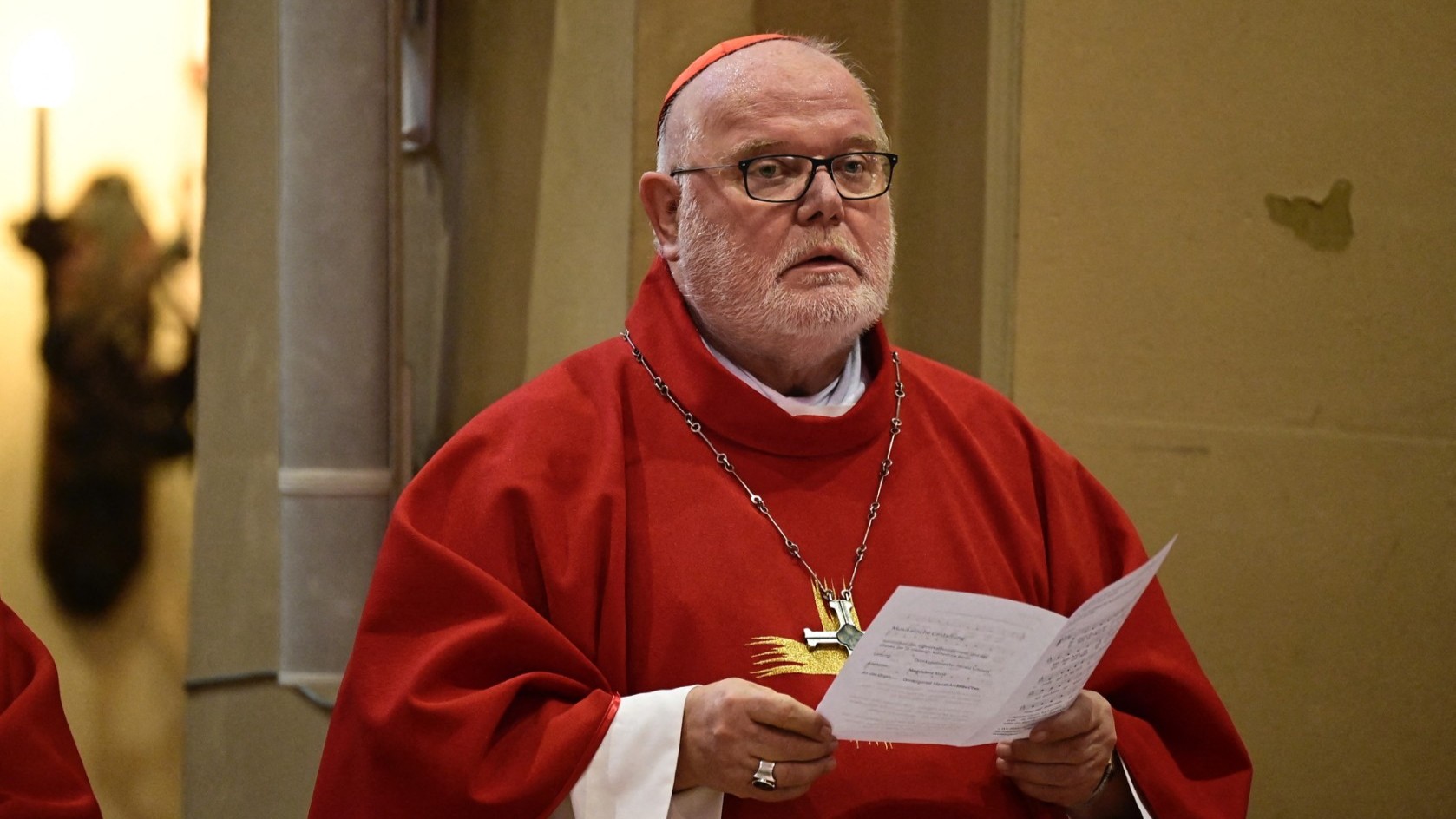
Cardinal Reinhard Marx has moved decisively to normalise the blessing of same-sex couples in his Archdiocese of Munich and Freising—an intervention that lays bare the deepening doctrinal confusion at the heart of the Catholic Church in Germany.
In a letter to clergy, Marx instructed that the pastoral guideline Segen gibt der Liebe Kraft (‘Blessing Strengthens Love’) should serve as the “foundation of pastoral practice.” The document, a product of Germany’s long-running Synodal Path, explicitly provides for the blessing of couples who cannot receive the sacrament of marriage, including homosexual couples and divorced-and-remarried Catholics.
Priests unwilling to perform such ceremonies themselves are advised to pass couples on to more accommodating clergy. From June, diocesan structures will offer training sessions to ensure these blessings are carried out in a more consistent and organised manner: hardly the spontaneous, informal gestures envisioned by Rome.
Marx insists that these ceremonies do not constitute marriage. Yet the distinction appears increasingly strained. When blessings are formalised, scheduled, and effectively institutionalised, they begin to resemble precisely what the Church insists they are not. The result is a practice that risks blurring the very boundaries Catholic teaching has long sought to uphold.
The move builds on the Vatican’s 2023 declaration Fiducia supplicans, issued under Pope Francis, which cautiously permitted non-liturgical blessings for individuals in “irregular situations.” Crucially, however, the document warned against creating rituals or any appearance of equivalence with marriage. It stated that such blessings should not be formalised or integrated into structured ceremonies.
That warning appears to have been quietly set aside in parts of Germany.
Opposition has been swift and unambiguous. In Cologne, Cardinal Rainer Maria Woelki has rejected the guidelines outright, arguing that they go beyond what the Vatican authorised. His archdiocese will not implement the document, maintaining that any blessing must remain brief, spontaneous, and clearly distinct from matrimonial rites.
What is emerging is not merely a pastoral disagreement but a widening fracture within the Church itself. On one side stand bishops and clergy determined to adapt doctrine to contemporary cultural expectations; on the other, those who insist that the Church’s teaching—grounded in Scripture and natural law—cannot be reshaped without losing coherence altogether.
The German bishops’ conference continues to present its approach as consistent with the tone of Francis. Yet under his successor, Pope Leo XIV, there are signs of a firmer line. Leo has already indicated resistance to any attempt to revise the Church’s sexual ethics or to introduce quasi-liturgical blessings that could be mistaken for marriage.
But Marx’s directive shows that in parts of Europe, the line between pastoral accommodation and doctrinal departure is no longer simply being tested; it is being steadily erased.