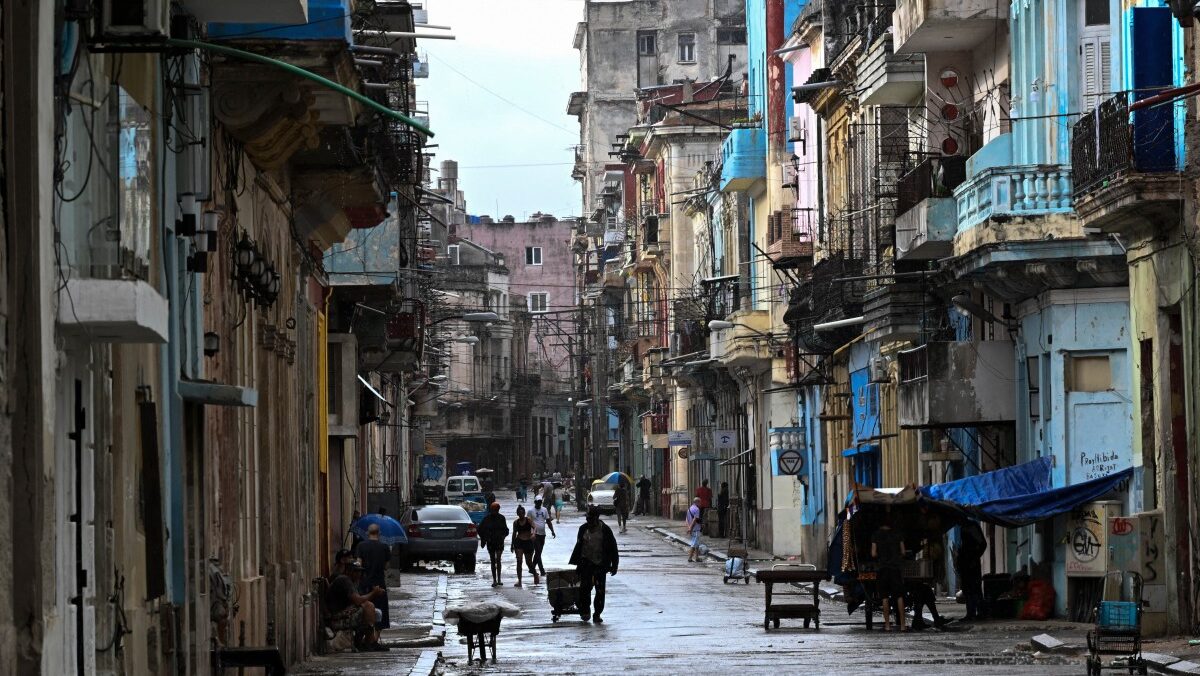
General view of a street in Havana on March 16, 2026.
YAMIL LAGE / AFP
Cuba is edging toward a breaking point—and, for the first time in years, even its leadership seems to know it.
After months of rolling blackouts, empty shelves, and growing street protests, Havana has quietly opened talks with Donald Trump’s administration. The goal is simple: ease the crushing economic pressure without loosening its grip on power. Whether that balancing act is still possible is another question.
In Washington, the mood is shifting. There is a growing sense that the system built in 1959 is running out of road—and that Cuba could be the next domino after the U.S.-led intervention in Venezuela and the escalating war with Iran. Behind the scenes, officials are exploring ways to force change without triggering chaos, including removing President Miguel Díaz-Canel while keeping the regime’s core intact.
On the ground, the situation is bleak. Fuel shortages have stalled transport. Tourism—once a lifeline—has collapsed. Power cuts are routine. For ordinary Cubans, daily life has become a grind of scarcity and uncertainty.
And yet, the regime is still standing. Decades of tight internal control—through the Communist Party and security services—have helped it survive shocks that might have toppled other governments. But the cracks are widening. Younger Cubans are less ideologically loyal, and the state can no longer afford the subsidies that once kept discontent in check.
The reforms announced so far—limited private enterprise, small openings to foreign investment—feel less like a new direction and more like a holding pattern.
Meanwhile, Europe’s absence is not accidental—it is the result of decades of political choices. For years, Brussels has avoided any serious pressure on Havana, preferring dialogue and cooperation even as those policies failed to produce meaningful political change. That approach has been shaped by a mix of ideological sympathy for the Cuban revolution in parts of the European Left, longstanding personal and diplomatic ties, and a broader post–Cold War inertia that discouraged confrontation.
The result is a policy that has achieved little. There has been no real opening of the political system, no significant improvement in rights and freedoms—and yet no shift in European strategy either. Even now, as the crisis deepens, the EU remains largely on the sidelines.
Now, with Cuba under more strain than at any point since the 1990s, the stakes are rising. Havana wants relief without surrender. Washington wants change without collapse.
And Europe? Once again, it is watching events unfold from a distance—its foreign policy strong in language, but weak when it comes to shaping outcomes.