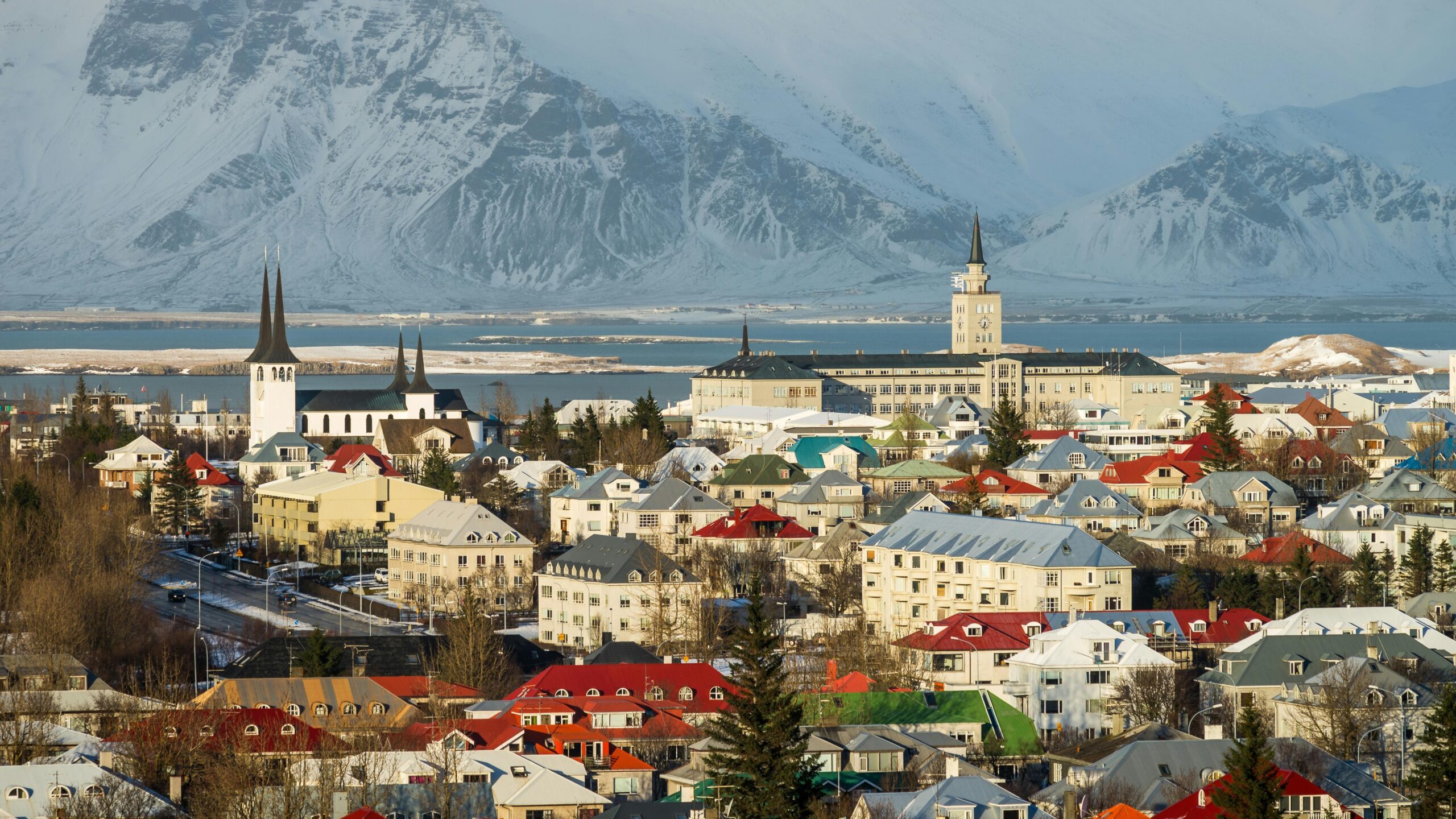
Reykjavík
Pexels
The European Union and Iceland signed a new security and defence pact in Brussels on March 18th, deepening cooperation in the Arctic and North Atlantic just five months before Icelanders vote on whether to reopen EU membership talks.
The agreement, signed by EU foreign policy chief Kaja Kallas and Icelandic Foreign Minister Þorgerður Katrín Gunnarsdóttir, strengthens cooperation on cyber security, hybrid threats, undersea infrastructure, and sanctions against Russia.
Its political significance goes beyond the technical details. Reykjavík plans to hold a referendum on August 29 on whether to resume accession negotiations abandoned in 2015. Brussels is therefore moving to integrate Iceland into its security architecture before any formal decision on membership has been taken.
For years, Iceland has occupied an unusual position in Europe. It belongs to the European Economic Area and Schengen; participates in the single market; and applies much of EU legislation through the European Economic Area, yet has always resisted full membership.
The main reason is fisheries. Fishing remains central to the Icelandic economy and national identity. Many Icelanders fear that joining the EU would eventually mean accepting the Common Fisheries Policy and losing control over their waters. That was why accession talks, opened after the 2008 financial crisis, were frozen in 2013.
But the strategic context has changed.
Russia’s war in Ukraine, growing competition in the Arctic, and Donald Trump’s renewed unpredictability have pushed Icelandic politics back toward Europe. The new centre-left government has therefore called a non-binding referendum on reopening negotiations. The defence pact signed with the EU reflects that shift. The Commission described the agreement as a “milestone” that would give new momentum to relations with Iceland.
The agreement establishes closer cooperation on Arctic and North Atlantic security, cyber attacks, hybrid threats, and the protection of critical infrastructure such as undersea cables.
It also formalises closer intelligence sharing and coordination on sanctions against Russia. Iceland is expected to participate in selected EU defence-related projects linked to cybersecurity, satellite communications, and military mobility.
That is politically significant because Iceland is not an EU member and has no standing army. For decades, its security depended almost entirely on NATO and the United States.
Now Brussels is adding a specifically European layer. The pact also forms part of a wider EU effort to deepen defence cooperation with non-member partners after similar agreements with the United Kingdom, Canada, and India.
Officially, the EU says the pact complements NATO. In reality, it reflects growing doubts across Europe about relying entirely on Washington.
Iceland matters because of where it is.
The island nation sits near the GIUK gap between Greenland and the United Kingdom, one of the key corridors linking the Arctic and the Atlantic. In any confrontation with Russia, Iceland would again become essential for surveillance and reinforcement.
By tying Reykjavík more closely to Brussels, the EU strengthens its claim to be an Arctic actor between Russia and the United States. Since Brexit, Brussels has lacked a strong presence in the North Atlantic. Iceland fills part of that gap. The agreement also fits into a broader northern strategy alongside Norway’s closer cooperation with the EU and the entry of Sweden and Finland into NATO. For Iceland, however, the decisive question remains sovereignty.
Fishing groups and Eurosceptic parties still argue that Iceland already has the best possible arrangement: access to the European market without political control from Brussels.
But the debate is changing. The government increasingly frames the issue not as Brussels versus sovereignty, but as security versus exposure.
The referendum is therefore only a first step. Icelanders are not being asked whether they want to join the EU, only whether they want to restart negotiations. Yet the defence pact may already be narrowing the distance, with Brussels appearing to be testing a new model: security integration first, membership later. Would it work? And—more importantly for Iceland—is membership worth it for small countries if Ursula von der Leyen’s hotly desired abolishing of the national veto is implemented?