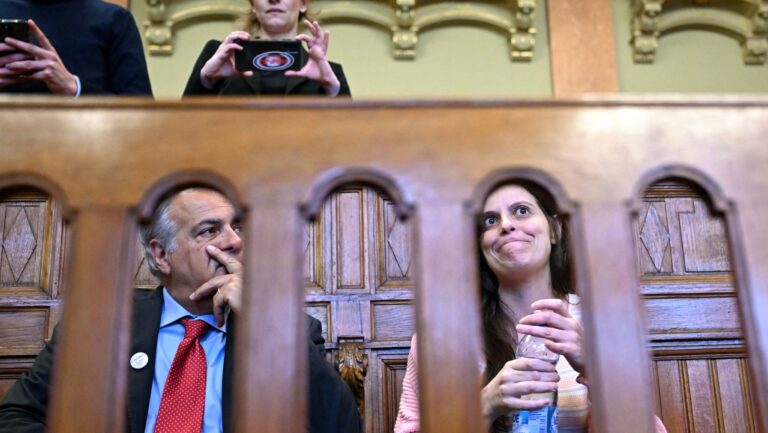
In a Parliament long dominated by leftist narratives and the culture of death, the latest meeting on family policies revealed signs of a shifting tide. The Federation of Catholic Family Associations in Europe (FAFCE) has emerged as a decisive force for pro-life and pro-family lawmakers who are beginning to translate their convictions into small but meaningful legislative victories.
The session, held at the European Parliament, brought together representatives from 20 countries and MEPs from different political groups who agreed on one diagnosis: Europe is facing a “demographic winter” and has lost the sense of the family as a nucleus of solidarity, education, and the future. As FAFCE president Vincenzo Bassi stated, “Without families, there is no intergenerational solidarity, no social cohesion, and no sustainable development.”
Among the most notable achievements was the committee’s approval of maternity leave for pregnant MEPs—a symbolic measure that breaks years of institutional indifference toward motherhood within the EU itself.
Likewise, the joint effort of members of the European People’s Party and independent MEPs led to the inclusion of an amendment in child protection legislation classifying children’s exposure to pornographic material as a form of sexual abuse. “We have managed to acknowledge real harm that was previously denied,” said one of the participants.
These results, modest yet unprecedented, confirm FAFCE’s strategy of bringing demographic and family issues from the moral sphere into the political and social one. Rather than appealing solely to religious convictions, pro-life advocates are managing to center the debate on economic and public health data: declining birth rates, accelerated aging, growing loneliness, and the psychological effects of digital overexposure on minors.
The debate is set to intensify on November 5th, when the Committee on Women’s Rights and Gender Equality (FEMM) votes on the ‘My Body, My Choice’ proposal, which seeks to abolish any restrictions on abortion across the European Union and guarantee full public funding through EU programs.
The initiative, backed explicitly by the European Commission, poses a direct challenge to pro-life groups, who warn against what they see as an attempt to “impose an absolute right to abortion” in an area that, under EU treaties, remains a national competence. “There can be no talk of freedom if the value of life is denied,” said one participating MEP, emphasizing that the defense of motherhood cannot be reduced to a mere ideological issue.
Pro-life lawmakers and family representatives agree that the defense of life and family faces structural resistance within the EU bureaucracy. They denounced that many Catholic associations are excluded from EU funding simply because they refuse to conform to Brussels’ imposed ideological language. “When you write ‘father and mother’ instead of ‘parents,’ the system blocks you,” one spokesperson explained.
Even so, the tone was one of hope. Several participants stressed that, following the most recent elections, the conservative bloc has gained influence and can now form stable majorities on issues such as family, childhood, and educational freedom. “This is not about imposing morality,” summarized a Spanish MEP, “but about reminding Europe that without strong families, there is no future—and no real democracy.”
Speakers repeatedly underlined that the demographic challenge is not merely economic but civilizational. With birth rates at record lows and a social policy model focused more on redistribution than on rebuilding the family fabric, the European Union faces a choice: to continue deepening its identity crisis or to rediscover in the family the principle of cohesion on which Europe was founded.