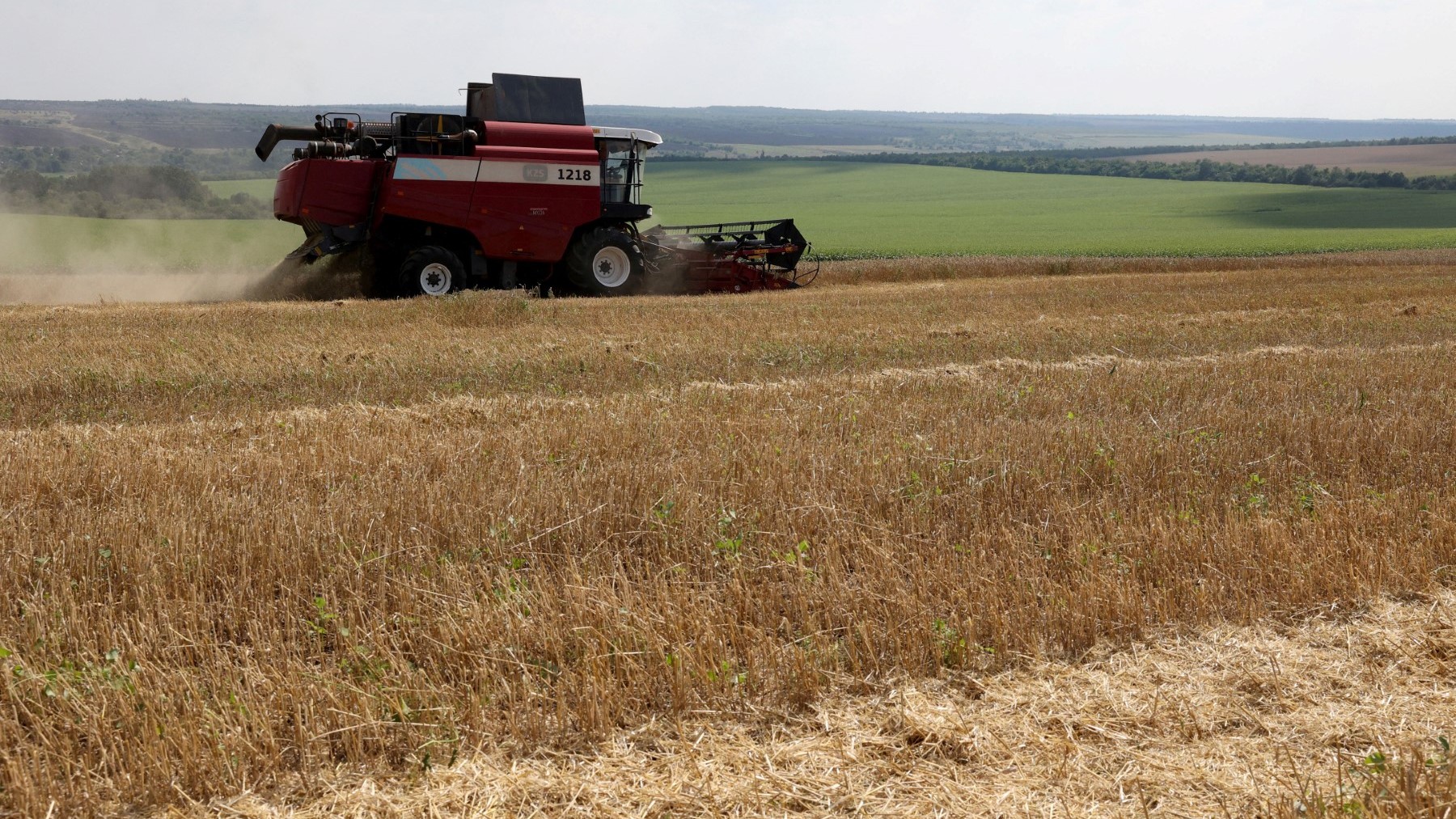
A combine harvests wheat near Kramatorsk, in Donetsk region on August 4, 2023.
ANATOLII STEPANOV / AFP
Hungary’s new centrist, pro-Brussels government has allowed a long-standing ban on Ukrainian agricultural imports to lapse, reopening the domestic market to products that farmers’ organisations say threaten both food safety and the survival of local producers.
More than twenty categories of Ukrainian products—including wheat, maize, flour, poultry, and eggs—may now enter Hungary with little more than a notification requirement for importers.
The decision has provoked outrage from the Hungarian farmers’ association MAGOSZ, which warned that the government has effectively dismantled protections shielding domestic agriculture from unfair competition.
Tibor Cseh, the organisation’s secretary-general, said the previous system had prevented shipments destined for the Hungarian market from crossing the border, while allowing sealed transit cargoes to continue westward.
The original restrictions were introduced in 2023 after the European Union opened so-called “solidarity corridors” to help Ukrainian grain exports reach global markets following the disruption of Black Sea shipping routes due to the war with Russia.
In practice, however, large quantities of cheap Ukrainian produce remained in Central European countries, depressing prices and leaving local farmers unable to sell their crops competitively.
Concerns have also persisted over food safety standards. Hungarian authorities previously reported cases of toxin and GMO contamination in grain imported from Ukraine, while neighbouring Slovakia detected chlorpyrifos—a pesticide banned in the EU—in a large shipment of Ukrainian wheat.
The controversy reflects a broader backlash across Central Europe against Brussels’ push to deepen economic integration with Kyiv.
EU officials have increasingly argued that Ukraine’s agricultural sector is aligning with European standards and should gradually be incorporated into the Single Market.
Yet farmers in Hungary, Poland, and Slovakia fear that Ukraine’s vast, low-cost agricultural industry could devastate domestic producers already struggling with rising energy costs and stringent EU environmental regulations.
The new Hungarian government’s willingness to relax import controls aligns with its broader pro-Brussels agenda and support for accelerating Ukraine’s path towards EU membership, despite the country remaining at war and facing longstanding corruption concerns.
It seems the new administration is ready to subordinate national interests to Brussels’ geopolitical ambitions.