Javier Villamor
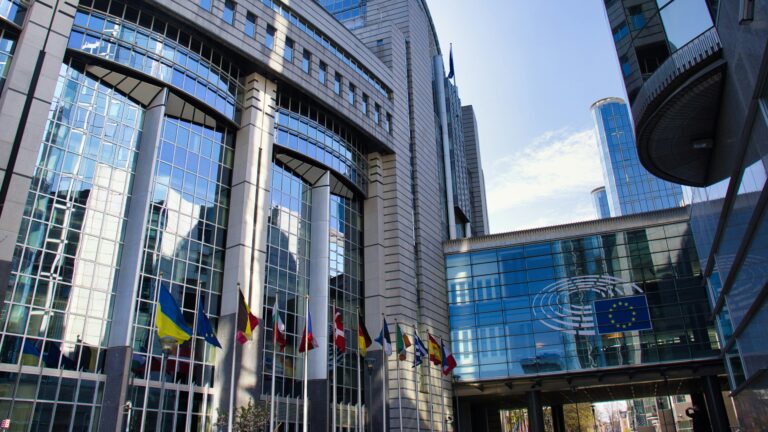
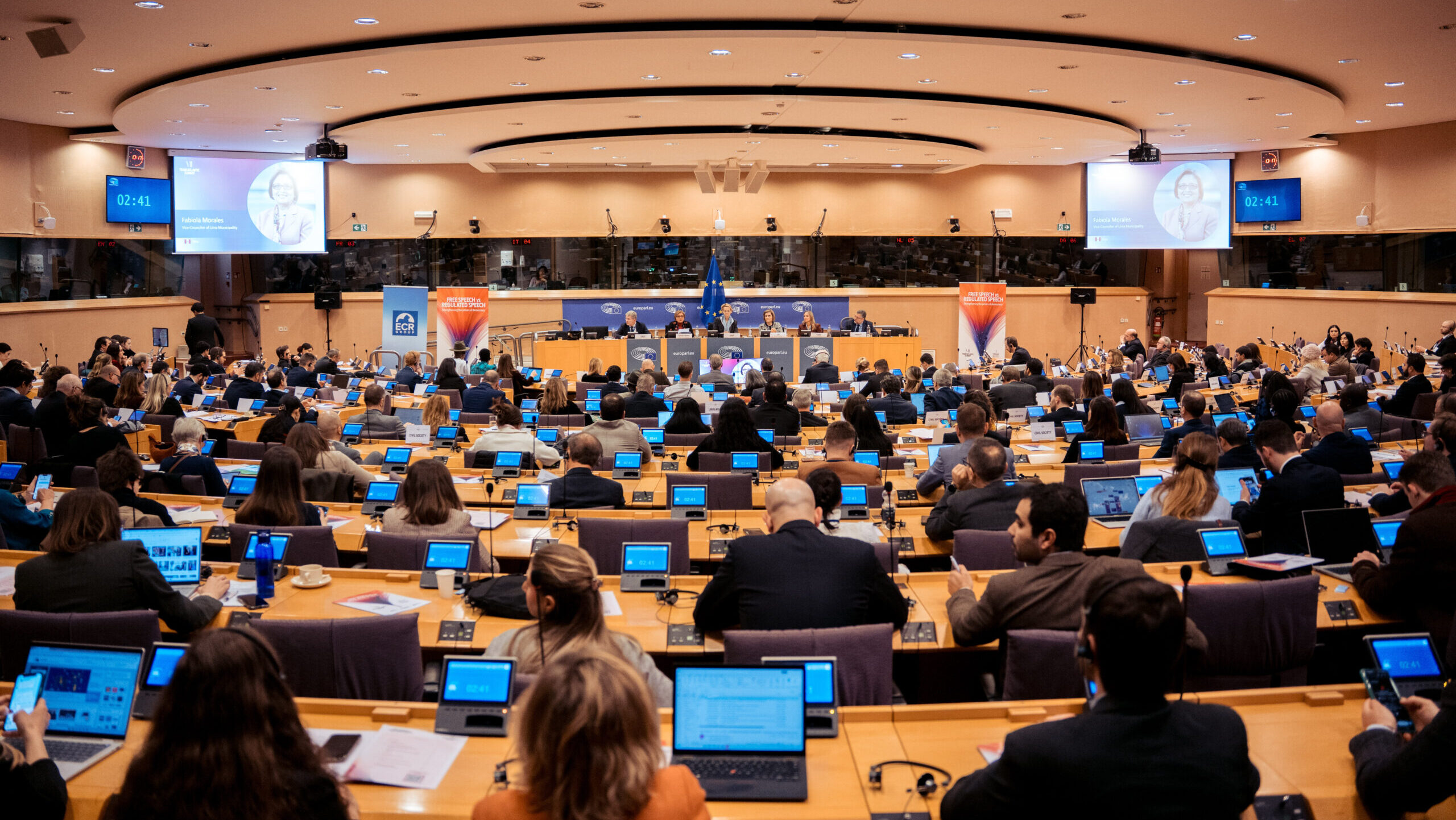
On February 3rd, the European Parliament in Brussels hosted the VII Transatlantic Summit of the Political Network for Values, where international experts confronted rising threats to free speech and debated the state’s role in protecting fundamental rights and the effects of regulating public speech in Western democracies.
The event brought together political representatives, judges, academics, and other experts from Europe, Latin America, and Africa.
The opening session was led by Croatian member of the European Parliament Stephen Bartulica, president of the Political Network for Values, who defined freedom of expression as “a right that precedes any government” and stated that it “does not depend on the will of those who administer public affairs but is essential to human nature.”
Bartulica stressed that, throughout history, “people have been willing to go to prison, to sacrifice everything, for this right,” adding that “it is not the role of government to police the public square or to decide which opinions citizens are allowed to see.”
A central part of the summit was devoted to analysing the Digital Services Act and content moderation mechanisms on digital platforms. Bartulica argued that this regulation “treats expression as just another commodity to be regulated,” when in fact it is “something fundamental to a free and democratic society.”
In his remarks, he warned that terms such as “hate speech” are “impossible to define precisely as legal concepts,” creating a situation in which “it is unclear when an infringement is being committed.”
In the same session, Polish MEP Patryk Jaki stated that “freedom of expression is not an accessory to democracy, but the condition of its very existence.” Jaki argued that “it is impossible to imagine a democracy without freedom of expression” and warned that “administrative pressure on digital platforms leads to the removal of content without judicial rulings, without clear appeal mechanisms, and without distinguishing between falsehood and opinion.”
“The result,” he said, “is that minority voices are eliminated, the official narrative is privileged, and pluralism is reduced to a single acceptable interpretation.”
During one of the panels, dedicated to the role of the state as custodian—rather than censor—of freedom of expression, several speakers linked freedom of speech directly to human dignity. Jaki stated that “it is difficult to imagine a fully human person if they are afraid to express themselves,” adding that “there is no development without constructive criticism or competition of ideas.”
Along these lines, he recalled that “the history of Europe is a history of disputes, debates, and controversies,” and that “those disputes were a source of progress.” According to the Polish MEP, “when even a single truth is silenced, pluralism, democracy, and the Europe we know disappear.”
From Latin America, several institutional leaders provided concrete examples. The president of the Constitutional Court of Peru, Luz Pacheco, explained that “the exercise of the state’s sanctioning power, whether administrative or electoral, is subject to the same principles that govern criminal law.”
Pacheco warned that “when an authority sanctions by expansively interpreting a rule or by creating prohibitions not expressly provided for, due process, legal certainty, and above all human dignity are violated.”
She noted that “the duty of the state is not to purge public debate of uncomfortable references but to promote it,” especially in electoral contexts. “It is not possible to prohibit invoking God in public debate,” she said, adding that “when the state becomes an ideological arbiter, it ceases to be a custodian of freedoms.”
From Paraguay, the president of the Chamber of Deputies, Raúl Latorre, argued that “freedom of expression cannot be merely a proclamation, but must be a daily practice,” while municipal representatives from Argentina and Peru agreed that “the annulment of dissent has become a habitual way of legislating.”
Civil society organisations also weighed in at the summit. The president of Abogados Cristianos, Polonia Castellanos, stated that “there is no freedom of expression when saying that there are only two sexes, or that parents have the right to educate their children according to their convictions, ends up in court.” Castellanos explained that her organisation has faced “threats, demonstrations, and legal proceedings” but emphasised that “each case has made it possible to save lives and defend fundamental rights.”
“In a world that seeks to silence the truth through unjust laws and intimidation,” she said, “denouncing injustice is an obligation.”
The sessions concluded with a call to strengthen cooperation among parliamentarians, jurists, and civil society organisations. The organisers insisted that freedom of expression “is not an ideological luxury” but “a condition of the common good” and that “a democracy that restricts speech in the name of the good ultimately restricts the good in the name of power.”