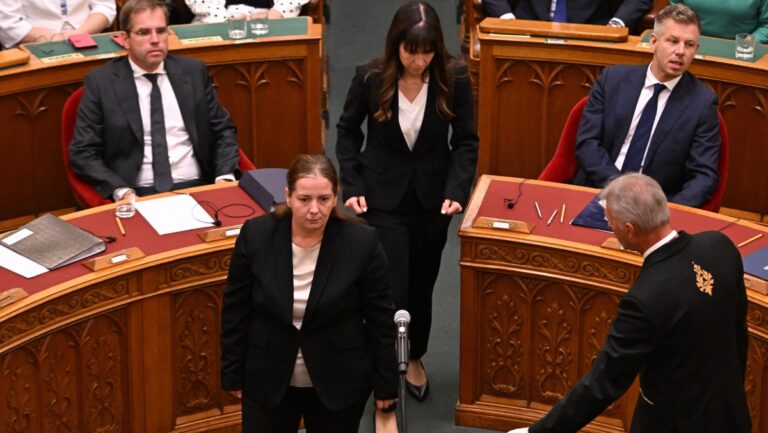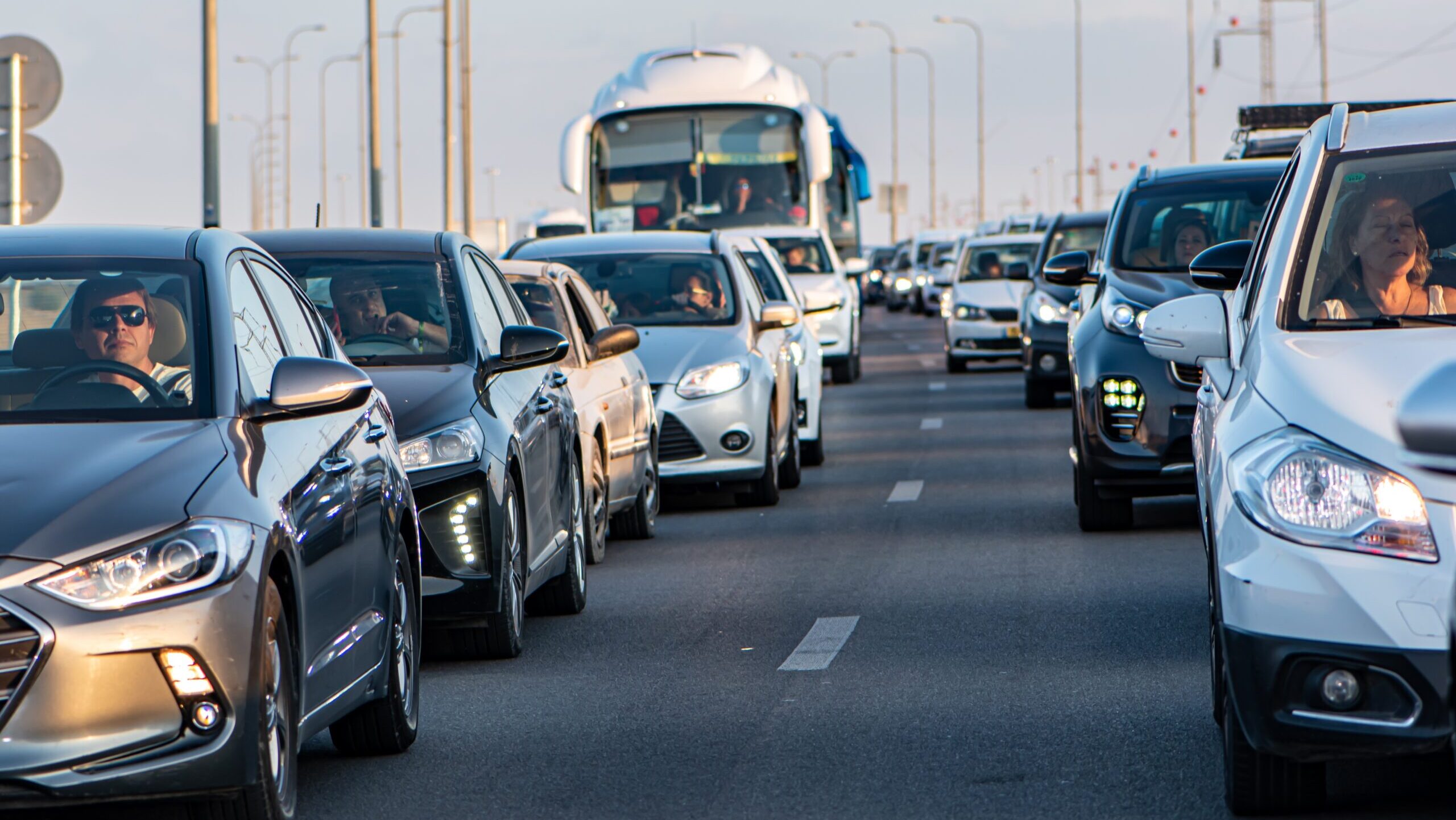
Following an intense parliamentary battle, French MPs have voted to permanently abolish Low Emission Zones (LEZs), which were supposedly intended to limit pollution from combustion-engine vehicles in urban areas. This legislative victory is a major blow to the government, which, still lacking a majority, has suffered a series of setbacks.
Proposed as part of a broader piece of legislation, known as the Simplification Act, the MPs’ decision to permanently abolish the LEZs goes far beyond a mere technical decision: it reveals a deep-seated political rejection and constitutes a genuine rebuke for the government, which has proved unable to maintain one of its flagship policies.
In recent months, the government has fought to keep them at all costs, even in a modified form. But MPs rejected the executive’s attempts at compromise, notably the one aimed at giving local authorities greater leeway and the one proposing to limit their application to certain major cities.
An unusual parliamentary dynamic made the rejection of the measure possible: a coalition spanning from the centre-right to the Rassemblement National (RN), including part of the centre, formed to bring down the measure, highlighting the government’s isolation on the issue. Unable to rally its majority or convince the opposition, the government has suffered a clear political setback, illustrating the erosion of its authority on environmental issues—as on so many others. The text of the Simplification Act was adopted by 275 votes to 225, in its final form repealing the LEZs.
The government had made LEZs a cornerstone of its strategy to combat air pollution. Introduced in 2018 and intended to be rolled out nationwide by 2025, they embodied a proactive policy to transform ‘urban mobility.’ The abolition of low-emission zones, voted through against the executive’s advice, highlights a twofold weakness: on the one hand, its inability to secure acceptance of restrictive environmental measures (and more broadly, a rejection of any form of ‘punitive environmentalism’); on the other hand, a loss of parliamentary influence in a context of a relative majority, which the outcome of the conclusion budget discussions might, in the long run, have made possible to forget. Sébastien Lecornu’s government has been struggling to hold on for many months without managing to make any substantial progress on any issue, as it is unable to rally a solid majority behind any political project whatsoever.
Moreover, if the LEZs were rejected on such a large scale, it is because they crystallised deep-seated social discontent. From the moment they were implemented, they were accused of penalising low-income households, who were forced to keep old vehicles for lack of the means to replace them.
The criticism of ‘punitive environmentalism’ largely shaped the public debate. In many suburban and rural areas, LEZs were perceived as a further restriction on freedom of movement, exacerbating the sense of territorial division. Moreover, the opposition was not confined to a single political camp: it spanned the entire political spectrum, a sign that the measure had become politically untenable.
Against the backdrop of the energy crisis reignited by the war with Iran, tensions surrounding car use have never been higher.
Beyond their social implications, LEZs have also been criticised for their relative ineffectiveness and incomplete implementation. After several years, only some of the affected urban areas actually implemented them, revealing practical difficulties in enforcement. The lack of support—insufficient funding, a lack of enforcement, limited transport alternatives—contributed to discrediting the scheme, which appeared to the majority of the French public as yet another unfair regulatory constraint rather than an effective and fair solution.
Over time, LEZs ceased to be a mere public policy tool and became a symbol of an environmentalism perceived as technocratic and of the growing disconnect between environmental objectives and social realities. Their abolition therefore carries political significance that goes far beyond the issue of air quality. It embodies the rejection of a certain vision of the ecological transition, perceived as top-down and unfair, imposed by privileged elites disconnected from the realities of French people who rely on car travel.