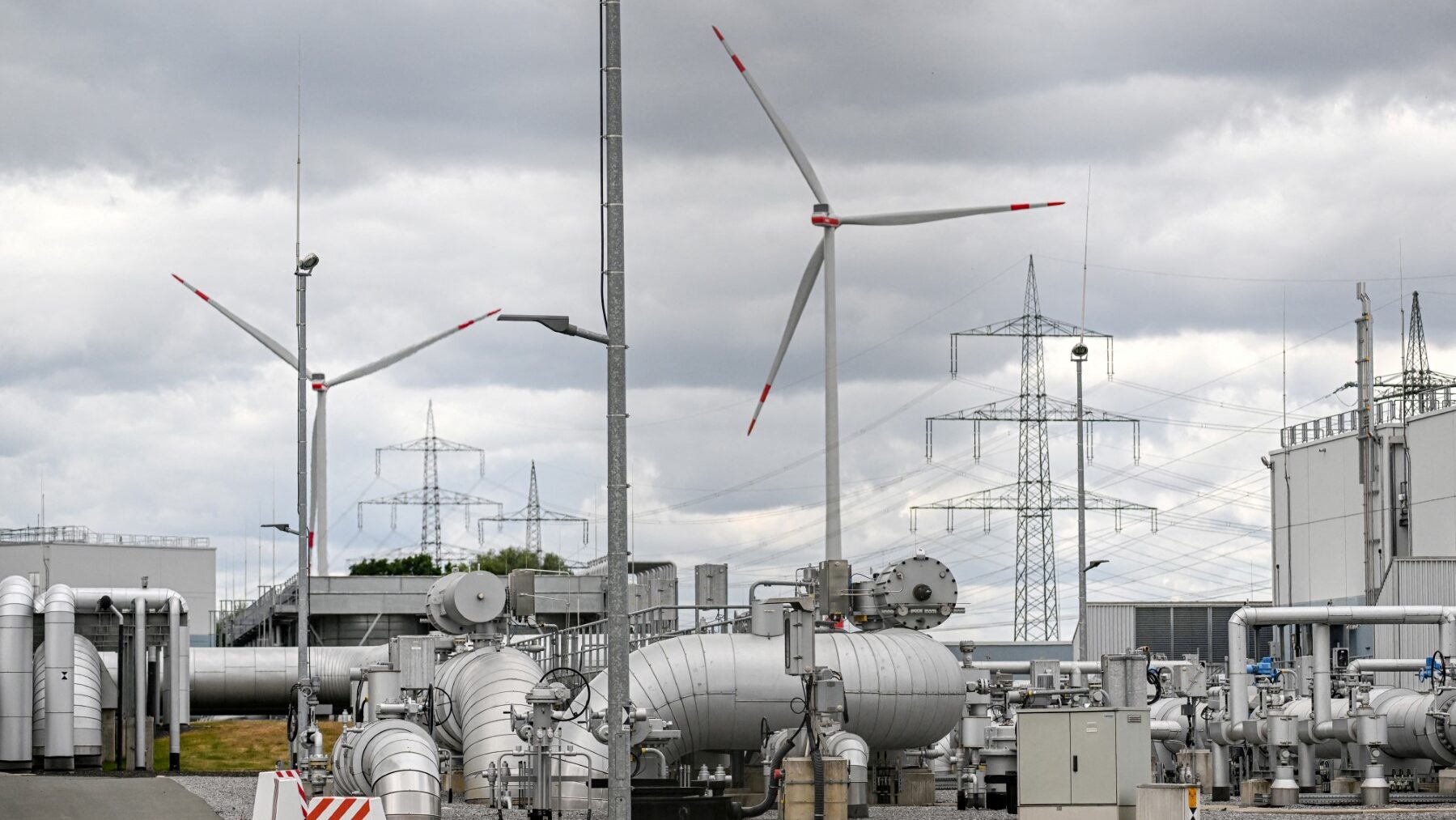
Wind turbines are pictured behind pipes and pressure gauges for gas lines at Open Grid Europe (OGE), one of Europe’s largest gas transmission system operators, in Werne, western Germany on July 15, 2022.
Ina FASSBENDER / AFP
The latest escalation between the United States, Israel, and Iran has reignited one of the most sensitive fault lines in the global economy: the security of energy flows through the Strait of Hormuz. For Europe—still adjusting to the loss of most Russian gas supplies—the shock is immediate.
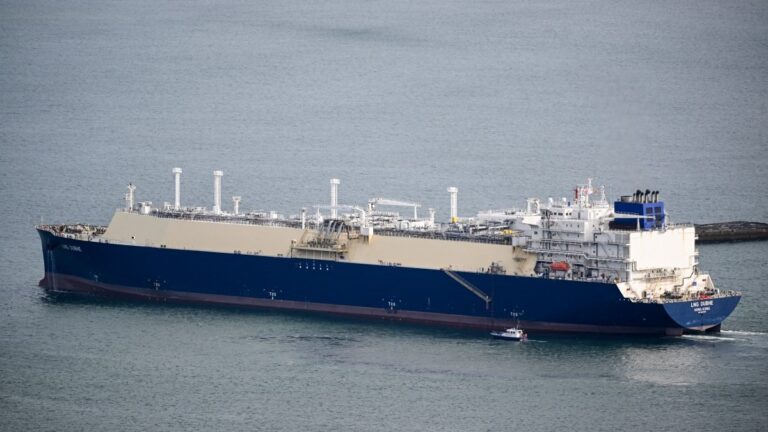
Roughly 20 million barrels per day of oil and petroleum products, about a fifth of global consumption, transit daily through the strait. In addition, all liquefied natural gas (LNG) exports from Qatar and the United Arab Emirates pass through the same corridor, accounting for around 20% of global LNG trade. Since the first strikes at the end of February, shipping traffic has slowed sharply, with tankers delayed amid security concerns.
Markets reacted instantly. Brent crude rose around 8%, approaching $78 per barrel, while European gas prices jumped close to 20% to roughly €38 per megawatt hour. Analysts warn that a prolonged disruption could push oil above $100 per barrel if inventories begin to tighten and logistics remain constrained.
Although OPEC+ has pledged additional output and the International Energy Agency could coordinate the release of strategic reserves if necessary, these tools would only soften a sustained disruption—not neutralise it.
Europe imports less Gulf oil than major Asian economies, but global pricing means no region is insulated. The continent’s greater vulnerability lies in LNG. If flows through Hormuz are curtailed, global spot supply tightens immediately, forcing Europe to compete with Asian buyers for flexible cargoes.
This comes at an uncomfortable moment. According to economic think tank Bruegel, EU gas storage stood at 46 billion cubic metres at the end of February 2026, well below levels seen in the previous two years. Lower inventories complicate refilling ahead of next winter and amplify exposure to price spikes.
Higher gas prices feed directly into electricity costs and industrial margins, especially in energy-intensive sectors such as chemicals and steel. If oil and gas prices rise simultaneously, substitution options narrow and inflationary pressures could return.
The European Commission is reportedly coordinating contingency measures, including closer monitoring of LNG flows, possible demand-reduction strategies and more synchronised storage refilling. Yet these are defensive steps. The deeper issue is structural: Europe remains heavily dependent on imported energy traded on volatile global markets.
The Middle East crisis has also intersected with internal EU tensions. Hungary and Slovakia, reliant on Russian crude via the Druzhba pipeline, have renewed calls in EU discussions for safeguarding overland supply routes amid disputes involving Ukraine. Both countries retain exemptions from the EU’s broader oil embargo and argue that diversification must remain pragmatic.
These debates highlight the persistent divide between geopolitical positioning and energy security. As prices rise, so does the pressure on governments to balance sanctions policy, industrial competitiveness and household energy bills.
Whether the current surge becomes a lasting shock depends on the duration of hostilities. A brief confrontation may leave only a temporary risk premium in prices. A prolonged disruption, however, would erode inventories and tighten global balances, with broader economic consequences for Europe.
Despite diversification since 2022, the continent’s exposure to external energy shocks remains substantial. The events in the Gulf are a reminder that energy security is not only a matter of supply contracts, but of geography—and geopolitics.