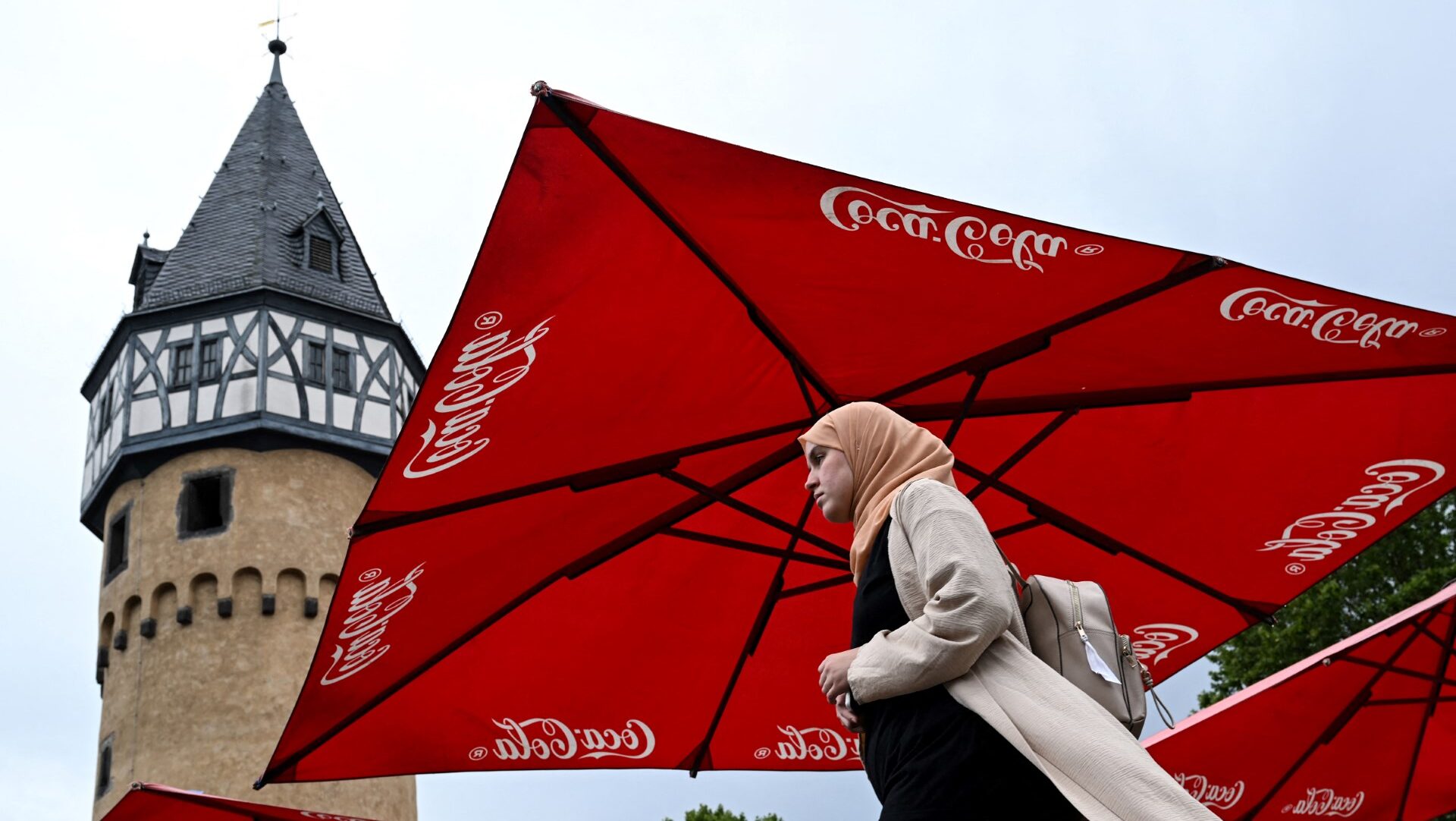
A woman wearing a hijab walks under the umbrellas of a street cafe with Coca-Cola ads in the center of Frankfurt am Main, western Germany, on July 25, 2023.
Kirill Kudryavtsev / AFP
One of Germany’s largest online retailers has begun selling hijabs for young girls, sparking criticism amid warnings of Islamist pressure on minors.
Otto-Versand promotes the veils as accessories that “offer comfort and allow your daughter to move freely.”
Security experts and civil society groups have long warned of the growing strength of Islamist networks in Germany. According to the Federal Agency for Civic Education (Bundeszentrale für politische Bildung), more than 5.5 million Muslims live in Germany, representing around 6.6% of the population.
The headscarf debate, particularly in schools, has reached the courts. In 2015, the Federal Constitutional Court struck down a blanket ban on the hijab for teachers, ruling that each case must be considered individually.
Against this backdrop, selling hijabs for young girls is seen as normalising a practice often driven by social and family pressure rather than individual choice. In Muslim communities across major cities such as Berlin, Hamburg, and Frankfurt, the German Ministry of Family Affairs has documented cases of forced marriages and pressure on children to wear the veil from an early age.
Otto-Versand, however, frames the product in purely commercial terms. Its description highlights that the “high-quality polyester” sits smoothly on the skin, that the hijab “does not slip,” and that it enables girls “to play and move freely while remaining covered at all times.” The promotional text even adds that the garments bring children “closer to Islam from an early age,” wording described as troubling by child protection organisations.
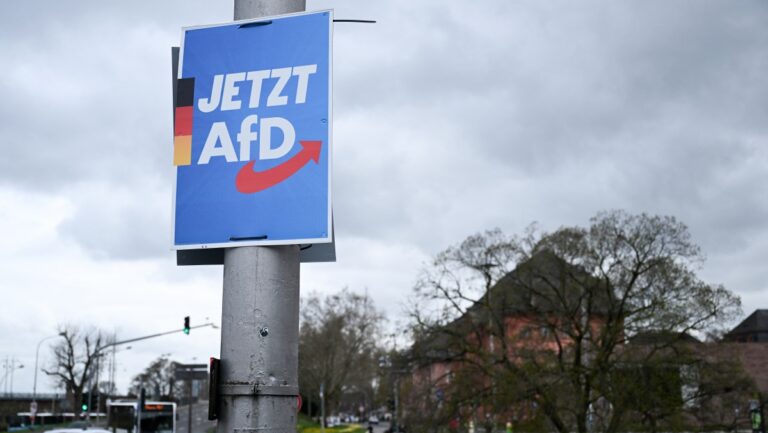
The controversy is further fueled by the contrast in Otto-Versand’s catalogue, which also features stickers with slogans such as “FCK AFD,” including rainbow versions alongside the veils. The catalogue simultaneously promotes merchandise attacking a legal political party while offering items seen as reinforcing Islamist pressure on minors—a double standard that has drawn strong protest.