More than half of the illegal migrants disembarked in Italy by NGO vessels since Giorgia Meloni came to power were brought there by German organisations.
Of the 42,338 people that entered Italy via NGO operations since October 2022, 22,513—just over 53%—arrived aboard vessels linked to German organisations. If organisations of other nationalities operating German-flagged ships are included, the figure rises to around 27,000.
Italy received 157,651 people by sea in 2023, 66,617 in 2024, and 66,316 in 2025. Vessels operated by these types of organisations—some of which have been accused of people trafficking—accounted for approximately 8% of all arrivals in 2023.
The role of German NGOs in dumping tens of thousands of migrants in Italy has now become a political issue between Rome and Berlin.
Germany wants to resume transfers to Italy of asylum seekers who initially entered through Italian territory and then continued to Germany. Rome, which since December 2022 has blocked a large proportion of these returns under the Dublin system, argues that Berlin should also take into account those disembarked in Italy by vessels operated by German organisations.
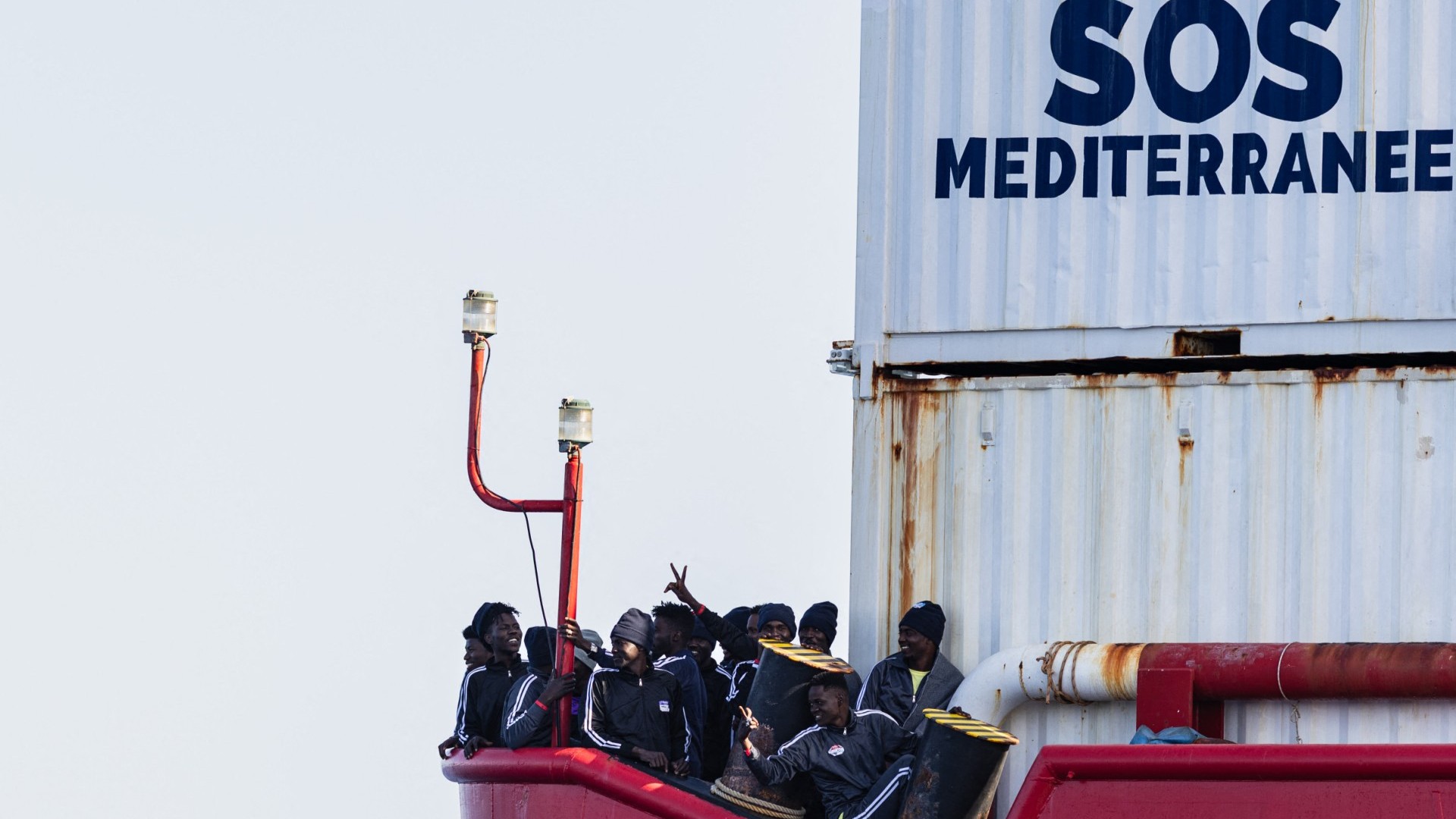
Italy argues that Germany demands that Italy assume responsibility because it was the first European country of entry, while German organisations such as Sea-Watch, Sea-Eye, SOS Humanity and Mission Lifeline have spent years carrying out operations in the central Mediterranean and subsequently disembarking those they rescue at Italian ports.
For several years, moreover, some of these organisations received public funding from Germany. The Bundestag had allocated €2 million annually between 2023 and 2026 to support what was described as “civilian sea rescue.” Beneficiaries included SOS Humanity, Sea-Eye and SOS Méditerranée. Around €900,000 was distributed in the first quarter of 2025 alone.
Friedrich Merz’s government ended that funding in 2025. Therefore, it cannot be claimed that Berlin is currently financing these operations through that federal programme, although it is true that for years public money from one member state helped sustain organisations of this kind.
This behaviour among member states is one of the main factors behind the current critical situation. For years, southern European countries warned of the risks of failing to properly secure the EU’s southern border and close off these routes. Northern countries paid little attention, arguing that it was not their problem. Now that the consequences are tangible, they criticise the countries of entry for, in their view, not doing enough.
The dispute also coincides with the entry into application, on June 12th, of the new European Pact on Migration and Asylum. Its solidarity mechanism requires member states to contribute to sharing migration pressure, although they may do so through relocations, financial contributions or operational support. For 2026, the benchmark has been set at 21,000 relocations or €420 million.
Hungary had spent years rejecting precisely this logic and has refused to participate in the new mechanism.
The Italian dispute therefore exposes the underlying problem: migration decisions taken by one member state can generate territorial and political costs for another, while Brussels subsequently attempts to redistribute those consequences collectively.
The question is no longer simply who carries out rescues in the Mediterranean, but who decides who enters and, above all, who ultimately assumes responsibility. For the time being, no one wants to take responsibility—or at least to bear the political cost that leadership in confronting the problem would entail.