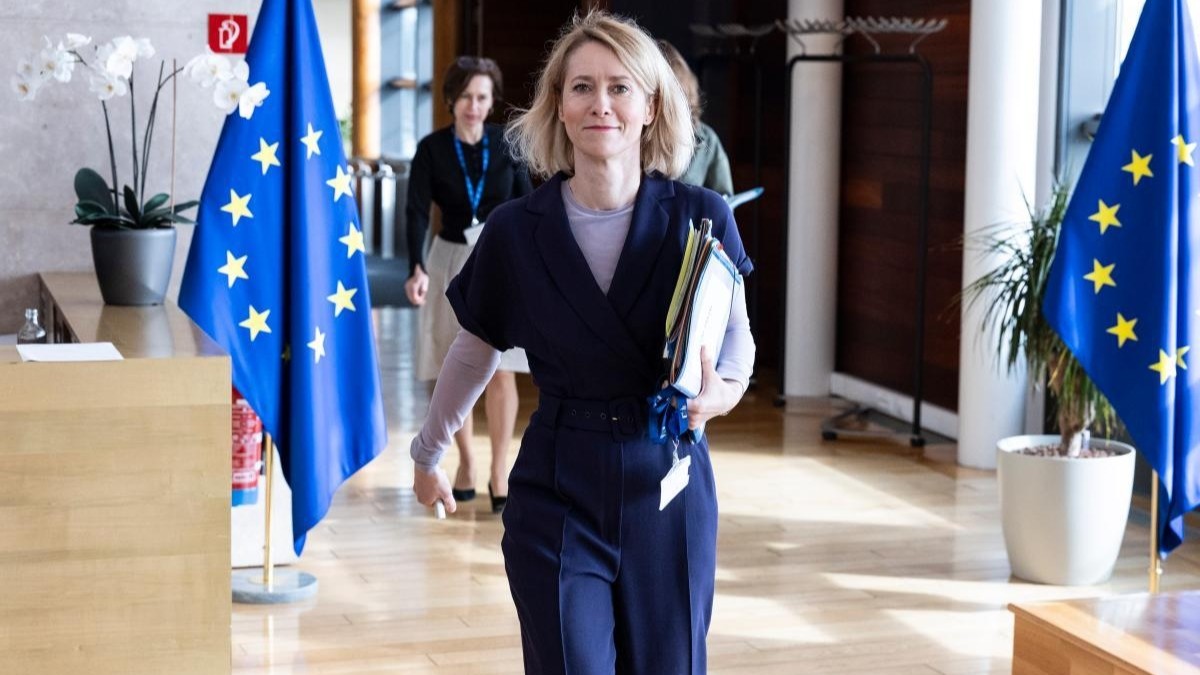
EU High Representative for Foreign Affairs Kaja Kallas on June 10, 2026
European Commission, June 10, 2026
On Tuesday, June 9th, the EU Commission unveiled its proposals for the 21st instalment of sanctions against Russia, aimed at weakening Putin’s war machine and forcing Moscow to abandon its goals in Ukraine.
According to the EU’s High Representative for Foreign Affairs, Kaja Kallas, the 21st sanctions package is the largest set of listings in over two years, with over 170 individual measures targeting mainly Russia’s bank and energy sector, as well as any entity in third countries that might help Moscow circumvent its effects.
If adopted, the package would impose asset freezes on nearly 90 banks, as well as additional transaction bans on over 30 banks both in Russia and in third countries. There would also be new bans on cryptocurrency transactions, affecting 11 crypto service providers in third countries.
Russia’s energy is also targeted. There will be new restrictions on the resale of LNG tankers to Russia, and 30 new vessels operating within Russia’s “shadow fleet” will be added to the sanctions list. Two Russian ports and four airports will also face new transaction bans.
With regards to Moscow’s military-industrial complex, the Commission focuses mainly on cracking down on Russia’s drone manufacturing capabilities, along with export control measures on 50 companies, including some based in China, Turkey, the UAE, and India.
Lastly, the Commission proposed a “comprehensive visa ban on (ex-)combatants of the Russian armed forces and its proxy groups.” This would effectively ban anyone who ever participated in Russia’s war on Ukraine, whether voluntarily or just as a draftee, from entering the territory of the EU until the decision is reversed.
“Brick by brick, we are collapsing the foundations of Russia’s war economy,” Kallas boasted in her statement. “We are depriving Russia of the means to fund its war.”
What she didn’t mention was that Russia’s oil and gas revenue was up by nearly 40% last month compared to the same period last year, mainly due to the war in Iran and its consequences on the global energy market.
Another thing Brussels doesn’t talk about is that Europe suffers the consequences of its own energy sanctions even more than Russia.
Rising energy costs and the EU’s self-imposed inability to replace missing Middle Eastern shipments with Russian ones already hiked eurozone inflation to over 3.2% by April (far above the 2% ECB limit), because of which the European Central Bank is expected to raise interest rates as early as this Thursday.