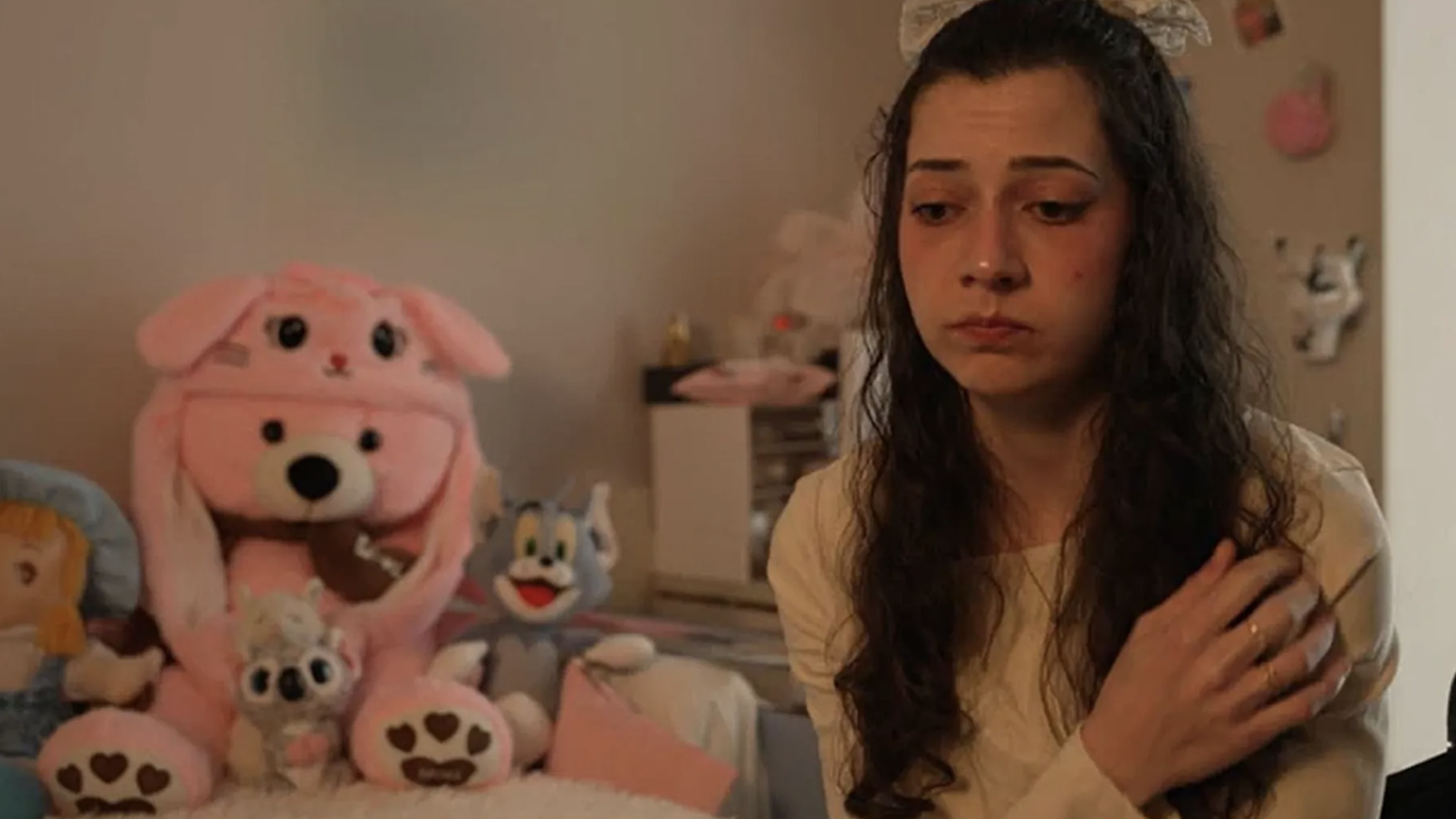
Noelia giving her last interview before her assisted suicide on March 26, 2026
Screenshot of the video of Noelia’s interview with the Spanish Antena 3 TV channel
The euthanasia of 25-year-old Noelia on Thursday, March 27th in Spain has made headlines around the world. Not because of its legal exceptionalism—it was upheld by all judicial instances—but because of what it represents: the shift of euthanasia from extreme cases of terminal illness into far more shaky territory, such as psychological suffering.
In just a few days, her story has spread across national and international media. Noelia’s life was marked by institutional neglect, episodes of violence and sexual abuse, severe depression, and a fractured family environment. And there is a lingering sense, shared by many, that things should have gone differently.
Noelia’s death was the result of a series of events that led to grave emotional and physical suffering. Her parents lost custody of her and she spent time in state care. According to her own account, it was in that context that she suffered abuse and episodes of violence that were never investigated judicially.
🇪🇸 A young Spanish woman will be euthanized today, after a group of illegal migrants gang-raped her while she was in state care.
— Visegrád 24 (@visegrad24) March 26, 2026
In 2022, the teenager Noelia Castillo Ramos placed in a state institution amid family difficulties and placed in a state-run home together with North… pic.twitter.com/8Rrv76Alot
Years later, those traumatic experiences led to a suicide attempt in 2021, leaving her with partial paraplegia. From that point on, her situation worsened. She was diagnosed with borderline personality disorder, underwent multiple psychiatric admissions, and lived with a persistent sense of isolation.
Medical reports—central to the process—concluded that her suffering was “serious, chronic and incapacitating,” and that there was no prospect of improvement. On that basis, the Catalonia Guarantees Commission authorized euthanasia in 2024.
Formally, the procedure met all legal requirements. But the case was never as closed as it appeared.
Noelia’s father, supported by the Catholic organization Abogados Cristianos (Christian Lawyers), launched a legal battle that lasted nearly two years. He argued that his daughter was not in a condition to decide and that her situation could improve with appropriate psychiatric treatment.
The judicial path followed the expected course: ordinary courts, the High Court of Justice of Catalonia, the Supreme Court, the Constitutional Court, and finally European bodies. All upheld the lower instance rulings.
The matter may have been settled legally—but not morally or emotionally. According to the family’s lawyers, doubts may have emerged on the young woman’s part in the final moments. They also alleged hospital pressure, even linking the case to potential organ donation protocols—a claim not officially confirmed but one that has added further tension to the debate.
The hospital, for its part, maintained that consent was firm and repeatedly expressed.
If anything has defined this case, it is its media exposure. The interview broadcast on television just hours before her death turned an intimate process into a public event.
Statements such as “I want to put on makeup and look pretty” or “I want to die alone” triggered mixed reactions. For some, they reflected calm acceptance. Others raised doubts about the emotional maturity behind the decision.
The way the entire process was televised—with captions, previews, and emotionally charged storytelling—has been strongly criticized by those who see in it a trivialization of the end of life.
One of the most significant aspects of the case lies in its future implications. Until now, euthanasia in Spain had been primarily associated with irreversible physical illnesses in advanced stages—or at least that was how it was presented when the law was passed. This case shifts the focus toward psychological suffering. And that is no minor issue.
It raises difficult questions: can mental pain justify an irreversible decision? How is genuine decision-making capacity assessed in contexts of severe depression? Where are the limits of the healthcare system?
Some experts warn of what they describe as a “gradual expansion” of the criteria. A slippery slope that, according to critics, has already been observed in countries such as Belgium, the Netherlands, and Canada.
Noelia’s death is, above all, a tragic story. A life marked by fragility, institutional failures, and a persistent sense of abandonment.
But it has also triggered something that did not occur when Spain approved its euthanasia law in 2021: a real public debate. Beyond political slogans, the case has forced many citizens to confront uncomfortable questions, such as whether a society that allows such decisions is offering all possible alternatives before accepting them.
That reaction—late, but intense—may be one of the few constructive elements to emerge from an otherwise deeply painful story.