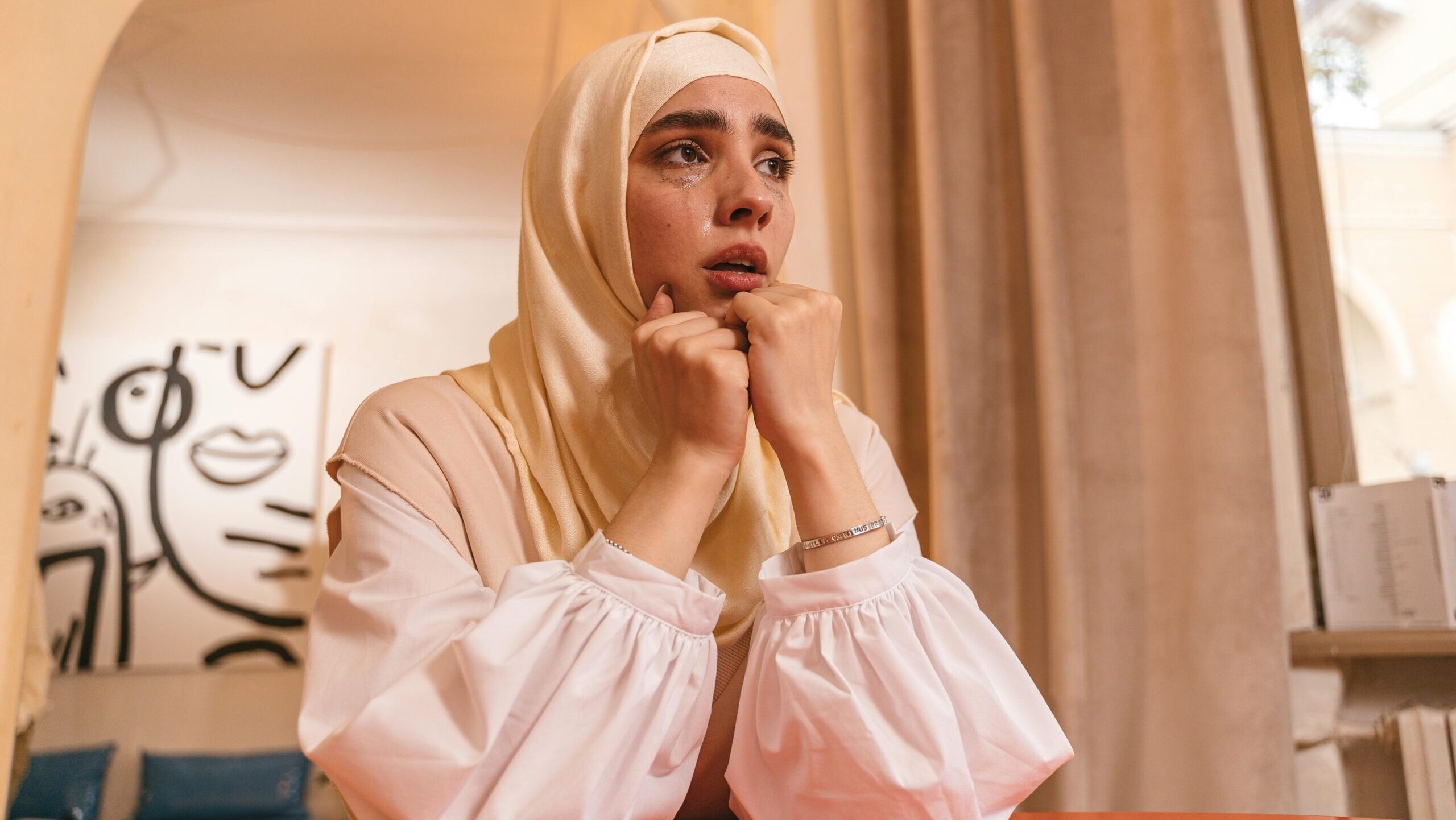
Spain’s debate over religion in schools has taken a decisive—and controversial—turn. A new report published by the Institute of Women, an agency under the Ministry of Equality, openly defends the wearing of the Islamic hijab in classrooms and goes a step further by publicly naming schools that have limited or banned it.
The document, “‘Hands Off That!’: Discrimination Against Young Muslim Women Wearing the Hijab in the Education System,” presents these restrictions not as neutral disciplinary decisions, but as cases of institutional discrimination. According to the report, opposition to the hijab is rooted in “Islamophobia,” described as a form of cultural racism that targets Muslims—or those perceived to be Muslim—within Spain’s education system.
The report directly challenges long-standing justifications used by schools, including uniform policies, common dress codes, and the preservation of a neutral learning environment. These arguments, it claims, are selectively applied and disproportionately affect Muslim girls.
In unusually explicit terms for an official government document, the Institute of Women identifies specific centres and incidents: students barred from wearing the hijab during exams, university entrance tests, vocational training placements in hospitals or care homes, and even school sports competitions. In each case, responsibility is placed firmly on school management, accused of misusing concepts such as secularism and ideological neutrality.
The consequences, the report argues, are severe. Restrictions on the hijab allegedly lead to interrupted education, forced school changes, and, in some cases, early dropout—outcomes framed as evidence of systemic bias rather than isolated administrative decisions.
What makes the report particularly striking is its sharp departure from Spain’s recent feminist orthodoxy. Until recently, institutions aligned with the Equality Ministry denounced school uniforms as instruments of control over female bodies—sometimes even as a form of sexualisation. Uniformity itself was portrayed as incompatible with women’s autonomy.
Now, a religious garment with a strong ideological and cultural meaning is officially endorsed as a symbol of freedom. The report insists that Muslim women who wear the hijab do so by choice and condemns what it describes as a Western stereotype portraying them as “submissive and without agency,” dominated by a religion characterised as “monolithic, irrational and misogynistic.”
For critics, the contradiction is hard to ignore: dress codes are oppressive—unless they are religious.
The shift also reopens an unresolved question in Spanish politics: what does secularism actually mean? Under left-wing governments, public authorities aggressively limited the presence of Christian symbols in schools, particularly crosses, arguing that visible religion had no place in public education.
The new report suggests a different standard. Far from excluding religious symbols, it calls on authorities to protect them—at least when they belong to certain communities. The document urges education administrations to revise school regulations, explicitly include freedom of religion in codes of conduct, and closely monitor centres that maintain restrictions on religious symbols.
In practice, this would reduce the autonomy of schools and expand state oversight over internal rules, all in the name of equality.
Beyond Spain, the report reflects a broader European trend: traditional principles such as secularism and equality are being reinterpreted through the lens of identity politics. What was once framed as neutrality is increasingly labelled discrimination; what was once criticised as patriarchal is now defended as “empowerment”.
For Spain’s Equality Ministry, the hijab is no longer a problem to be debated but a freedom to be enforced—and schools that disagree may find themselves publicly named and politically exposed.