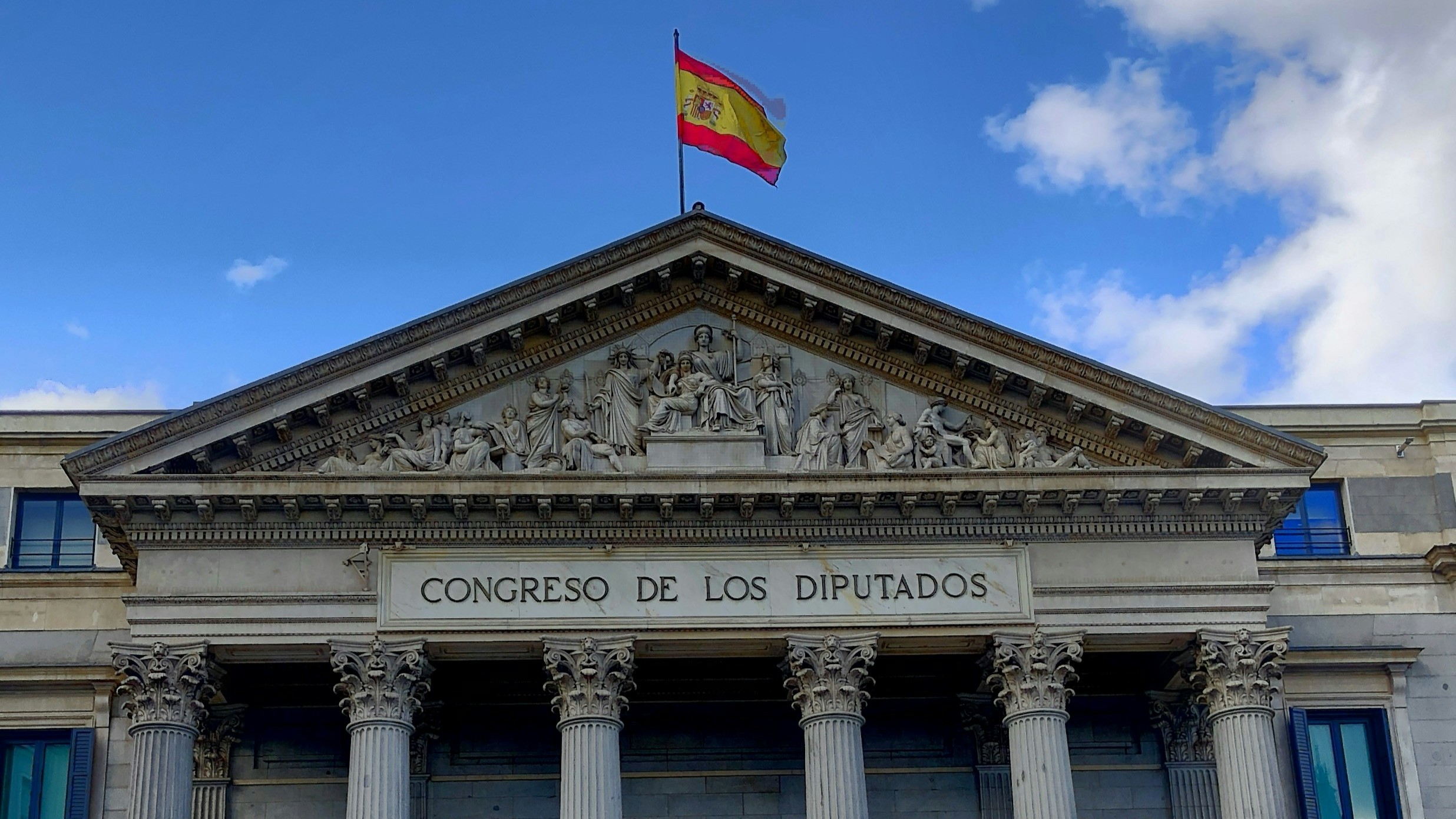
The facade of the Spanish Parliament with the Spanish flag (image cropped)
Photo by David Carrero Fernández-Baillo on Unsplash
Spain’s Congress of Deputies experienced one of its most tense sessions in years on Wednesday, June 17, as a cascade of corruption scandals engulfing the Spanish Socialist Workers’ Party (PSOE) is placing Prime Minister Pedro Sánchez’s government under increasing pressure.
Cornered by judicial investigations, a wave of media revelations, and growing opposition backlash, Sánchez opted for the offensive—airing the ‘dirty laundry’ of his political rivals to shift the spotlight away from his party.
The day’s spark came from a fresh Civil Guard report uncovering an alleged structural corruption network tied to the PSOE, with direct links to officials and former ministers from Sánchez’s inner circle. Most notably, Santos Cerdán, the party’s number three and one of Sánchez’s closest allies, resigned after being accused of embezzling public funds.
Reactions in the chamber were immediate. MPs from the centre-right Popular Party (PP) pounded their seats chanting “resignation, resignation!” while VOX leader Santiago Abascal dramatically walked out, refusing to listen to Sánchez’s address. From the podium, PP leader Alberto Núñez Feijóo demanded the prime minister’s immediate resignation: “The Spanish people need to be saved from you—they’re waiting for your letter of resignation.”
Sánchez, for his part, struck a defiant tone. He repeated that his government has a “zero-tolerance” policy toward corruption and claimed that “harsh and immediate measures” had already been taken against those involved. However, his combative rhetoric and finger-pointing strategy failed to convince, especially his own coalition partners.
In fact, discontent within the governing alliance is growing. Three Sumar MPs, including its leader and Second Deputy PM Yolanda Díaz, boycotted the session. ERC’s Gabriel Rufián was blunt: “We don’t want a PSOE version of Gürtel. The left must not tolerate corruption.” Sánchez shot back angrily: “We are not corrupt,”but reality contradicts his claim on all fronts.
Meanwhile, the Basque Nationalist Party (PNV) called for restraint, while Bildu demanded “firm measures” against corruption, though neither joined the parliamentary crossfire. That afternoon, Sánchez held behind closed doors meetings with ERC, Bildu, and PNV leaders, seeking to preserve his parliamentary majority until 2027 in exchange for possible future concessions.
The political atmosphere is suffocating, with no one knowing what further scandals may erupt in the coming weeks. On Monday, government spokesperson Pilar Alegría could not rule out more revelations: “I cannot guarantee that there won’t be more cases.” The confusion has spread within Sánchez’s cabinet, which now seems paralyzed and disoriented. Sánchez may have turned on the fan, but the stench of corruption still lingers.