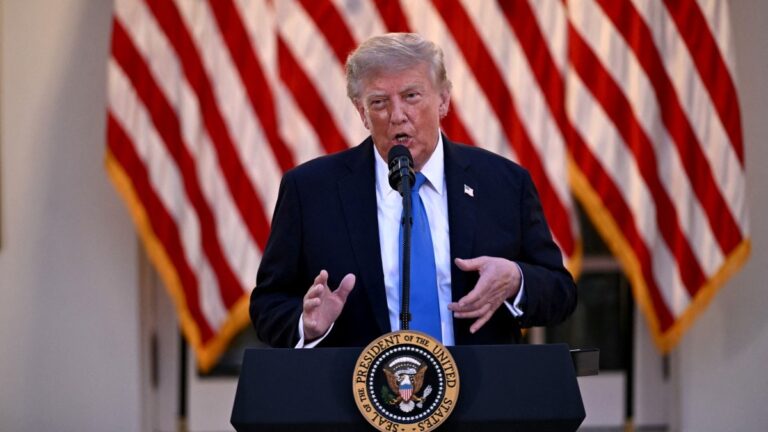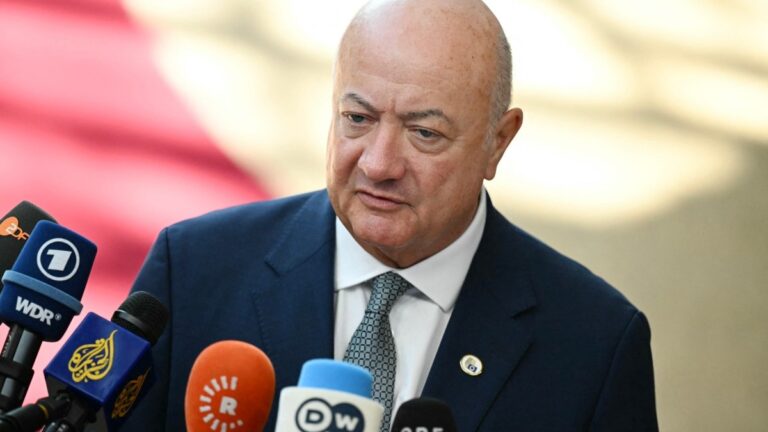
Britain’s Prime Minister Keir Starmer (C) and his wife Victoria Starmer (R) leave after casting their votes at a polling station in Westminster Chapel, central London on May 7th, 2026, as polls opened for local elections.
Local elections heaped more pressure on beleaguered Labour prime minister Keir Starmer and showcased the rise in support for populists, both Green and patriotic.
JUSTIN TALLIS / AFP
Regional and municipal elections in many parts of the United Kingdom have put Prime Minister Keir Starmer on notice—while highlighting major changes in voter loyalties.
Despite earlier efforts to block specific local authority elections, municipal voting went ahead in England on Thursday, May 7th. What unites this disparate mix of 136 full or partial council (i.e., municipal) and mayoral elections was the almost uniformly terrible performance of the Labour Party, which still holds a majority in the Westminster parliament. Due to different schedules in counting the ballots, the final picture is expected to emerge over the weekend, with Labour figures blaming PM Starmer for the debacle (as expected), with, at the time of writing, 58% of contested seats lost.
In contrast, Nigel Farage’s Reform UK has significantly increased its vote share at the polls in England. At the time of writing, Reform had gained 897 new councillors (from virtually a standing start). This coincides with both Labour and the Tories—often derided as ‘the uniparty’—losing 688 and 429 council seats, respectively. Reform also won control of its first-ever London borough, Havering, bordering Essex.
The major story in England is of Labour councillors, especially in working class areas, losing their seats to Reform. Many local authorities holding elections were scheduled to open up only a proportion of seats, and not their councils as a whole, to the electorate. In traditional Labour areas in the North of England and the Midlands, this usually led to Labour losing council seats to Reform. Going forward, many councils will be classified as having ‘no overall control’—i.e., no majority party, at least until further elections are held. In contrast, municipality-wide ballots saw Newcastle-under-Lyme, Suffolk, Sunderland, and Essex all swing to Reform.
In some urban areas, Labour also bled votes to Zack Polanski’s Green Party, which has outflanked Starmer on the Left and emphasised Gaza in some of its campaign materials. The London Borough of Hackney now has its first ever elected Green mayor.
Although many counts in England are incomplete, Reform looks like a strong performer, with new councillors elected in second city Birmingham and across Warwickshire.
Voting in elections for the Scottish and Welsh Parliaments also closed yesterday, with all seats in these home nations’ devolved administrations up for grabs. At the time of writing, votes for more than a third of the Scottish seats have been counted, with a clear lead for the Scottish National Party. Labour has already conceded defeat in Scotland.
The current picture in the Welsh Senedd is much more dramatic, with 42 out of 96 seats confirmed and nationalists Plaid Cymru and Reform UK on track to become the two largest parties at the time of writing. The striking development here is that Labour—for a century the dominant party in Wales—has been pushed back into third place under Starmer. Labour has also conceded defeat in Wales.
As for the hapless British Labour PM, for now, he is taking some responsibility for the unfolding disaster, saying after losing hundreds of seats that he is “not going to walk away” and “plunge the country into chaos.” Of the latter prospect, unsympathetic people might say he has done that already.