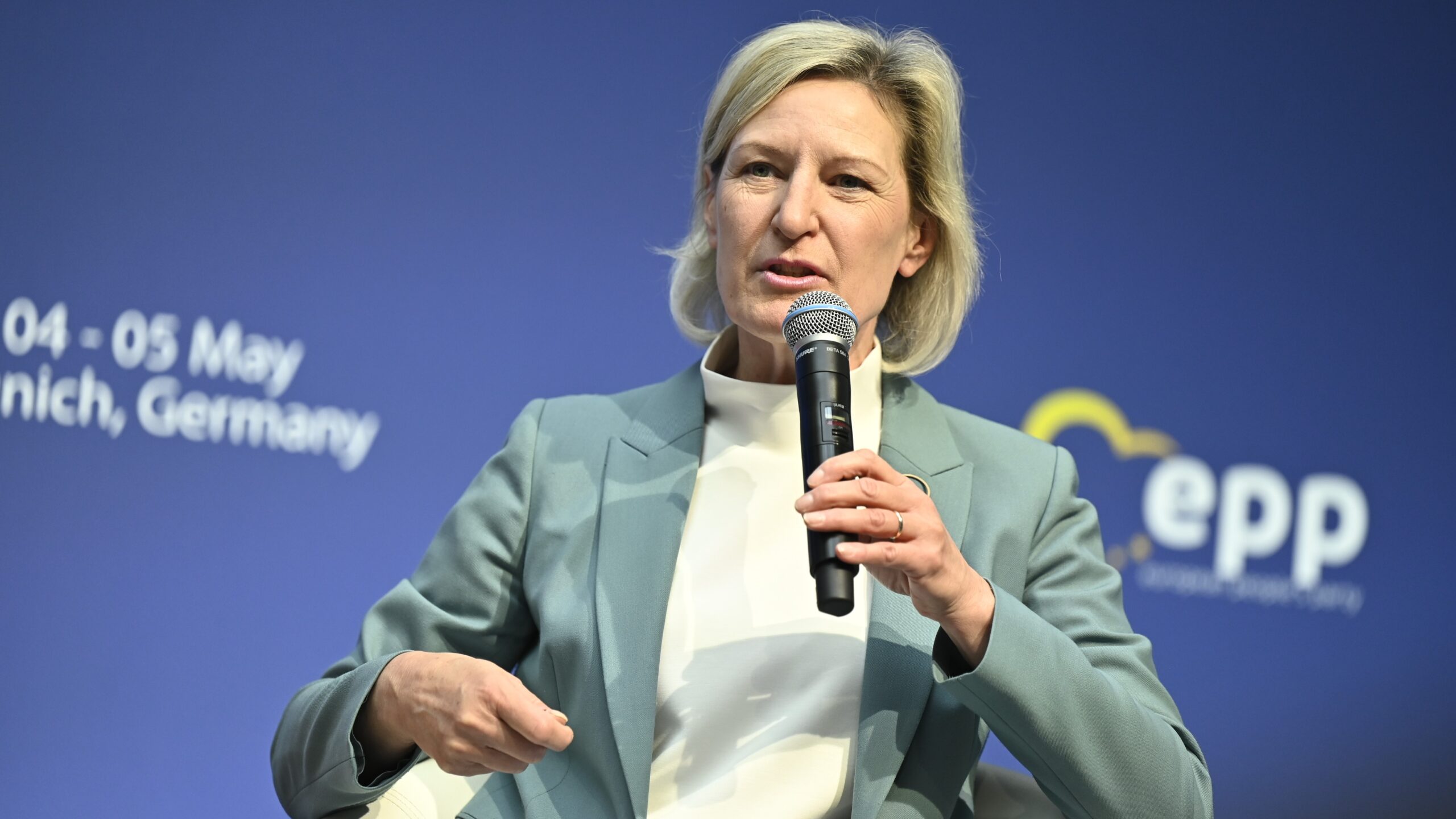
MEP Angelika Niebler (CSU/EPP) in 2023
By European People’s Party – EPP Political Assembly, 04-05 May, Munich, CC BY 2.0, https://commons.wikimedia.org/w/index.php?curid=131561429
The European Parliament is once again applying double standards, as mainstream political groups plan to shield a prominent German centre-right MEP from investigation and possible prosecution.
The controversy centres on Angelika Niebler, the leader of the Christian Social Union’s (CSU) delegation within the centre-right European People’s Party (EPP).
On Tuesday, the Parliament is expected to endorse a recommendation from its Legal Affairs Committee (JURI) not to lift her parliamentary immunity despite a request from the European Public Prosecutor’s Office (EPPO) and German prosecutors.
Investigators suspect Niebler may have improperly used EU-funded parliamentary assistants to chauffeur her from her hometown of Munich to Brussels and Strasbourg, as well as to private and business appointments not linked to her work as an MEP.
A committee report also referred to allegations that one of her assistants paid with EU funds worked exclusively for a former CSU MEP. Prosecutors believe all this could amount to fraud.
Niebler has denied wrongdoing, insisting the accusations are “untrue.” The JURI committee argued that politically motivated actors may be attempting to damage her reputation.
The European Parliament’s establishment parties—the EPP, the Socialists, and the liberal Renew—will now likely protect one of their own instead of allowing prosecutors to do their work.
The contrast is stark: only a few weeks ago, Parliament voted to strip several Polish right-wing MEPs of immunity, enabling prosecutors in Poland to pursue legal proceedings against them.
The Parliament has demonstrated its selective treatment of MEPs in many other politically sensitive cases.
Last year, MEPs refused to lift the immunity of Italian socialist Elisabetta Gualmini in connection with the Qatargate corruption probe, citing insufficient evidence from Belgian prosecutors. They also saved Italian radical left-wing MEP Ilaria Salis from prosecution: she is wanted in Hungary for participating in a series of attacks.
German magazine Der Spiegel described the Niebler affair as “perfect ammunition for populists,” warning that the perception of political elites shielding colleagues from scrutiny risks deepening public distrust in EU institutions.
The publication argues that if Niebler truly believes she acted lawfully, she should have no objection to a full independent investigation.
The dispute has also exposed growing tensions between the European Parliament and the EPPO, with some lawmakers privately warning that MEPs are overstepping their role by assessing the credibility of evidence themselves instead of allowing prosecutors to conduct investigations.