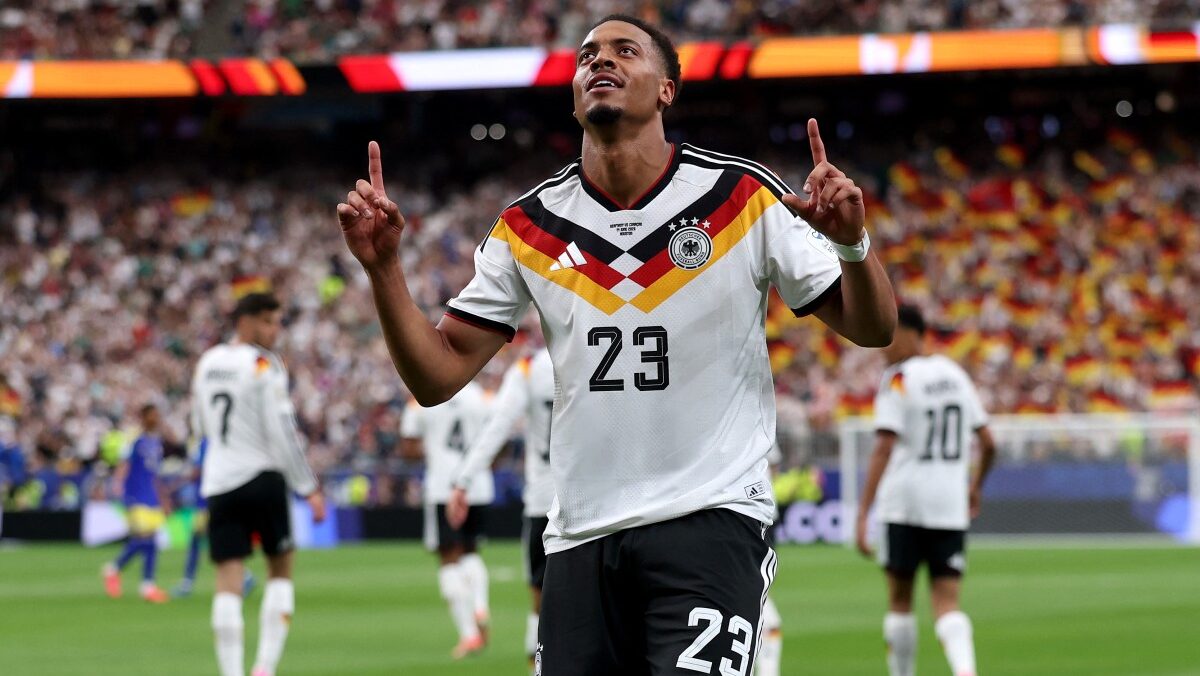
One of the most talked-about moments following Germany’s 7-1 victory over Curaçao came after the final whistle, when players from both teams gathered on the pitch for a spontaneous Christian prayer.
Some players from Curaçao and Germany shared a moment of prayer after the full-time whistle 🙏❤️ pic.twitter.com/KVNi2SkvhN
— ESPN UK (@ESPNUK) June 14, 2026
German internationals Felix Nmecha and Jonathan Tah joined several Curaçao players in a prayer circle, drawing attention from football fans around the world. Explaining the moment afterwards, Nmecha said: “In the game we are opponents, but after the match we are all Christians and brothers. We simply said a little prayer together because we are all very grateful.” He added: “We all believe that Jesus is glorified through the game, that’s why we came together and prayed.”
What made the scene noteworthy was not only its religious character, but also its spontaneity. No football federation organised it, no governing body promoted it, and no public relations campaign surrounded it. The players participated because they wanted to.
That stood in contrast to many of the social and political campaigns that have become increasingly visible in football over the past decade. Following the death of George Floyd in 2020, taking the knee became a regular feature of matches across Europe and North America, while debates over the Black Lives Matter movement frequently spilled into the sport.
More recently, football authorities, clubs, and advocacy groups have promoted various diversity, inclusion, and LGBT-related initiatives, including campaigns surrounding rainbow symbolism and the OneLove armband.
Supporters have often been divided over these efforts, arguing that the sport has increasingly become a platform for organised political and cultural messaging.
The prayer circle between Germany and Curaçao offered something different. It was not a protest, a federation initiative, or a sponsor-backed campaign. It was a voluntary expression of faith shared by players from opposing teams.