Alex Rusin / Pexels
Ukrainian Deputy Prime Minister for European and Euro-Atlantic Integration Taras Kachka declared in Luxembourg on Monday, October 27th, that the country’s agriculture “is developing in line with EU standards”—a statement widely interpreted in Brussels as a prelude to Ukraine’s entry into the Single Market.
The message, delivered during a meeting of EU agriculture ministers, aims to project the image of a reliable and modern partner—but it also raises questions about the Union’s ability to absorb an agricultural giant still at war.
Kachka stressed that “most European standards have already been part of Ukraine’s political agenda for years,” which, he said, will ease the implementation of the new trade agreement with Brussels, expected to enter into force in the coming days. The deal revises the conditions of the so-called Deep and Comprehensive Free Trade Area (DCFTA), established under the EU–Ukraine Association Agreement.
For the government in Kyiv, this economic integration is not only a technical step but a political symbol. Ukraine wants to show it can adapt to EU rules and guarantee the continent’s “food security.” Yet among European farmers—particularly in Poland, Hungary, and Slovakia—fears of unfair competition persist.
Joint doorstep by @jacobjensenMF of #Denmark @eu2025dk, @taraskachka of #Ukraine, and @CHansenEU of @EU_Commission at the Agriculture and Fisheries #AGRIFISH Council taking place on 27 October 2025 in #Luxembourg.https://t.co/cUH0uA23xu
— EU Council Newsroom (@EUCouncilTVNews) October 27, 2025
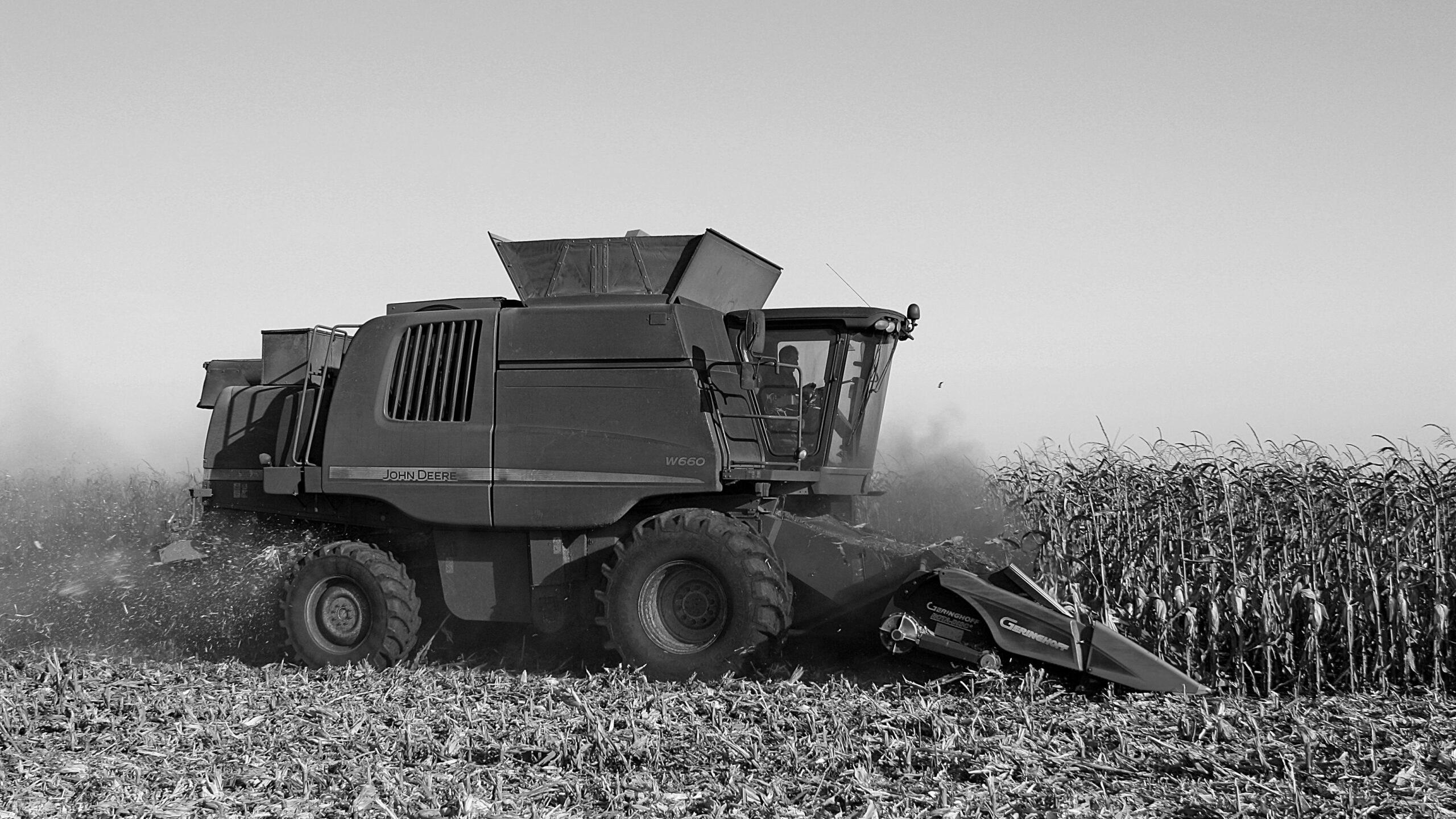
The massive inflow of Ukrainian grain, poultry, and honey has driven down local prices and sparked protests that Brussels has tried to placate through subsidies and temporary measures. Many agricultural associations warn that the EU’s own farm system, already suffocated by climate policies, could face its final blow with Ukraine’s integration.
EU Agriculture Commissioner Christophe Hansen acknowledged that the new agreement will bring “the necessary predictability to the sector” and remove “the need for unilateral measures” such as those imposed by several member states over the past year. However, in the capitals of Eastern Europe, suspicion is growing that trade liberalization with Ukraine will ultimately undermine the Common Agricultural Policy (CAP), one of the EU’s most fundamental, although costly and politically sensitive pillars.
In Denmark—which holds the rotating presidency of the EU Council this semester — Agriculture Minister Jacob Jensen urged Europe “not to fear” Ukraine’s future accession but to “work together” to expand trade flows. Yet behind this rhetoric of cooperation lies an uncomfortable reality: Ukraine possesses some of the most fertile soils in the world and far lower production costs than Western European countries. Integrating such an agro-export powerhouse into the Single Market could have seismic effects on the internal balance of the CAP. Coupled with trade deals like Mercosur, the damage to Europe’s farming sector could prove irreversible.
Brussels has sought to ease tensions by limiting import increases to “non-sensitive products,” while maintaining partial restrictions on sugar, wheat, poultry, and eggs. Still, the new trade framework confirms a broader trend: in the name of solidarity with Kyiv, the EU continues to open its market to a direct competitor, even as its own farmers struggle under green regulations, high energy costs, and global competition.
If anything, this episode reveals that the narrative of “alignment with European standards” conceals a deeper strategic struggle over the future of Europe’s agricultural model. Ukraine is preparing to integrate into the Single Market, but its entry will not be neutral: it will test the economic and political coherence of a Union that, between war and green ideology, seems willing to embrace any contradiction in the name of European unity.